Welcome to Den Haag!

Dear readers,

Today marks not only my 27th birthday but also the first day of the three months I will spend working this summer in Den Haag (the Hague), the Netherlands. I can’t believe that I’m here already; the last two weeks have been an utter whirlwind of final exams, packing, and finally, travel.

I’ve spent two summers in Europe prior this one but have never been away for more than eight weeks; this summer I will be here for three whole months – which to me is pretty much as good as it gets. Tomorrow I start work at the International Criminal Tribunal for the former Yugoslavia (ICTY), where I will be working in the Office of the Prosecutor. I don’t know yet what exactly I’ll be doing, but it will, in at least a general sense, involve prosecuting some of the worst war criminals from the breakup of the former Yugoslavia during the 1990’s. Given my Croatian ancestry and my experiences working in four Balkan countries last summer, this experience is highly personal for me, and I am really looking forward to my first real legal job dealing with human rights.

I landed in Amsterdam this morning and knew even before arriving at the gate that I was in Holland. While heading towards the gate, I could see a windmill, several bikers, and a canal. I’ve never been to the Netherlands before, and sadly Dutch is not one of the languages I’ve studied, so I am sure that this summer will involve a decent number of good stories – and today was no exception.

You can take a train straight from the Amsterdam airport to the Hague, so I grabbed my two large bags and headed towards the train station. After some frustrating, failed negotiations with the automatic ticket sellers, I made my may to a window and got a ticket. I scrutinized the ticket looking for a hint of what time the train left or at least what platform it would leave from and found neither. Since none of the platforms were labeled with that specifically, I chose a random elevator and headed down to the tracks. I had perfect timing: a train was just pulling up bearing the sign “Den Haag Centraal”, so I heaved my bags on board and settled into a seat. I spent the next 20 minutes convinced I had somehow messed up; the train was going TOWARDS Amsterdam, which despite my limited grasp of Dutch geography struck me as incorrect. When we arrived at the main terminal, I grabbed my bags again and asked someone on the platform about getting to the Hague. Apparently, I did have the right train – but for whatever reason it went to Amsterdam before turning around and going to the Hague. Crisis averted!

I was very blessed to have family with me today – my cousin Rachel and her mom came to spend my birthday with me as part of Rachel’s good-bye Europe tour after a semester in France. It was reassuring to have people with me as I found my way to my apartment, unpacked, figured out how to turn on the hot water heater, etc. We got to spend eight hours together, and it was wonderful!

I’m renting a small flat that’s about a 10-minute walk from the ICTY in the northwest part of the city. The neighborhood is absolutely charming – it reminds me most of Notting Hill, but it has hints of Georgetown and the Fan as well. My building is on a narrow street lined with simple yet stately brown brick houses, and my flt’s up on the second floor overlooking the street. It could almost be a scene from Alfred HItchcock’s “Rear Window” – I can see into the apartments and terraces of everyone across! I have one combination living/dining/bed room, a small bath, and a small kitchen – just enough space for one person.

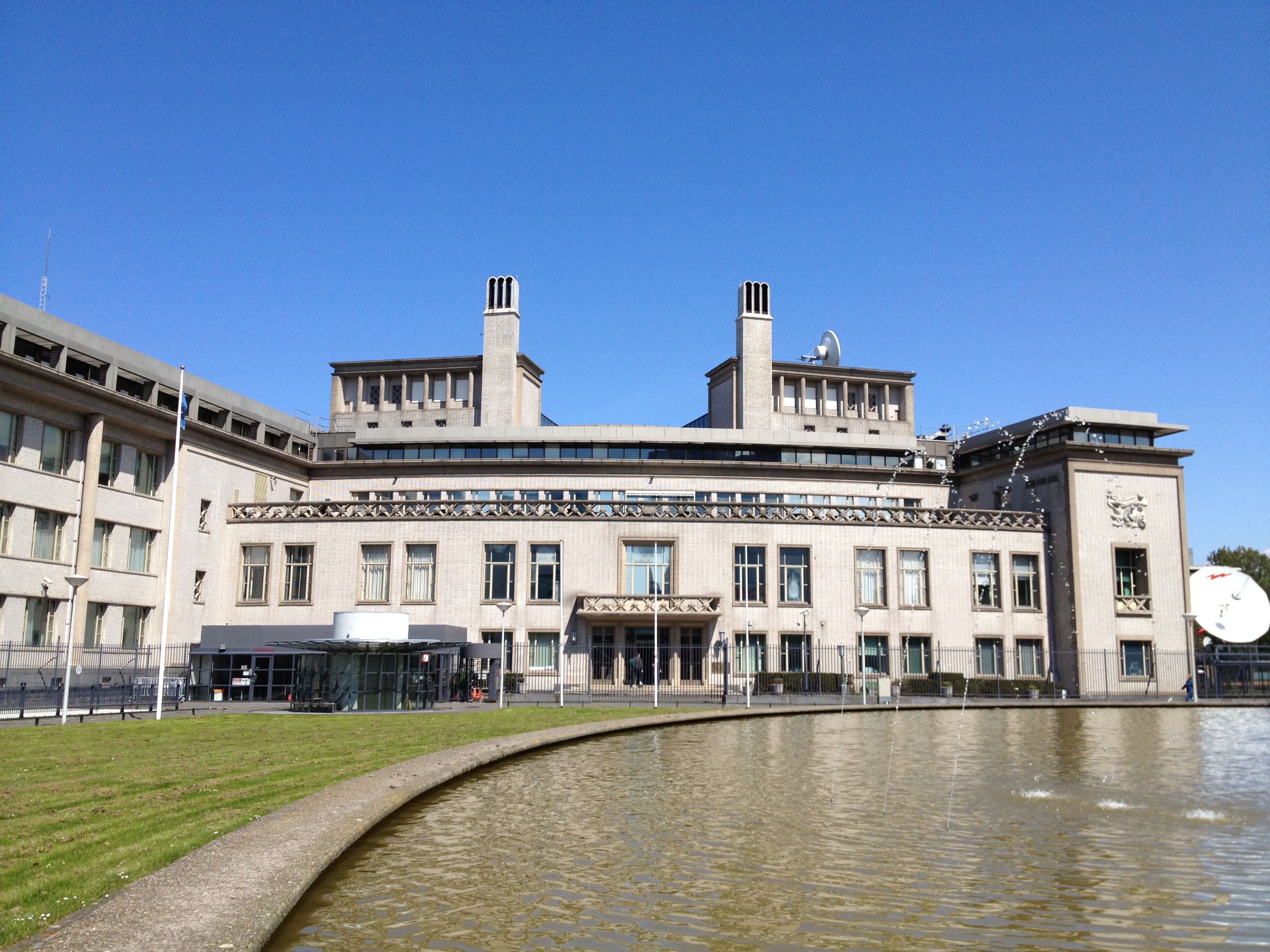
After I got cleaned up a bit after my flight, the three of us headed off to explore the area. We first made our way in the general direction of the ICTY and managed to find it without any trouble. I think it’s still surreal that I will finally get to work for the UN after a decade of hoping, and the sight of the UN flag flying in front of the ICTY further heightened that for me.
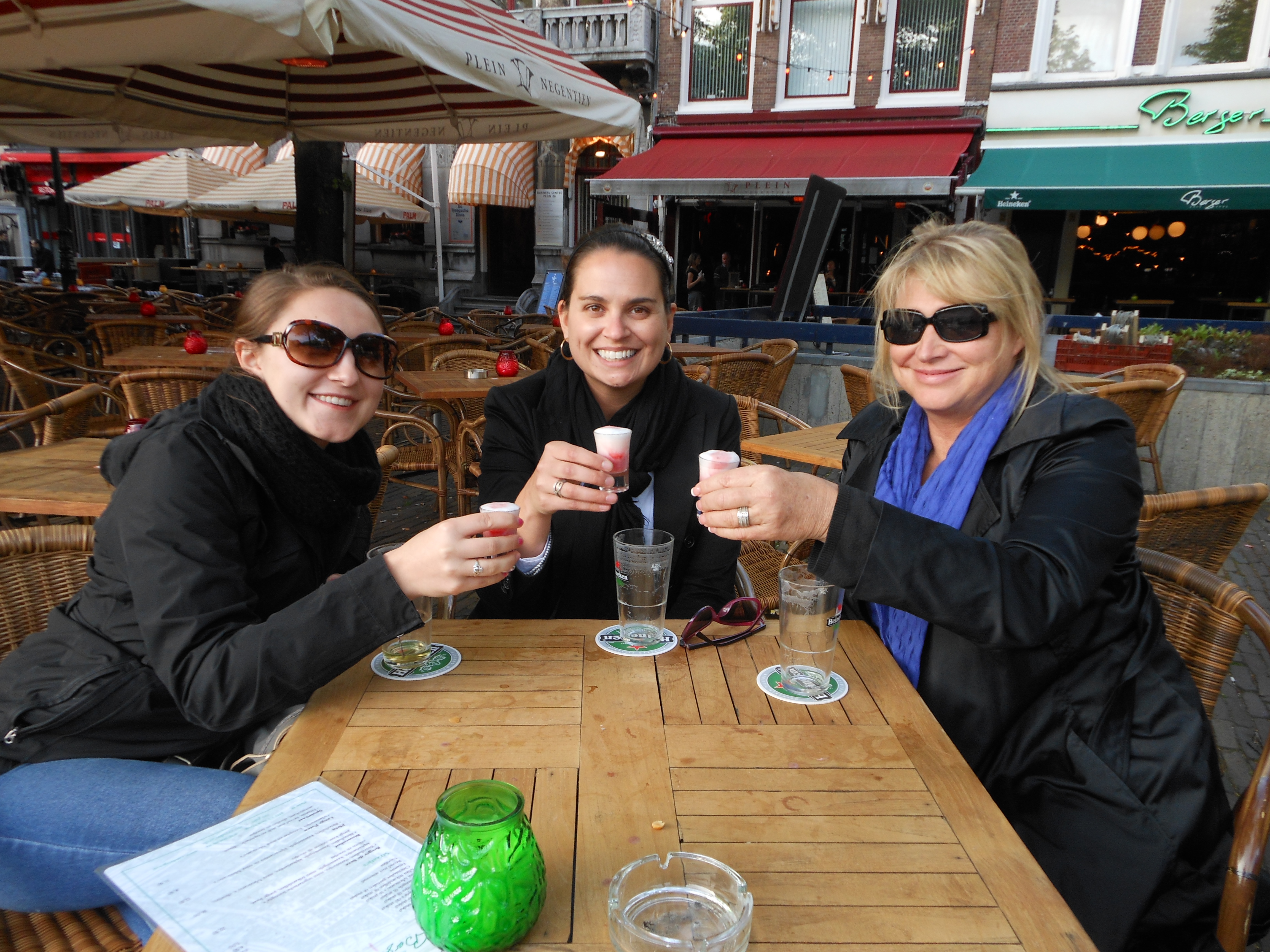
We found an outdoor cafe next to a nearby art museum and enjoyed a late lunch while watching little kids play in the park and thirsty Dutch yuppies enjoy a wine tasting going on just next to us. (We thought about joining in but decided that my truly incredible lack of jet lag probably had its limits.) After that we headed back to the apartment for a some unpacking and research (Rachel did some much-needed research on the public transit system here), and then we set off to try our luck at taking the tram. A short while later we found ourselves back at the train station and set off in search of a popular shopping/walking district. When we found it, I really started to feel like I was back in Europe. The quaint shops (or not so quaint, in the case of the sex shops) lining the pedestrian-only streets felt very familiar to me. We ended up grabbing drinks and some tapas at an outdoor cafe in a big plaza, and our very nice waitress brought us strawberry cheesecake shooters to celebrate my birthday – YUM.
After dinner (already 8:30 at that point) I said good-bye to Rachel and Linda and gamely tried to make it back here via trams. This proved to be a highly prolonged endeavor, as I was essentially removed from the first tram (I was trying to explain where I was going so I could pay, and they thought I was asking for tourist advice) and then ended up on the right one only to get off too early and end up over a mile away from where I needed to be! Thank God I had bought a map a few hours before – it’s hard enough even with the map given the (currently) unpronounceable Dutch words involved, but without it I would have been utterly lost. After an hour of frustrated wandering I finally made it back here via a different route, through which I discovered some nearby eateries and a bar just steps away from my door that seems like quite the cozy neighborhood hangout.

And now, ladies and gents, it’s time for me to FINALLY go to sleep before starting work at the ICTY tomorrow! Tune in tomorrow for an update on what I’ll be working on this summer.
Summer 2012: A Preview

I have to start by expressing my gratitude that law school is so far opening all the doors for international work and travel that I’d hoped it would. I am absolutely thrilled to have the opportunity to work in the Office of the Prosecutor at the International Criminal Tribunal for the former Yugoslavia this summer, and though I probably won’t be able to share many details of my work there on this blog, I’ll have the chance to do quite a bit of traveling through Europe during my three months in the Hague.

When deciding on travel destinations, I often struggle between a desire to add more stamps to my passport and a desire to deepen my experiences in countries I’ve already visited. I’m trying to strike a balance this summer. I drove through (and spent a night in) France and Hungary last summer but haven’t actually done anything touristy in either country, so I think this summer will include trips to Paris and Budapest. Similarly, I spent a summer in Spain but didn’t make it to Barcelona, and as a beach-lover, I feel the need to prioritize Barce as well. I’ve been to Bosnia-Herzegovina and Serbia but didn’t get a chance to see Sarajevo or Belgrade, so those two cities are going on the list too.

As far as new countries are concerned, it’s a tough call (especially considering that the list above is already pretty long). I’ll hopefully get to visit my friend Dani in Portugal, and after that it’s a toss-up between Denmark (where I have some family) and Turkey (where I know no one but have always wanted to go).

I welcome your thoughts on these and any other destinations; you can vote here to tell me where to go!

European Summer 2012 begins, appropriately, on my birthday: May 13. Check back then!

Peace Camp in Kosovo

On our way from Pristina to Novi Sad we had the opportunity to conduct a workshop at a peace park in the Kosovo border town of Pudojevo. A British group called Manchester Aid to Kosovo has been running a peace camp there for the last two years and asked us to provide some instruction in the types of games we do that could be applicable to the peace camp participants. We spent more time planning these three hours than we’ve ever spent planning a session, and I think that’s a reflection of both our excitement to engage with this group and the large amount of games that can be used to promote themes around peace.

We ultimately decided to split the ~30 participants into three groups that would rotate among us for activities followed by discussion. Will, Libby, and I planned our station around the theme of inclusion; Scott, Danijel, and Martha planned for teamwork and cooperation; and Hannah, Dani, and Siôn planned games related to verbal and non-verbal communication.

I was particularly excited to have inclusion as our theme. Will, Libby, and I spent a long time brainstorming ideas for games – there are many different types of groups to consider within inclusion (eg, race, physical ability, religion, etc), and we had to narrow down our long list of ideas to what we could play within half an hour. We decided to make the games as close as possible to the situation in Kosovo between the Kosovars and Serbs so that it was most obviously relevant.

We ended up with groups of about 18 teenagers and MAK volunteers. For our first activity, we divided the group into three teams and gave each a different color bib. While Will and Libby briefed the blue and green teams about how much they love to toss a ball to each other, I explained to the red team that they want to play but are disgusted by the idea of touching a ball after it has touched someone else’s hands. As a result, if someone throws the ball to them using their hands, they have to swat the ball away.

Once we got everyone into a large circle, it quickly became apparent to the blue and green teams that the people on the red team were “rude” and “unfriendly”. For a while they avoided passing us the ball; then Will explained that we had to find some way to play together. When the ball rolled behind me, I picked it up between my arms and demonstrated how to pass it to someone else on the red team. It took a while for the blues and greens to work out that we have to receive the ball that way, but eventually they learned how to play with us and had fun doing so.

Next up, we stayed in our teams but switched over to a set of relays. This time the red team had it easy – we got to be normal. The blue team learned that they only had use of one foot, so they had to hop; the green team had four feet and had to crawl. The first relay was basic: get to a cone about 20 meters away and come back. The red team obviously beat the others by a considerable amount, and Will played this up by having us parade in front of them for a few seconds. The next relay involved dribbling a football to the cone and back; the reds should have retained the advantage but somehow came in second to the blue team in both sessions! Finally, we mixed up the teams so that there were equal numbers of colors on each. This equalization made it a real race, and the results were very close.

We ended up having less time than anticipated, but our final activity was supposed to be a version of Toxic Swamp, which is an initiative exercise in which teams are given a very small amount of material (a piece of rope or a small parachute) and told that they had to get everyone from point A to point B using only that. It’s impossible to do unless they realize that by combining material among teams they will have enough to make a bridge through the “swamp”. Our plan for this session was to keep the groups the same from the relay (greens on all fours, etc) and do the same thing using hula hoops as the material. We had planned a few variations in which each group would had the chance to be both the most or least advantaged. For instance, those walking on all fours take up the most space and are thus a disadvantage in a game that requires limited space, but a modification in which no one can use their hands to touch the hula hoops would place those people at the advantage as they have four “feet”, including two that happen to look like hands.

We were sorry not to get to Toxic Swamp, but it was clear from our discussions with the participants that they got a lot from the first two activities. They were able to articulate the lessons we’d hoped for and the general idea that it is possible to work together and have fun regardless of what you look like or what language you speak.

The other groups had similar success, and we left wishing we could have stayed for a few days. That type of situation is perfect for leaving the kind of lasting and self-sustaining impact that is so important to us in World at Play. Hopefully, future expeditions to Kosovo will be able to partner with MAK and the Pudojevo community again! It was a great chance for us to how how sport and games can be used as legitimate instructional tools for a host of values and life skills.

Kosovo in review

Добар дан!

Those unintelligible characters spell out “dobar dan”, which means “good day” in Serbo-Croatian. Now that we’ve reached Serbia, we’re in the land of the Cyrillic alphabet, which makes everything infinitely more interesting. Martha and I learned the alphabet yesterday on the bus and have been amusing ourselves ever since with deciphering signs!

Before others tell you more about Serbia, I’m going to summarize the nine days we spent in Kosovo.

Neither of the previous World at Play expeditions went to Kosovo, so this leg of the trip was as much about making connections for the future as it was about playing with kids. Scott met with representatives from organizations dedicated to people with autism and Down syndrome, a school for the blind, the SOS Children’s Village, and the pediatric ward of the main Pristina hospital. We were able to run at least one session with all of these groups except the school for the blind, and we are really excited about the possibilities for future partnerships with these and other groups. They were all very anxious to work with us, and it seems like a future World at Play expedition could spend much more than nine days in Kosovo and still be quite busy.

Our primary partner in Pristina was the Ideas Partnership, which coordinated the afternoon sessions we ran with the Ashkali and Roma children in the community of Fushë Kosova.  Those sessions will stick in our memories for a long time to come. We worked on a field in the middle of what is at best a very poor neighborhood and at worst almost a slum. We dedicated the first ten minutes of our second session to picking up all the trash on the field; thanks to the enthusiasm of the children, we were able to fill several large trash bags with all sorts of debris that would have made playing safely a real challenge.

Over the course of our six sessions, we worked with approximately 80 kids ranging in age from two to 18. I think we all enjoyed the additional thought that planning these sessions required. For example, Siôn and I worked with the littlest children, and we found that a bit of creativity and modification of usual games can go a long way in helping two people manage a group of 15-20 kids under the age of five. We decided on several long-term goals for our sessions and broke these down into objectives for each day. For instance, we learned quickly that equipment had to be used in small amounts and in extremely structured ways, so we progressed from a session with no equipment to one involving a blanket and two beanbags to one involving a blanket, four beanbags, and two balls. We played the same general set of games each day but introduced new elements in each session to make things mire interesting and challenging, and I think this scaffolding really helped us to control the kids and lead them to higher-level games. Other instructors had particular success with Chuck the Chicken, What’s the Time Mr. Wolf?, and rugby (which the older boys quite enjoyed).

We started each session in Fushë Kosova with some songs in a large group. “Head, shoulders, knees, and toes” seems to be a hit wherever we go, and Hannah did a fantastic job of leading us in her Tarzan song each day. The kids got really excited and repeated the lyrics with all sorts of hilarious interpretations of the actual English words.

Perhaps most memorable are our departures from the field. We quickly learned that we had to have Will or Siôn standing on the back of the van in order to prevent kids from grabbing on; this led to Will or Siôn eventually sprinting alongside the van and jumping in once we’d reached the main road and could finally go fast enough to escape the crowd of children following us. On our last day, kids were banging on the sides of the bus and doing everything in their power to prevent us leaving; I am still amazed that Scott managed to maneuver us through the tight alleys each time without hitting anyone or anything amidst that chaos!

Other than our sessions with Fushë Kosova, we ran two with the SOS Children’s Village (the counterpart of our hosts here in Serbia),  one with the Down syndrome group in the town of Prizren, one with the center for children with Autism, and one with patients in the hospital pediatric ward. Each was a good experience, and I think there’s great promise for future work in Kosovo.

We were also deeply impressed by the hospitality and generosity of the people we met in Kosovo. Fadili, our contact with the Pristina Rotary Club, put us up in his own house for the entire duration of our stay, and his nephew Patrick made sure we experienced some of the best food and nightlife Pristina has to offer. Even the parents of the children we worked with in Fushë Kosova offered us water and sunflower seeds despite having so little to give to their families. It’s clear that Kosovo is a country with much to offer, and I know we’ll all be anxious to see not only how World at Play can become more involved there but also how it will continue to develop as an independent country in years to come.

the journey from Bosnia to Kosovo

Greetings from Kosovo! This is the first time I’ve ever been to a country that no one else in my acquaintance has been to, so I’ll do my best to write frequently and lengthily about our experiences here.

Our journey from Livno to Prištine was long and adventurous. Part of the length comes from political rather than geographic reasons – since Serbia doesn’t recognize Kosovo, and because Serbia is our next destination, we had to drive into Serbia first in order to get our passports stamped. If you try to enter Serbia from Kosovo and don’t already have a Serbian stamp, the Serbs consider you to have entered the country illegally. So, in order to avoid that hassle, we drove east through Bosnia into Serbia and then down into Kosovo rather than just south through Bosnia.

We were up at 5 a.m. for a scheduled departure of 5:30. A few last-minute errands and forgotten items delayed us until 5:55, but soon enough we were coasting through the ever-beautiful Bosnian countryside en route to Sarajevo.

I would estimate that approximately four hours of our trip yesterday were spent on winding roads through mountains/large hills. I had no idea that this part of the world was so hilly, but that seems to be most of Bosnia and the part of Serbia that I’ve seen! This made for some more demanding driving on Scott’s part and some lovely scenery for those of us who were awake and keen to take pictures. It was also misty and rainy all day, so we saw lots of mountaintops covered in fog that lent an even more ethereal feel to the area.

We spent about five minutes within the limits of Sarajevo; I didn’t see enough to make any judgments about the city. I can say that the area around Sarajevo looked pretty war-torn; it seemed like there was one gutted, abandoned, or half-finished house for every two that were inhabited. It’s very strange to see so many buildings like that. Many of them, and also a good number of the ones in which people do actually live, seem to be made of cinderblock with no outer layer. It must get very cold living in those in the winter.

Once we were past Sarajevo, we started to see more and more signs in Cyrillic as well as some Serbian flags. We had seen a few signs in Roman and Cyrillic around Mostar, but as we got closer to the Serbian border, we encountered whole villages where the signs were only in Cyrillic. I plan to dedicate some time today to learning that alphabet – it’s SO hard to remember it and to rewire my brain to think of a different sound for the letters that look the same.

Around 11:30 we experienced what I have now dubbed, and what has been collectively adopted, as The Sheep Incident.

We were driving through a small village just past Foča when we came around a bend and saw some sheep about 40 meters away standing right on the edge of the road. Now, it’s useful to understand that we are driving in a British van, so the driver’s seat is on the right side of the van. I was sitting right behind Scott, also on the right side and on the same side as the sheep.

A series of things happened very quickly, as is often the case with these things. A couple of seconds after the sheep came into view, Hannah (sitting up front next to Scott) said “watch out for the sheep.” At almost that exact moment, the sheep chose, for whatever reason, to come into the road. There was absolutely no time to do anything. We weren’t going TOO fast, but we were going fast enough that slamming on the brakes or swerving wasn’t an option. There were maybe two seconds in between when the sheep moved and when we got to that part of the road. There was a sickening, loud series of bumps, Martha and I screamed, and moments later Scott had pulled over. He hopped out immediately with Danijel; the rest of us sat stunned for a bit. Dani and Lib had been sleeping and didn’t know what had happened; those of us who had seen it were trying to figure out whether we could stand to look or not.

To make a long story short, we stayed on the side of the road for about an hour. Two sheep died, and a third was injured enough that the owners included it in the casualties. After some debate, we decided not to call the police and instead to negotiate an amount to pay and move on. We had to backtrack to Foča because the radiator had been punctured in the impact and was leaking fluid. “Betty” the van suffered a few other cosmetic injuries but in general came out relatively unscathed. We were all fine too, which is impressive. Scott did a tremendous job of leading and staying cool in a very challenging situation.

Fortunately, the men at the repair shop were able to drop what they were doing to help us. We got underway again in about two hours. I think Saint Christopher helped us out!

The remaining drive through Bosnia grew increasingly rural and Serb-populated. At one point we passed a giant memorial to Tito, complete with a statue and 10-meter long letters spelling out his name. We finally arrived at the tiny border with Serbia around 5.

Every border experience is interesting, and this was no exception. First we laughed at one of the guardrails, which was wrapped in duct tape – clearly someone had driven through it at one point. Next, since we were in the middle of nowhere with no idea where there might next be a place to stop, a few of us ladies got out to find a toilet. Squatters exist in this rural part of the Balkans, and the one at the border officially qualifies as the worst I’ve used… I’ll leave it at that.

Passports freshly stamped, we continued into Serbia and went through another set of winding roads through mountains and extremely small, impoverished towns. There seemed to be no one around for miles, but we saw lots of livestock (including sheep) roaming the hills and fields. We eventually stopped at a gas station for some dinner (salami, bread, and cheese – the official World at Play sandwich) and another squat toilet experience, then we continued on to a larger, crazy town called Novo Pizaro, which we renamed Novo Bizarro. The main road through town was very narrow, filled with people, and went in the most crooked path imaginable. Some in the van commented that it reminded them of Southeast Asia.

Night fell while we were unscrambling our way through Novo Bizzaro. We passed some lakes that I’m sure are quite beautiful in the daytime. Houses started to dwindle as we approached the border with Kosovo, so it was very dark, and we encountered two trucks that had just stopped in our lane, so it was once again not the most relaxing of drives for Scott. (At this point we’d been on the road for about 14 hours.)

There is a curious bit of no-man’s land between where Serbia ends and Kosovo begins. The border out of Serbia is m favorite so far; the guard was a hot young guy around all of our ages who was hilarious and teased us about running a stop sign (true) and then made us open the back, at which point he jokingly asked if we had any drugs (no). Anyway, we got through with no problems and with another round of squats, this time in a field (I did not participate). Ten minutes later we reached the border into Kosovo. They took the time to enter our passports into a computer, so we had time to look around at a gas tank left by the UN and a truck full of cows that pulled up next to us.

Upon entering Kosovo, we passed a large sign reminding UN and NATO workers that this was the border and not to cross. This is also my first time being in a place with an active international peacekeeping presence; I am curious to see what else we’ll encounter.

We continued driving through sparse countryside for about half an hour, then suddenly there were stores, giant wedding receptions (that looked SO FUN), and huge produce stands lining the road. One of our partners met us about 40 minutes outside Prištine, so we had an escort the rest of the way.

Prištine is MUCH larger than we had imagined, and it’s also more posh – we haven’t driven through much, but the area where we’re staying has lots of upscale shops that I never expected in a place that so immediately evokes an image of war. I am looking forward to driving through more of the city today.

That’s all for now – time for our first session!

Last post from Bosnia-Herzegovina

Hi everyone,

Today is our last day in Bosnia – we are finally leaving for Kosovo tomorrow after two weeks here. It’s a quiet Sunday in Livno. The sun has come out, but we had some rain showers earlier that made for the kind of sleepy Sunday that people across the world can enjoy from time to time. This worked out well for us since we had a pretty late night taking advantage of Livno’s surprisingly vibrant nightlife scene.

Although Livno is a small town by any standards, its relative proximity to Croatia and incredibly low prices on alcohol make it a destination for the tall, well-dressed, and almost universally attractive twenty-somethings within a pretty wide radius. Croatians apparently come here to drink because the prices are so low. For instance, drinks for five people cost 12 Bosnian marks, which is about 6€ – also known as how much I would pay for one or two drinks in the US.

Martha had spent the day fighting off a stomach virus, so Sion stayed to continue taking care of her in the evening. The rest of us – Scott, Will, Danijel (Big D), Hannah, Libby, Dani, and I headed into town in search of some fun. We started off at the internet cafe where I am now, and I was literally walking out the down when the entire town lost power. We headed back to a bar we had passed that was already full of beautiful people pulsating to techno beats and found that lack of electricity is no reason to stop serving alcohol or to press pause on the fun button. The bartenders were happy to hook us up with some beer, and the crowd was making their own music to continue dancing. We headed outside, where the emergency lighting in a few nearby buildings made for a more visible hangout space. Fortunately, the power came back on in about 20 minutes, and the energy level ramped up accordingly.

Around 12:30 we joined the throng of people heading towards Club Lennox, a huge club a couple of blocks away. We immediately hit the dance floor and spent another hour and a half dancing to the sounds of Croatian/Bosnian techno. Although it would have been nice to hear one or two familiar songs, I quite enjoyed the break from American music. I am always frustrated when I travel abroad by how inescapable American cultural products are, particularly music. I was glad to have the opportunity to hear some native sounds, and I’m going to try to track down the names of some of them so I can make a playlist.

We’re leaving tomorrow morning at 5:30 for the ~12 hour drive to Pristina, the capital of Kosovo. On a trip that includes almost all of the former Yugoslavia, I think we are all most interested in seeing Kosovo. It’s obviously the one that has been in the news most recently, and I anticipate many challenges there. Hopefully, we’ll be able to access Internet frequently enough that I can write some lengthy posts about our experiences.

Until then!

World at Play in Livno, Bosnia

Greetings from a smoky internet cafe in Livno, Bosnia! Warning: in Bosnia, the y and z keys are reversed… if there is a z where there should be a y, please forgive the error. 

If you’ve never heard of Livno, don’t feel bad. It’s not significant enough town to merit mention in my Lonely Planet guide or for the weather app on my phone to give me the forecast. Despite the generally negative reviews we had heard (mainly just that it is a small and boring place), Livno is turning out to be a very charming place to spend a week – I love it here!

The drive here from Mostar was by far the shortest journey between host cities that we will make on this trip – it was just over two hours door to door. I settled into a corner in the back of the World at Play van and drifted in and out of sleep, stirring periodically to see the beautiful, diverse landscape we passed along the way. I am not sure how I had pictured Bosnia in my head, but I guess I was not expecting such a war-torn country to be so lovely. It’s quite mountainous, and there are fields, rivers, streams, and lakes aplenty as you move through the countryside. In this still predominantly-Croat area of the country, it is not uncommon to see Croatian flags, signs for Split’s Hajduk football team, or umbrellas advertising the Croatian beers Karlovaško and Ožujkso. As we got farther from Mostar, we started seeing less of the ruined or abandoned houses that cover much of the area in and around that city and the area around Zagreb. The houses around here are newer and don’t suggest a bloody past.

In fact, Livno is about as different from Mostar as it is possible to be. For one thing, its higher elevation makes it a hell of a lot cooler – we are actually spending time in our World at Play hoodies snuggling under sleeping bags! It’s surreal after a week of 110-degree weather in Mostar. Livno reminds me a bit of Cadiz, where I spent a summer in Spain – it is a pretty typical European town, with a main drag along which all members of the populace stroll, drink, and play at night. There’s a large plaza (where, again, the Croatian flag is flying) fringed by bars and outdoor eateries (one is called the Moulin Rouge, and another hosted a foam party last night – so much for claims that there is nothing interesting to do in Livno!).

We have our own cottage just outside of town. It’s a charming, whitewashed structure with three main rooms plus a bathroom and storage area. There are no actual beds, so we are rotating through the various pull-out couches and – literally – inflatable pool rafts. It’s a bit cramped, but it is also really nice to have a place entirely to ourselves and to get back into a routine of cooking for each other. We also have a little yard where we can have meetings, a well with fresh water, a cat that sometimes comes to visit, and possibly a ghost. During our first night, Martha and I woke up at different times and thought we saw one of our other teammates, Will, in our room – she thought he was standing near the kitchen sink (the kitchen is also our room) for an hour; I thought he was in bed with me instead of Martha. Our other teammate Dani also came through our room in the night and thought that Will was sleeping there too. Will slept soundly in a different room, so none of us are able to account for these strange experiences…

We have a more relaxed schedule here – after a three-hour session in the morning, we are free. We are planning to spend some of the extra time doing “skill sharing” sessions, which means we will take turns teaching each other about things that we each do well. I am running sessions on public speaking and social media (blogging!). Since we only have one session to plan, we can get planning done quickly and spend time doing things like leisurely drinking beer at one of the local bars (last night) and people-watching in the square.

Our role here is slightly different in that the majority of our time will not involve playing with disadvantaged children. We are working now with kids from the main elementary school as just a supplementary summer activity. We had about 60 of them this morning and had a blast. We are also mixing up our approaches to session planning, so I got to plan the entire session by myself, which was really awesome. I think this morning’s session is the best I’ve had as an instructor the entire trip. I’m working with the 11 and 12-year-olds, and they are great.

I have been inhaling smoke from the guy next to me for about 30 minutes now, so I am going to cut this short – more later, hopefully!

Catch-Up: World at Play in Croatia

I’m taking advantage of our last night in Mostar (where we have three wireless networks within two minutes of our apartment) to catch up and write about Croatia. I’m sitting outside sipping a drink with Dani, Hannah, and Libby, and techno-jazz plays gently behind us from our cafe/bar.

We arrived in Croatia on July 2 after an uneventful drive from Innsbruck. I got progressively more excited as the highway through Slovenia brought us closer to the border; I took several pictures of signs counting down the kilometers to Zagreb.

We hadn’t had to show passports (or even stop at a border) since leaving the UK, so crossing the border into Croatia was our first real border experience. Sion, who was part of the 2004 expedition, had some anxiety about it – on their trip, they were stopped at the Croatian border for six hours and ultimately had all their equipment confiscated! Fortunately, things went very smoothly for us. I think the border patrol men were fairly amused and intrigued by our van with people from four nationalities. I didn’t get a stamp, but that doesn’t matter much since I have two from our trip in 2006.

Our hosts met us on the other side of the border. Ivana and Silva were very welcoming and provided us with an early glimpse of our work for the week – we stopped at one of the adult “rehabilitation” centers on our way to our dorm.

The rehab center (an ill-fitting name for a home for mentally disabled adults) in Zorkovac was at the end of a long, winding road through the middle of nowhere. We met many of our future participants outside the charming yellow house, and to be perfectly honest, I think most of us were more than a little overwhelmed. I worked with a few kids in Special Ed while I was teaching, but I had zero experience with adults and was unprepared for the ones at Zorkovac. They were very friendly… but I couldn’t understand them (not simply because of the language barrier) and wasn’t sure how to react to them touching me (in an admiring, “I like your sunglasses!” kind of way). It was so hard to imagine getting them to play sports. I had learned a lot in Wales and Austria, but we’d worked only with general ed, semi privileged kids.

Our fears turned out to be wholly unfounded. During the four hours per day we spent with the adults at Zorkovac and Jaskovo, we accomplished a great deal and brought out hundreds of smiles on their faces and ours. We had favorites at each center. I worked a lot in Zorkovac with a woman named Slađana, who on day 1 was identified as someone with whom it would be more challenging to work. She rarely spoke and never produced more than a word or two when she did. She didn’t smile or otherwise respond much the first two days, either. Despite this, she participated in our activities and clearly recognized me on the second day – she came over to me on her own! By the end of the week, she was smiling at me and grabbing my hand or patting my shoulder.

We also loved a man named Saša who brought great enthusiasm to every game. He shuffled around on thin legs and had a default face that wasn’t particularly friendly looking, but his smile lit up the room. (Dani even called dibs on him for her team during our mini Olympics on the last day.) I also enjoyed Mario, who never said any words that were intelligible to me and often walked around seemingly in his own world. We learned that Mario loved music, and he and I had several dance parties together. (By “dance party” I mean that we held hands facing each other and swung our arms and hips from side to side for a minimum of five minutes.)

The home at Jaskovo was much larger, and its residents were significantly higher functioning. My favorite was Anka, a woman in her 70’s who reminded me a lot of my Grandma in terms of spirit and sense of humor. She was unfailingly happy and enthusiastic, always ready to dish out high-fives and try anything. I also befriended a woman named Tina who is probably in her 50’s. She was a little quieter than Anka but had an equally warm smile and game attitude. She started calling me “moja Jana”, which means “my Jana”. I found that “Kendra” was a tough name to understand, so I switched to a familiar one. (Not only does my mom happen to have a cousin Jana, but it’s a brand of spring water here. Now when I say it, people go “oh, like the water!”)

I’d love to describe each person at these centers, but I’m typing this on my iPhone, and it would take forever. Look for pics on Facebook when I get back. Suffice it to say: they were AMAZING, and I will really miss them. We made a very, very clear impact, and they made a huge impact on us as well.

Our third partner organization in the greater Karlovac area was an orphanage in the city center. We started our days there. It wasn’t quite what we expected. First, there were only about 15 kids. The rest somehow get to spend the summers with their families. Second, I for one was expecting a pretty dismal place. Instead, the home was lovely – bright, cozy bedrooms and genuinely caring staff. We worked with a range of ages. The youngest kids were about 5; the oldest were 17. I loved getting to bond with the teenage girls, who spoke a good amount of English and were eager to practice. I’m also proud that I got the three teenage boys to open up to me. They tended to sit on the sidelines and refuse to get involved (and no one forced them since technically they were on work breaks), so finally I broke away from the group, grabbed my Croatian phrasebook, and literally sat with them for 45 minutes asking things like “what football team do you follow?” and “what kind of music do you like?” We ultimately covered topics including Croatia joining the EU, the football rivalry between Zagreb and Split, the continued presence of Serbs and Bosniaks in Croatia, favorite movies and movie stars, and preferred Saturday night activities. (I can’t take all the credit for that – one of the boys spoke some English, so he supplemented where Lonely Planet didn’t suffice.)

My favorite day with the orphans was Friday (our last day), when we came in the afternoon and took them to swim in the river. I spent a full two hours in the water, and much of that time involved supporting the impossibly cute six-year-old Andrija as he spluttered his way around. After climbing to the top of the giant inflatable iceberg, he’d look for me in the water, cry “Kendra Kendra!”, count down, and leap into the water near me.

All in all, our work in Croatia was hugely rewarding. Our days were long and exhausting (six hours of sessions), but it was so obvious that we were making the days of all the kids and adults. They even showed their appreciation with gifts! The orphanage gave us art made by the children (presed flowers!), Zorkovac gave us beautiful beaded necklaces made by the residents, and Jaskovo gave us homemade jam and elephant necklaces (for happiness). We have been wearing those necklaces a lot!

Anyway, that’s a brief description of a great week in my family homeland. Look for lots of pics when I get home!

Halfway Point, and Bosnia So Far

I’m writing this on my phone at a cafe in Mostar, Bosnia-Herzegovina. (technically, just Herzegovina. They are distinct principalities that act as one country.) it’s relatively cool in the shade, but we’re facing another day of 90+ degree heat (which, considering that most of this week it was between 105 and 110, is actually welcome relief).

We’ve been in Mostar for a week now, and we had two more days to go before we move on to Livno, which is northwest of here and in the Bosnia section of BiH. Mostar is a charming town with much to see. The 2.5k walk from the orphanage where we stayed until yesterday included a huge Muslim cemetery, many buildings riddled with bullet and shell holes, a number of once beautiful stone buildings that were gutted during the war, and an Ottoman-style market that makes it clear we’re no longer in Western Europe. Across the Old Bridge (which stood for centuries before being bombed dring the war) and a bit further on, there’s a different scene: Catholic churches, the occasional Croatian flag, fewer signs of destruction, and a generally more western, privileged feel. Mostar is known for being a divided city, and it’s very visible.

We’ve spent this week working with two groups: the kids at the Egyptian Village (an orphanage once financed by Mubarak) and Sunce Mostar, an organization for physically or mentally disabled children and adults. It’s been a major change from our week in Croatia, where we ran three two-hour sessions per day at an orphanage and two homes for mentally disabled adults. In Croatia we worked with about 70 people per day; here, it’s more like 25.

The Egyptian Village is one of the strangest places I’ve been. Most of the kids are either home for the summer (something I don’t understand at all) or with relatives in Italy (again, no idea). The ones remaining range from ages 3 to 22 and are almost 100% unsupervised. We saw an occasional social worker during the day, but after living there 7 days, we still have no idea if there were any adults in charge and/or permanently present. It broke my heart to spend time with two brothers who are three and five and have zero parental figures. I held and cuddled with the three-year-old for about two hours total over the last two days, and he was clearly desperate for that kind of contact. He threw his little arms around my neck and snuggled into my chest like I’d always been his mom. Saying good-bye to them yesterday was terrible – who knows what will become of these children without structure and guidance. This is not a country in which there’s much potential for starting from scratch and making your own way.

We’ve worked with only six people (five adults and one adorable, inexhaustibly enthusiastic and cheerful little boy with malformed legs) from Sunce Mostar. We integrated them with the orphans, which was generally a success. Everyone seemed to have a good time, and although the kids misbehaved a good amount to us, they treated the Sunce folks perfectly well despite their obvious differences. We have finished working with the orphans but have one more session with Sunce tomorrow morning.

Outside of our sessions, the World at Play team and I have a total blast with each other. Our evenings always include games of some sort combined with the occasional cold beer, dance party, or Scrabble tournament. We’ve had significantly more down time here, so we’ve also gone out to dinner, walked around the old town, visited Medugorje (site of a Vatican-unconfirmed Virgin apparition), and swam in a lake surrounded by waterfalls. Bosnia has a lot to offer, and I hope tourism will increase and begin to boost the economy and recovery process.

I can’t believe we’re nearly halfway through the trip. Training in Wales and Austria seems forever ago, and I feel like I’ve known everyone my whole life. (Spending 24/7 with the same 8 people tends to do that.) I’m so grateful for this opportunity.

hi from Mostar, Bosnia!

Dear Readers,

The busy nature of our schedule combined with the infrequent access to internet (particularly to computers) is making it mostly impossible for me to blog. Please find me on Facebook to see small updates periodically. I will post all our adventures from World at Play here when I return to the States!