Hi readers! It’s been a very long time since my last post, but as some of you probably know, that is because I’ve been living/studying in Paris since August and have been maintaining a separate blog for that experience! I love Paris so much that I have not been very motivated to leave, but I finally left France (for the first time since August) last week to take advantage of my last spring break ever.
I flew to Zagreb last Thursday to reconnect with my Croatian friend Iva, whom I met while working in The Hague during the summer of 2012. We hadn’t seen each other in 19 months, so this reunion was well overdue! Iva lives in a different city, but we agreed to meet in Zagreb and then take a train from there to Budapest the day after I arrived.
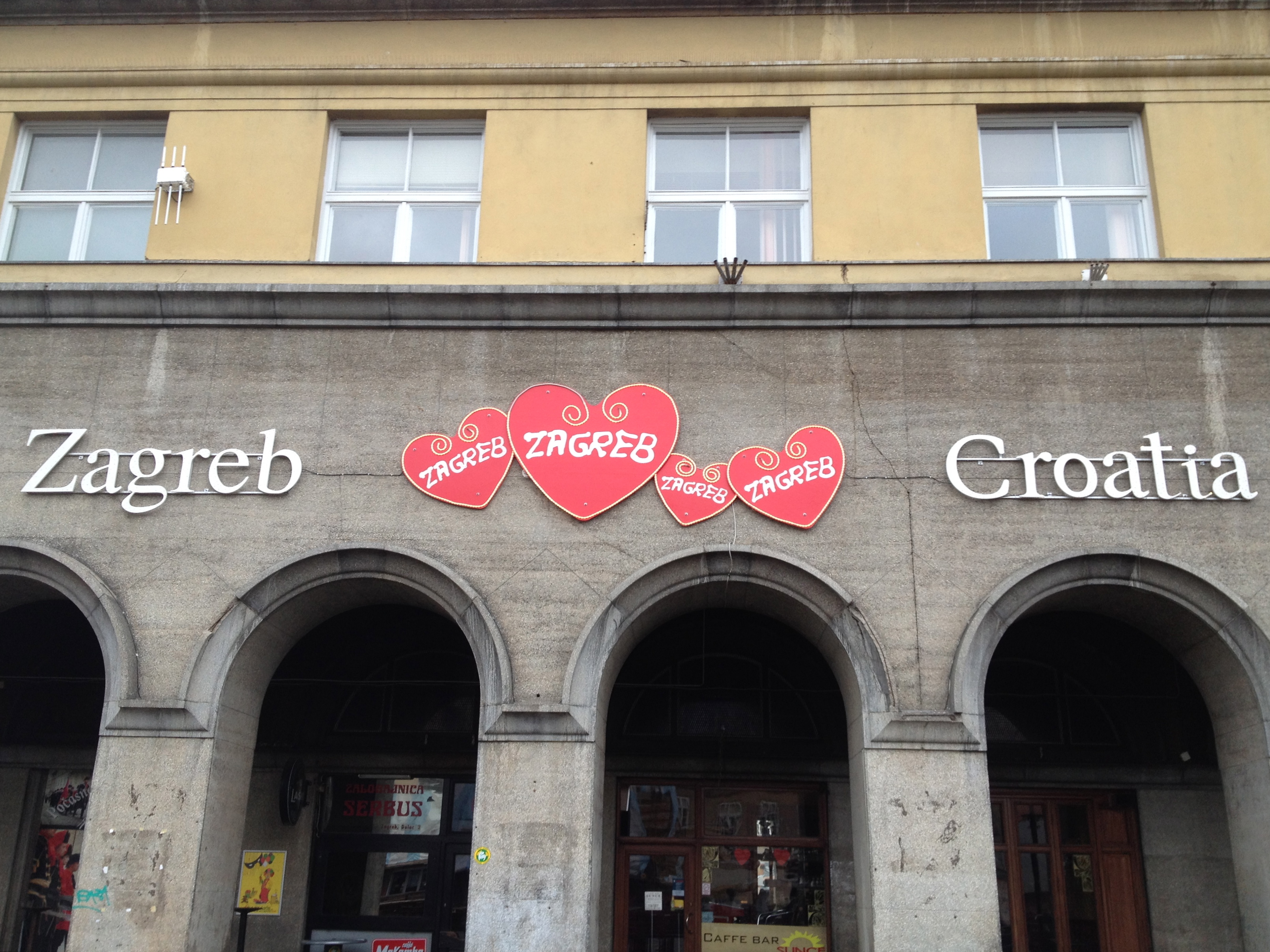
I had been to Zagreb twice before: first in August 2006 with my family and then again (just for an evening) in June 2011 while I was working with World at Play in the nearby city of Karlovac. Zagreb is quite different from the coastal cities – it’s surrounded by small mountains and lacks the beautiful aquatic vistas that make Dalmatia such a treasure. It’s also a grittier city – although it doesn’t bear many scars of the war (unlike the pockmarked streets of old town Dubrovnik and the many abandoned homes you’ll pass while driving through countryside), it bears the signs of a politically restless populace. When I first saw Zagreb in 2006, I was aghast at the amount of graffiti. It was hard to find a building or tram car that didn’t have something scribbled on it – even the beautiful national theater. I had much the same impression in 2011. It’s also pretty small as far as capital cities go – it has a population of 790,000, making it about 2/3 the size of my own hometown in Virginia. The city center is a fairly confined (though very charming!) geographic area, so there just isn’t a ton of city to see.
It’s fair to say that while I didn’t dislike Zagreb, it has never ranked among my favorite cities. I tend to favor big, beautiful cities with water (Paris, London, Rome, Rio, etc), and the graffiti really bothers me. But as is obvious to those who know me, I really love Croatia since it’s the ancestral homeland of my mom’s family. I am always excited to go back and try to make use of the ~200 words and phrases that I’ve accumulated over the last several years, and this was the first time I would be in Croatia since my time at the ICTY and learning so much more about the war through that work and subsequent research that I completed last year. Plus, Croatia’s in the EU now! (There’s really mixed public opinion about that.)
I really enjoyed the 24 hours I had in Zagreb last week. I landed at the little airport around lunchtime, successfully withdrew kunas from an ATM (sidenote, traveling in Europe is so much easier with a European bank account!), and made my way outside to see about taking a bus into town. It wouldn’t have been super expensive to just take a taxi to my hotel, but after I successfully managed to go by myself by a regular city bus from the airport in Bucharest (when I spoke zero words of Romanian), I figured this would be a reasonably low-stress undertaking. Thankfully, I was right! The bus came when and where it was supposed to, and while we were waiting for it to leave, I fell into conversation with a man who had originally asked me (in Croatian) what time the bus was leaving.
This man, probably in his mid-sixties, turned out to be a philosophy professor from Rijeka (a city on the northern end of the coast) who spoke not only English but also French, so when I revealed that I was visiting from Paris, we started chatting in French. I explained why it is that I look Croatian but don’t speak much of the language, and we ended up discussing a host of different issues during the 30-minute trip into the center. At some point I revealed that I had spent a summer working at the ICTY. (It is important to note that I don’t just blurt that out to people from the region; I don’t remember how it came up, but I only mentioned this after feeling it would be neutrally or positively received.) I of course would have loved nothing more than to talk Balkan politics with a bunch of people, and I was very glad that this professor was very willing to discuss some of these issues with me; as soon as I said I’d worked at the Tribunal, he asked for my opinion on the acquittal of Ante Gotovina, a Croatian general whose appeal process was going on during my first week in The Hague and who was ultimately acquitted several months later, to great consternation and anger on the part of Serbia. (I actually wrote a paper last year on the impact of various recent acquittals, starting with that one, on the peace process in the region.) I’m not an expert on the Gotovina case (I’m much more familiar with what happened in Bosnia), but I offered my perspective and got a positive response. The professor went on to say that he had been in Zadar during the war and that he had had the surreal experience of seeing former students among those firing on the city. It’s hard to imagine such a thing.
I parted ways with the professor once we arrived in Zagreb, and after a quick taxi ride, I arrived at the Hotel Dubrovnik just around the corner from the main square. I was already thinking my trip was off to a good start, and I was even more pleased when I arrived at the desk, greeted the two people with the usual “dobar dan” (“good day”), and prompted a flurry of responses in Croatian because, as they explained, “oh! you said that so perfectly we thought you were Croatian.” This is another reason I enjoy being in Croatia: I really do fit in perfectly in terms of physical appearance. I have, on numerous occasions, watched people (such as security agents at the airport) go from speaking English to someone else to switching back to Croatian to address me because they just assumed that I was one of their own. I can pass for a native of most of the countries I’ve visited, but I think Croatia comes out on top for the number of instances of someone thinking I was a from that country. (Curiously, in Paris I am frequently assumed to be Brazilian – not that I object to that!

Jelačić Square
After taking a few minutes to check email, get myself oriented, etc, I left my hotel room in search of lunch and a few museums. While on my World at Play trip, I grew to love something called burek, the best of Balkan comfort food and originally from Bosnia. Burek is layers of greasy pastry stuffed with cheese (not sure what kind – something a bit like feta?), spinach, and potatoes. It is very heavy but is SO delicious! I crossed Jelačić Square and walked up the stairs to the Dolac market, a huge outdoor market filled with colorful produce stands. Just around the corner I found a bakery chain I’d read about, Dinara, and successfully procured some burek with cheese (sir). I sat down on a bench in front of the cathedral and savored it while watching passersby.

Dalnac market circa 2006
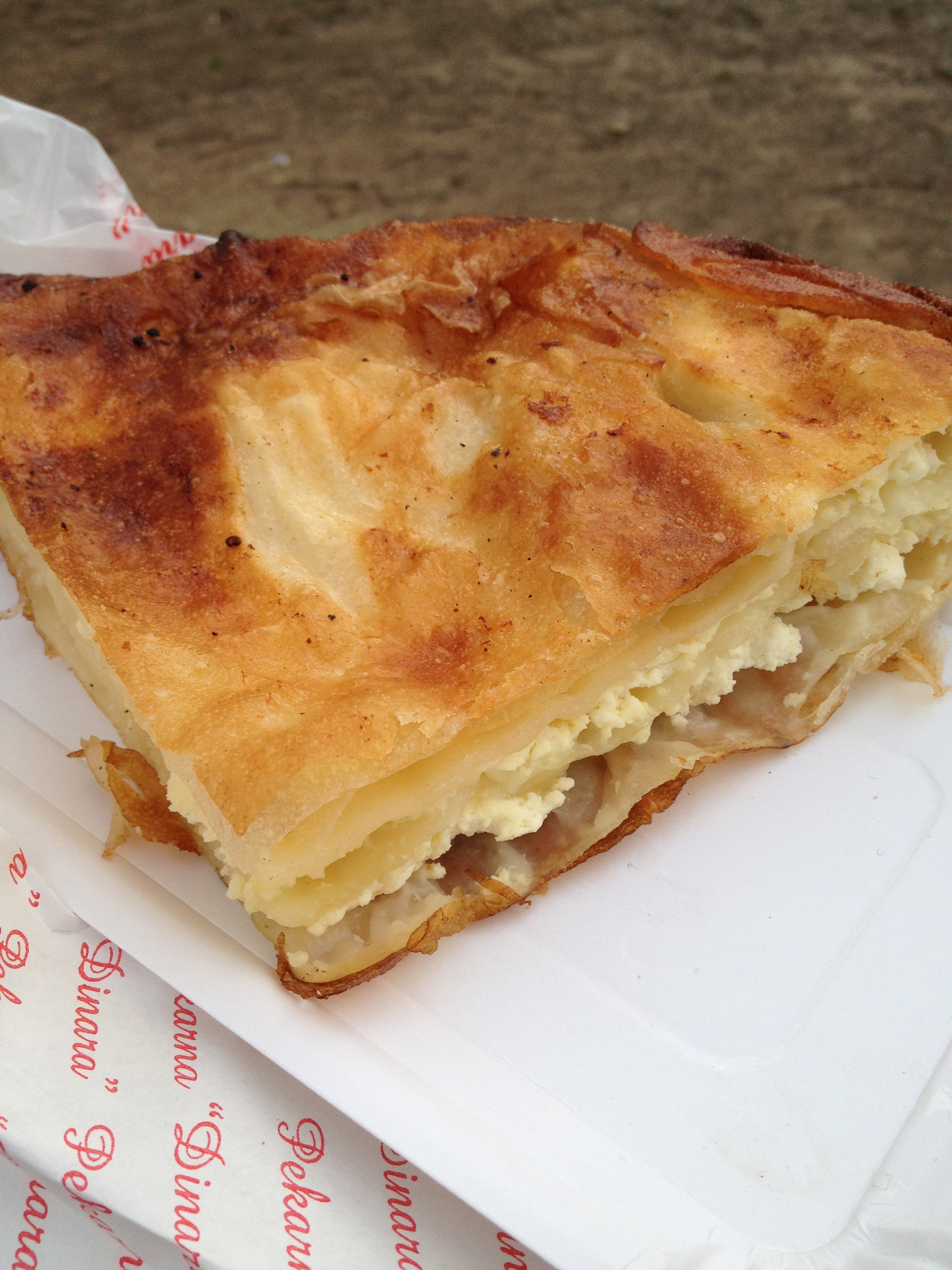
mmm, burek.
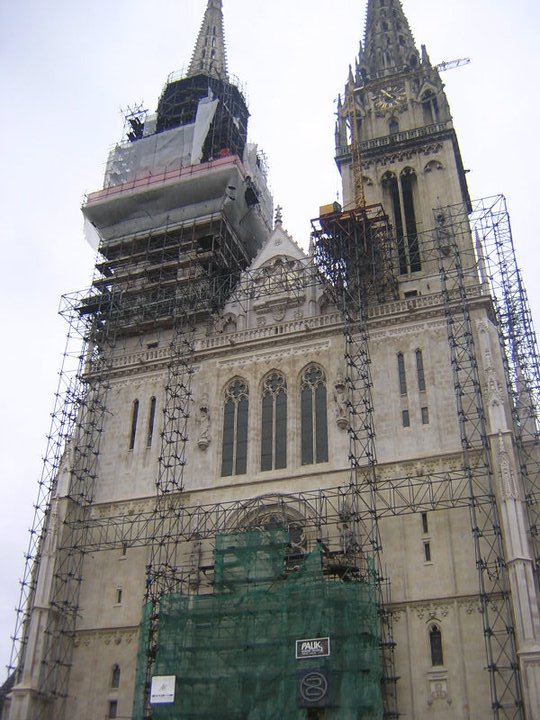
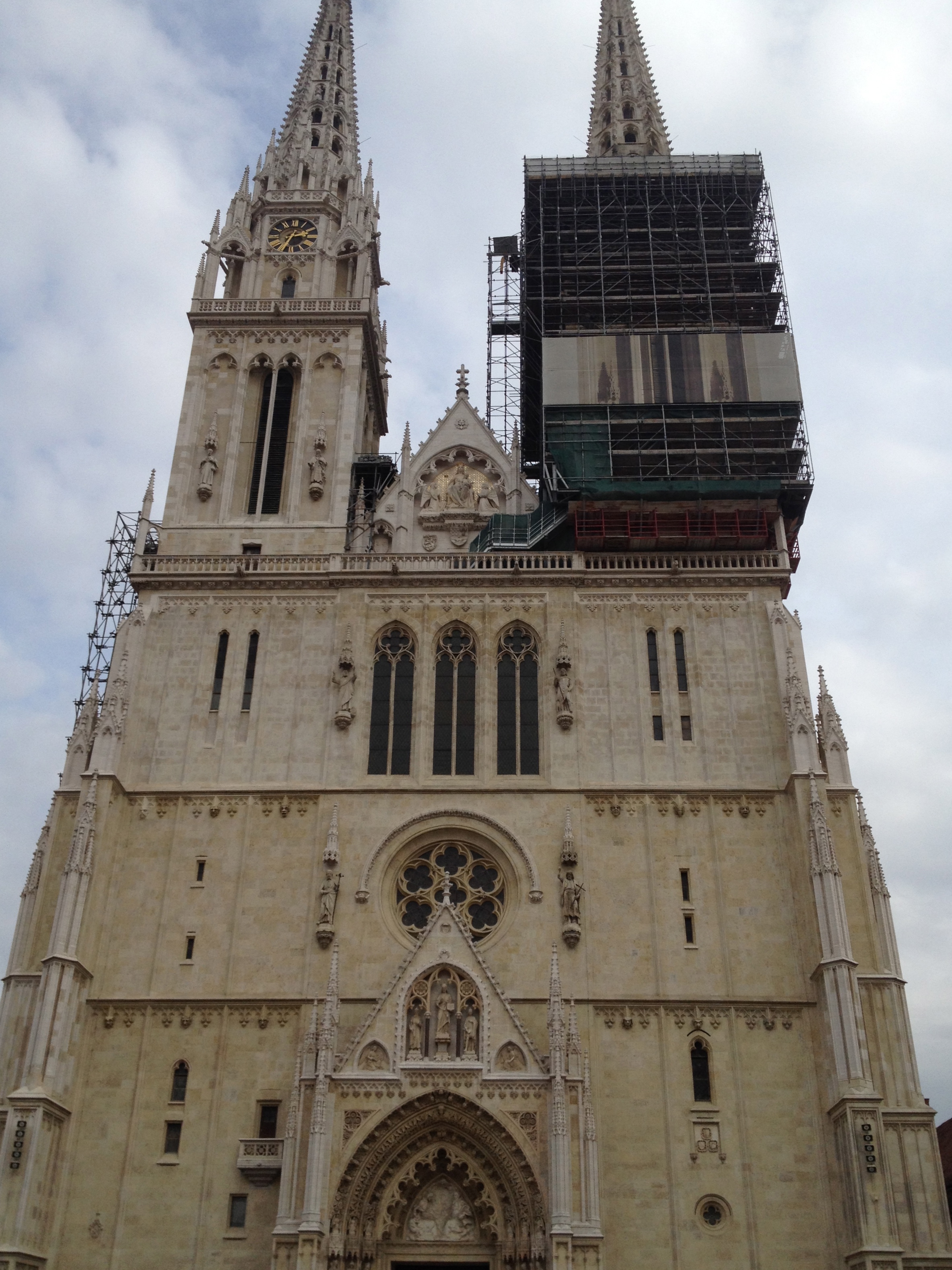
About the cathedral: I have never seen it without scaffolding somewhere. I really hoped that the restoration would be done by now! Here’s what it looked like when I first saw it in 2006:
And here it is in 2011:
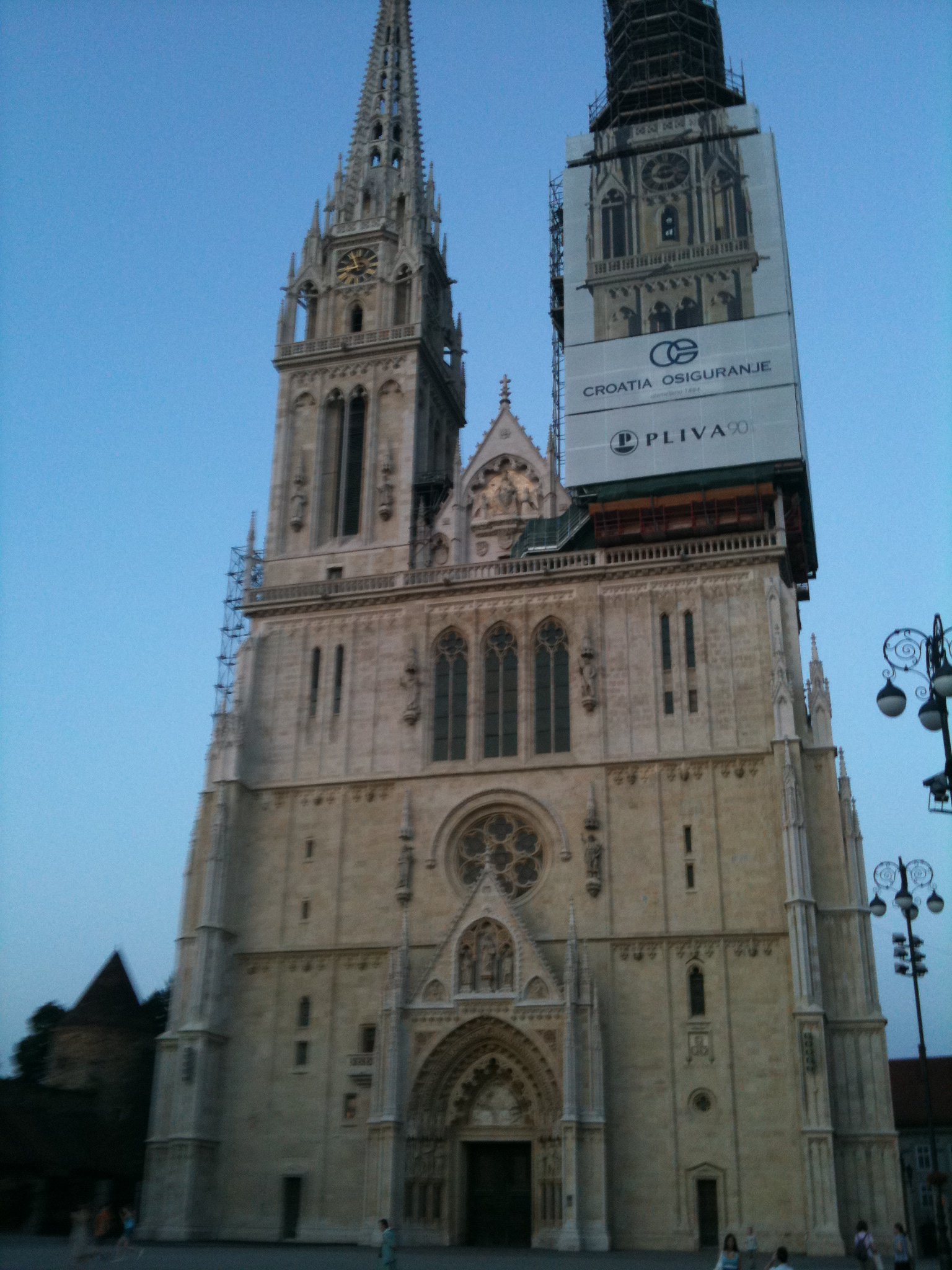
I’m laughing now that I see that one, because not much has changed in the last three years; here’s the one from last week:
Anyway, after enjoying my first burek in nearly three years, I wandered northeast in search of a very unique museum that had been featured in a New York Times article: the Museum of Broken Relationships. People from all over the world (though with a curiously high concentration of entries from Paris and Denver) submit an object that they associate with a past relationship and then write an explanation – sometimes just a sentence but sometimes multiple paragraphs, explaining the significance of the object within the context of the relationship. It was a really fascinating collection of random curios and even more interesting insight into the nature of relationships and love.

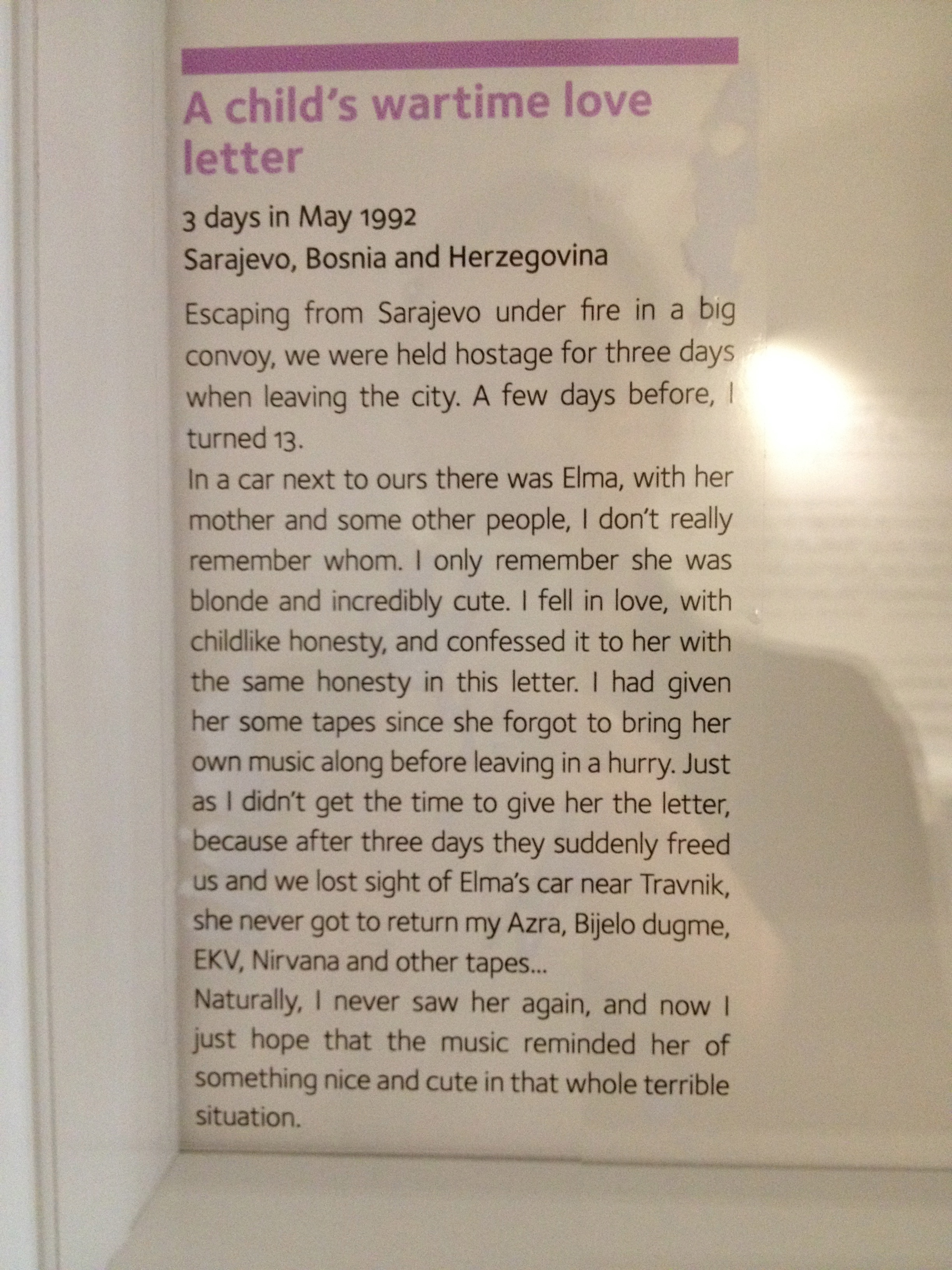
one of my favorite submissions
Next, I crossed the street to go through the Croatian Museum of Naive Art. Disclaimer: I still have no idea what Naive Art is. I had never heard of it before and thought maybe I’d figure it out while going through the museum, but ultimately I couldn’t find any unifying trend among the pieces I saw. I did see a few pieces I really enjoyed but otherwise didn’t find that the museum merited more than the 15 minutes I spent there.
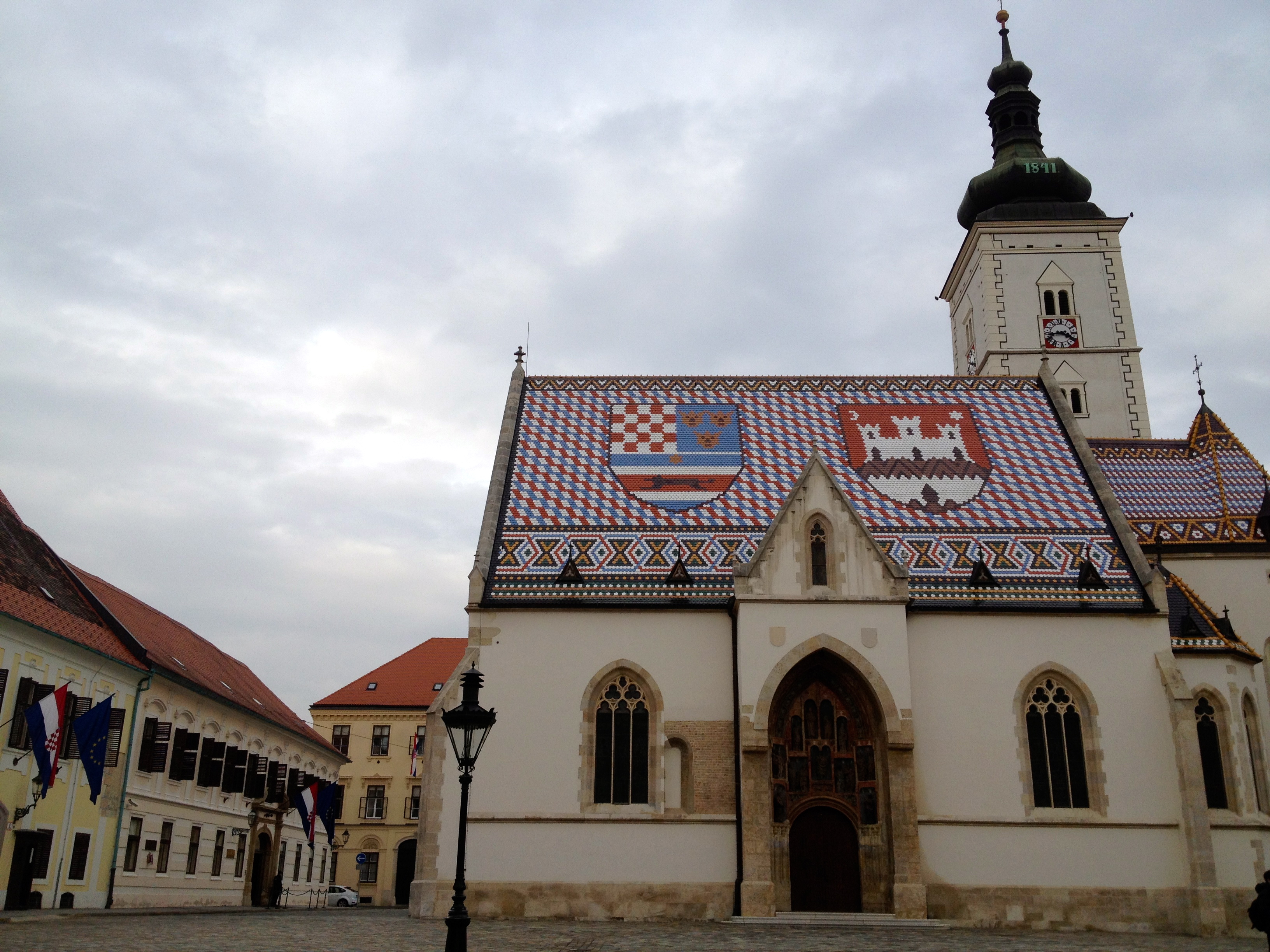
Both of these museums are just down the street from another famous church, St. Mark’s. I am not sure if I went inside this church back in 2006, but really the outside is the part that stands out:
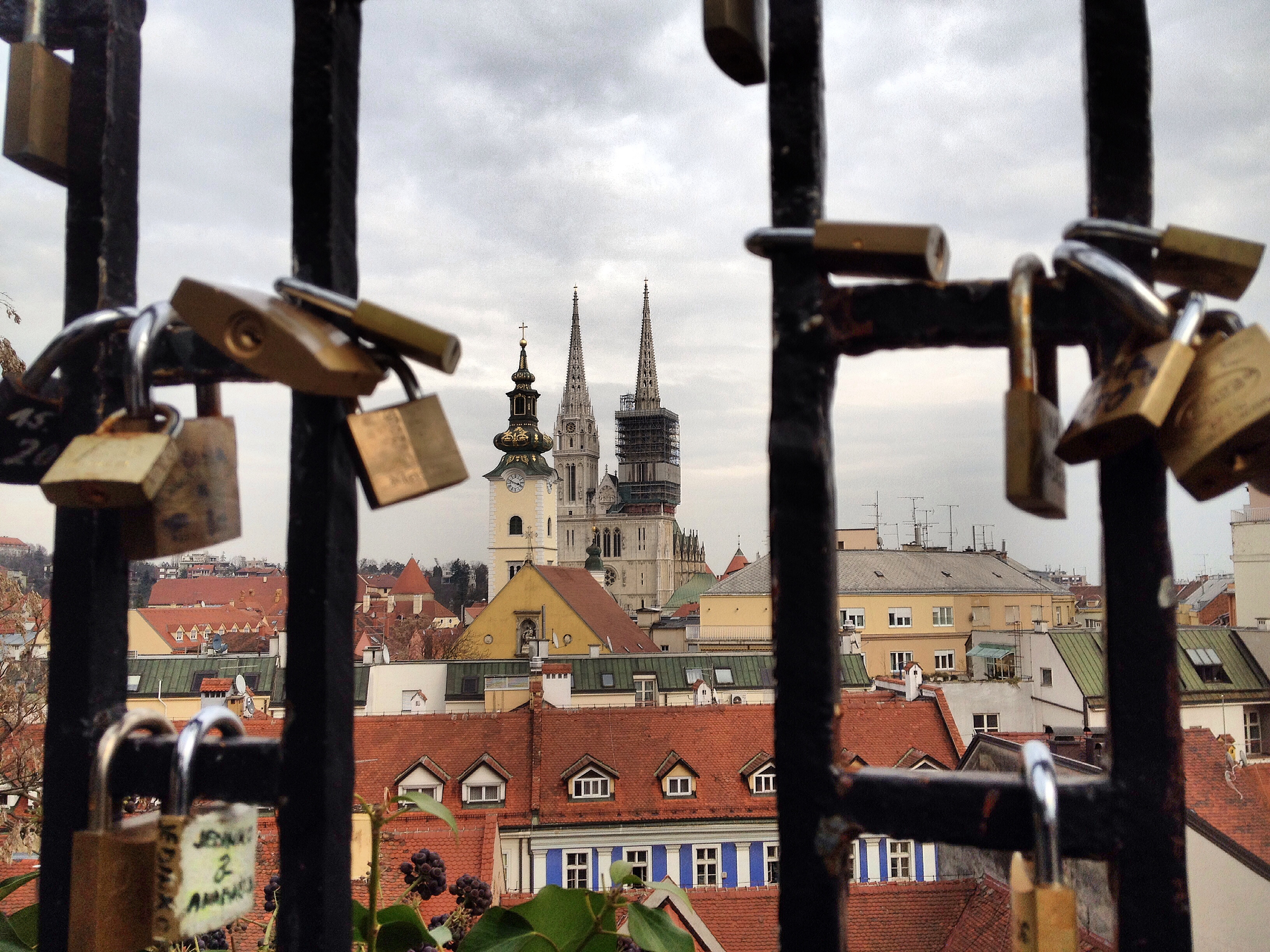
I enjoyed wandering around this part of the city. It’s up on a hill, and I remember that it was lovely during the summer evening we spent there in 2011. There are great views of the city, lots of cute restaurants and stores, and a lot of people strolling casually around. There are also elements of Paris (will I just look for Paris everywhere now?) – part of the area is called Strossmartre (like Montmartre), and Zagreb has a decent number of couples who have adopted the put-on-a-lock-and-throw-away-the-key approach to monogamy made famous by the Pont des Arts in Paris:
On my way back to the hotel, I walked through a tented market in Jelačić Square. I wanted to take pictures but did not want to look too touristy, and it was pretty crowded. It was very similar to Eastern Market in DC – vendors from around the area were selling meats, cheeses, and liquors. I did a few laps before going over to a guy selling medica (MAY-deet-sa), a honey-flavored type of rakija (RA-kee-ya, or brandy). Rakija comes in all sorts of flavors (I’m a big fan of pear and apricot), but honey is my favorite. I used my VERY broken Croatian to talk to the vendor, who spoke about as much English, but I managed to explain that I’m half Croatian from my mother’s side, really like rakija and especially medica, and had never tried a red one that he was selling called višnjevac. As would probably not happen in the United States, this guy immediately proceeded to pour me a shot of each one so that I could sample both, and then when I indicated that I wanted to buy the big bottle of medica, he threw in a smaller bottle of višnjevac as a gift. I’ve never been more proud of such meager linguistic abilities!
In the evening, I met up with Iva’s friend Tomislav for drinks and an excellent walking tour. We went to a bar called Time that was exactly the sort of place I would have gone after work in DC and sipped višnjevac (which turns out to be cherry flavored and is pronounced VEEsh-n-yay-vats) while listening to fun mixes of techno and pop (my favorite was a blend of Fleetwood Mac’s “Everywhere” with something considerably more electronic in nature). Tomislav had been to San Francisco and Las Vegas and told me that he really missed the burgers; in Croatia they are too small! We also compared the systems of legal education in our respective countries: in Croatia a law degree is equivalent to a bachelor’s plus a master’s, and there is a mandatory apprenticeship for several years before you take the bar exam (which is, I think, harder to pass that the ones in the US).
After leaving the bar, we walked in a big loop around the city center, past the University of Zagreb’s law school building and then back up the hill into the Strossmartre area, through some side streets and alleys, and finally back down to the main square. Tomislav provided running commentary throughout, and I was very sad that he had to leave to do more work!
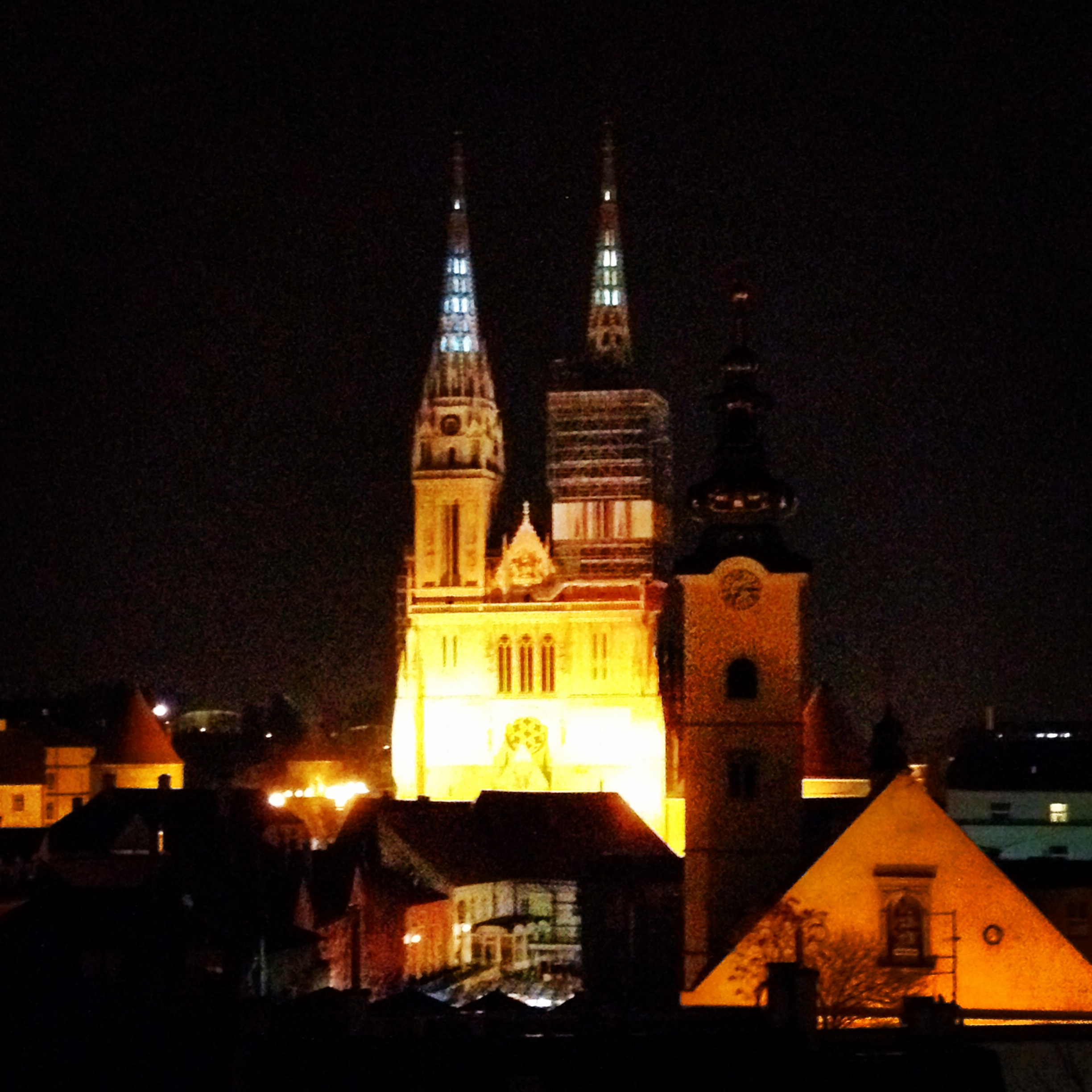
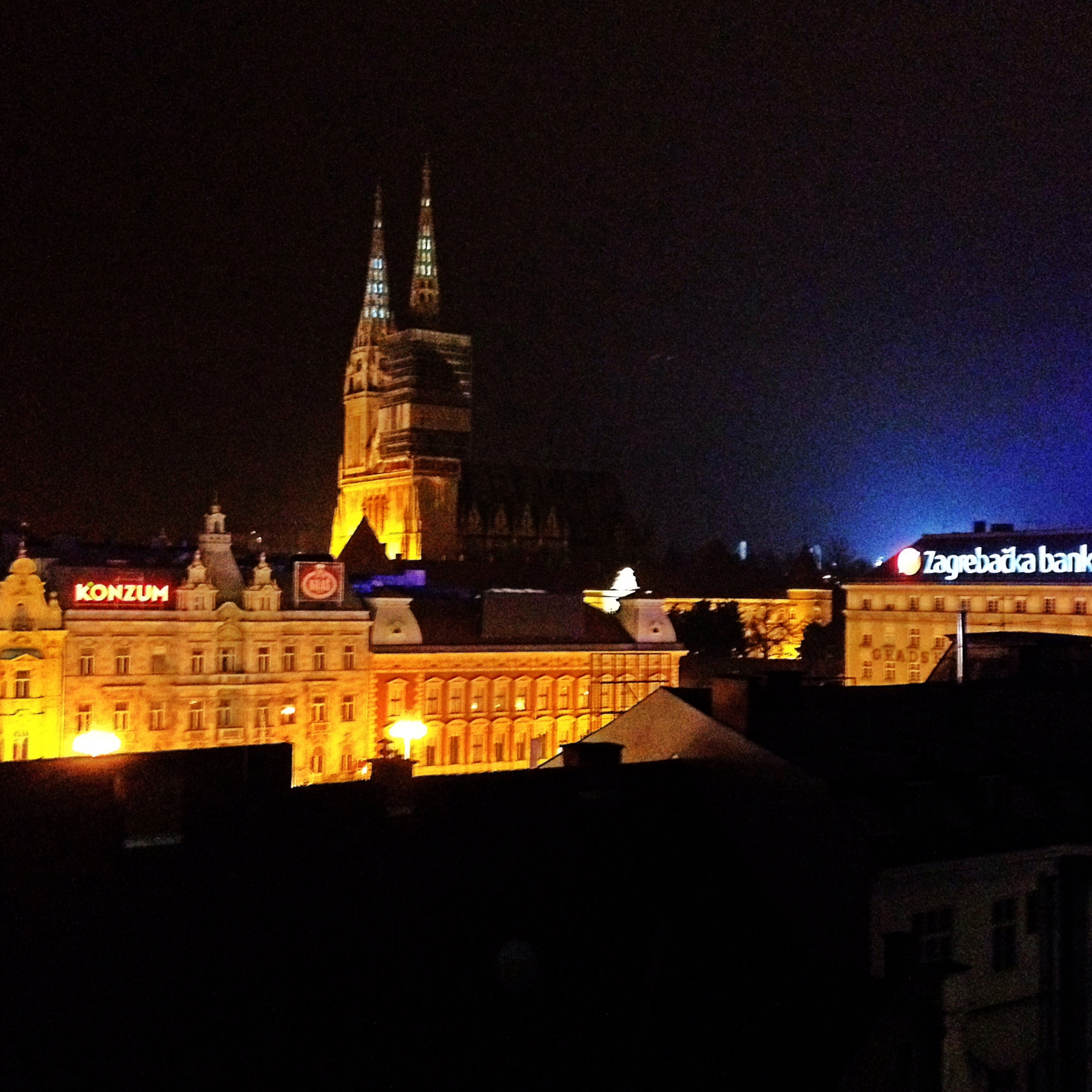
Because I am still not great about traveling by myself (that is, being in a foreign place alone, as opposed to getting there alone), I wimped out and couldn’t bring myself to go to a restaurant alone. I still haven’t done that even in Paris where it would be pretty normal. Instead, I found a place that made good salads for takeout, bought some Karlovačko beer and other snacks from the Konzum grocery store, and headed back to my hotel room for the rest of the night, which I spent being amused at trying to decipher Croatian coverage of Olympic curling. (Most non-Croatian language channels were in German, so there weren’t a whole lot of options either way.) Before I went to bed, I snapped this great picture of the illuminated cathedral behind the square:
 Travel With Wergs