Croatia and Croatian: A Primer

The Country

I no longer have a sense of what, if anything, might come to mind for the average person when thinking about Croatia. I imagine that people with some knowledge of foreign affairs are aware that Croatia is a relatively new country and that its first few years were, to put it mildly, not the easiest. You might also know that Croatia became the newest member of the European Union last July.

Here’s my very abbreviated history of Croatia:

Croatia became an independent country in 1991 after it became the second Yugoslav republic to secede from Yugoslavia. (What was the first? Slovenia.) Although Tito placed a lot of emphasis on promoting “unity and brotherhood” during his time at the helm of Yugoslavia, any such cultural unification began to break down swiftly after his death in 1980. Longstanding ethnic rivalries and spirited nationalism that Tito had kept in check began to gain momentum again, and by 1990 Yugoslavia was essentially a powder keg moments away from explosion. The horrible fighting that took place in the former Yugoslavia during the first half of the 1990’s was, at its core, about each of the three big ethnic groups (Croats, Bosniaks, and Serbs) trying to fortify its claim on particular territories. I highly recommend watching “The Death of Yugoslavia,” which is a BBC documentary/mini-series that is available on YouTube, for a very in-depth look at this recent history.

As someone who’s driven across five former Yugoslav republics, I can tell you that Croatia is both distinct and indistinct from its neighbors. Where you are will heavily influence your impression of the country, and even though Croatia is a relatively small country, you can have a different experience in each of its regions. Zagreb, for instance, is visible proof of the former Austro-Hungarian dominance in the region, while Split and its magnificent Diocletian’s Palace is much more Roman in character, both physically and culturally. Dubrovnik, so close to the Bosnian border, reminds me more of Mostar, a Bosnian town that, like Dubrovnik, was hit very hard during the war.

On the whole, what I’ve seen in Croatia makes me feel like it’s more a part of Western Europe than its neighbors to the east. This is partially because the Austro-Hungarian influence was concentrated more heavily in Croatia and partially because I think there has been some effort among the Croatians (not just since independence) to reinforce those western ties. Many people in Croatia speak German, Italian, and/or French (and I really mean and/or – I’ve met many people who speak at least two foreign languages, in addition to English), and Croatia’s gorgeous coast has long been a source of tourism that eclipses what Bosnia and Serbia can attract as landlocked countries. Perhaps the main reason I see Croatia as more “Western” is simply because I haven’t spent much time in the big cities of Bosnia or Serbia, so it’s difficult for me to compare. The moderately-sized Serbian city of Novi Sad also looked and felt more Austro-Hungarian despite being much further east.

Still, to the extent that one equates “Western” with “modern,” Croatia has retained a very “old country” feel. If you’re not in a major city, you quickly get the feeling that you’re in the middle of nowhere. As someone who grew up on the east coast of the US in a capital city, I’ve always marveled at the rural nature of Croatia. Whether you’re driving or on a train, you’ll pass through lots of villages. That’s not a word I would ever apply to anything in the US (partially because “village” also seems to imply a sense of antiquity), but it’s definitely the right word for the tiny collections of homes scattered throughout the Croatian countryside. You can go for miles and miles without seeing any signs of civilization other than the occasional cluster of five or ten small houses together. And when you consider that there are over 1000 islands along Croatia’s coast, you really start to understand how many micro communities there are in this small country. And in that way, Croatia is indistinct from its eastern neighbors; Bosnia and Serbia are also largely rural and dotted with tiny villages. Other than the change in alphabet on the road signs, it’s impossible to tell where you are once you’re outside a big city.

Now, I’m someone who really loves big cities, and I’d probably go crazy if I lived in anything small enough to qualify as a “town” let alone a “village,” but I adore all of those “old country” features of Croatia. I love that you can drive along a two-lane road and find people roasting lamb in their yards. I love that there are still people playing the music and instruments that came over to the US with my grant-grandparents’ generation, and I love that the scene in Zagreb’s central market is almost identical to what Rebecca Black observed on her trip in 1937 and described in her 1100-page memoir Black Lamb and Grey Falcon (which I’ll be working through in the next two weeks). Croatia seems to be one of those truly timeless places.

I’m looking forward to many interactions on this trip that will help me to further distill my understanding of the country and people of Croatia. The nation’s history is so long, rich, and varied that describing it in any meaningful way requires both extensive knowledge and excellent writing skills, both of which I’m still pursuing. Perhaps I shall seek to adopt Ernest Hemingway’s goal of writing “one true sentence” each day during the trip in the hopes of being able to string together one true paragraph by the time I return.

The Language

I’m going to be including accurate spellings in my forthcoming blog entries (and perhaps a few vocabulary lessons!), so it will be helpful for anyone who plans on following along to have a basic understanding of the pronunciation in Croatian. Many words in Croatian look unpronounceable to native English speakers, but it’s not that difficult once you know the rules:

  • č and ć both sound like “ch”
  • c without an accent sounds like “ts”
  • š sounds like “sh”
  • ž sounds like the s in “measure”
  • đ sounds like the j in “judge”
  • h is pronounced, hence Hrvatska (the word for Croatia) is Her-VAT-ska
  • j sounds like a y (which explains why it’s actually spelled Jugoslavija), unless it’s on the end of a word, in which case it’s essentially silent.

The emphasis usually falls on the first syllable, which is the hardest thing for me to put into practice (mostly because this is not an absolute rule, and I have no idea when the emphasis goes elsewhere). We pronounce Dubrovnik wrong; we all say Du-BROV-nik when it’s actually DU-brov-nik. Same with Sarajevo: it’s actually SA-ra-yay-vo.

Practice:

  • Goran Višnjić (the Croatian actor from ER)is GO-ran VISH-nyitch
  • Ćevapčići (very delicious small sausages) is CHAY-vap-chee-chee
  • Hajde (“come on”) is HIGH-day or HIGH-da (I hear both)
  • Doviđenja (“good-bye”) is do-vi-JEN-ya
  • Ožujsko (a brand of beer) is O-zhoo-sko

Croatian is technically a separate language, but it is essentially the same language as that spoken in Bosnia and Serbia. From what I can tell, it’s like American vs. British English. We generally understand each other, but occasionally there’s a different word for something. At the Tribunal, we called the language BCS (Bosnian/Croatian/Serbian). Some might take offense to that, but it really does simply things and makes any language discussion more politically neutral. It’s my understanding that after the disintegration of Yugoslavia, each new country made an effort to differentiate its language, so there’s some nationalism attached to the name of the language. The major difference is that Croatian uses the Latin alphabet while Serbian uses the Cyrillic. When Yugoslavia still existed, children learned both alphabets in school, but now most Croatians don’t learn Cyrillic (hence the utility of my knowledge of that alphabet while working with Croatians at the ICTY).

And unfortunately, that’s the end of the “easy” part of the Croatian language. As I went through my big Croatian grammar book last night to make copies for the trip, I realized that the odds of my being able to put together any grammatically correct, semi-complex sentence without a teacher are slim to none. It appears that Croatian is like Latin and that, among other things, you have to decline nouns. I don’t really even know what that means because it’s not something I’ve ever had to deal with in my study of Spanish, French, Italian, or Portuguese! And unlike the Romance languages, Croatian verbs seem to fall into lots of categories, not the usual three root families (like -ar, -er, and -ir in Spanish). So… we’ll just have to see how this goes. I might just become a walking recitation of my Lonely Planet phrasebook!
Coming up: Croatia, round 4!

Hello readers,

After spending my last year of graduate school and the best year of my life in Paris, and after 12 weeks of almost non-stop studying for the bar exam, it’s time for the longest-anticipated trip of my life as a traveler: I leave in a few days for Croatia, the ancestral homeland of my mother’s family.

As you’ll know if you scroll back in time on this blog, I’ve been to Croatia three times: in 2006 with my family (including my grandmother, who grew up speaking Croatian in the US), in 2011 as a volunteer with World at Play (described in posts on this blog), and earlier this year during my spring break while studying in Paris. Why then do I want to go back?

Being Croatian has influenced me in numerous ways. If you actually know me, it’s very likely that you know that I’m Croatian and that for a long time I’ve wanted nothing more than to go to Croatia and learn the language. I’m only 50% Croatian by blood, but because my mom grew up in a very Croatian community in northwest Indiana, her childhood was heavily influenced by that heritage. My own connection is much more tenuous. I grew up in Virginia, unaware of any other Croatians in the area, and the only way in which I can truly make a legitimate claim of being Croatian is by pointing out that I look Croatian. I have an olive complexion, dark hair, and dark eyes, and for as long as I can remember I’ve had random people ask me my ethnicity because I “don’t quite look American.” It’s true, and people have taken me for a native each time that I’ve been in Croatia.

My mom’s pride in her heritage transferred to me, but it has always bothered me that the only truly Croatian part of me is my genes. In particular, I’ve always wished that I spoke at least some of the language. My grandparents and their peers in the 1940’s and 1950’s saw no value-added in teaching their children Croatian, a decision heavily influenced by a desire for full integration into their new country. As a result, my mom and the others of her generation grew up speaking only English, with a smattering of Croatian words and phrases thrown in for good measure. The central difference between me and my mom is that she grew up in a Croatian community that kept much of the culture alive; she attended a Croatian Catholic church (where I was baptized and where it is still possible to attend a mass in Croatian) and went to events at Croatian Center. The food, music, and dancing of her childhood was all Croatian.

In an effort to make up for my linguistic and cultural deficiencies, I’ve attempted over the last several years to at least become conversant in the history, geography, and politics of Croatia and its neighbors. Volunteering with World at Play in 2011 brought me back to Croatia and also introduced me to Bosnia-Herzegovina, Kosovo, and Serbia, which helped to give me a more complete picture of the former Yugoslavia as a whole and expanded my vocabulary to about 200 words (many of which are useful only in that context, like “Make a big circle! Run! Faster!”). I also learned the Cyrillic alphabet, which is not used in Croatian but is used in Serbian (more linguistic notes to come). I spent the following summer working at the International Criminal Tribunal for the former Yugoslavia, where I focused on a case concerning Bosnia but gained a much more in-depth understanding of the disintegration of Yugoslavia in the early 1990’s and how that experience, and the much longer history of the region, continues to shape the culture and politics of today. While there, I met my friend Iva, who lives in Split and is now one of my closest friends. She was always happy to give me random vocabulary lessons and often invited me to join her and the rest of the interns from the region on their coffee breaks. They would speak BCS (Bosnian/Croatian/Serbian) to each other while I happily listened, occasionally picking out a familiar word or phrase. They also enjoyed looking through my Croatian phrasebook and laughed to no end about its inclusion of the phrase “lakše malo mačore,” which in the book translates to “easy tiger!” (on the page with bedroom vocabulary…) and which they said would be essentially unintelligible to someone in that context. Duly noted. Croatians and others from the region have been universally supportive of my desire to reconnect with my ancestral homeland, and that means a great deal.

I started thinking about going to Croatia to do an intensive language course sometime in college, before I’d even visited the country for the first time. Each time in the last decade that I’ve had a gap period, I’ve pondered the possibility of going to Croatia. When I started law school three years ago, I emailed my Croatian cousins to suggest a group trip to the homeland in August of 2014 once I’d taken the bar exam. One of my cousins took note and is coming with me!

I start work in London next month and so, once again, I lack the time and timing necessary for doing an intensive language course. However, I’ve acquired a number of Croatian textbooks over the last several years, and I plan to study a bit of grammar and vocabulary each day during the two weeks that we’ll be there. As of now, my vocabulary is entirely limited to words and phrases – I have no knowledge of grammar whatsoever. I’ll be pleased if I can end this trip able to conjugate some verbs and form complete sentences in at least one tense. It’s a big help that I already understand how to pronounce the language; I made that my goal during the trip in 2006. (This, coupled with my ability to read Cyrillic, came in handy a few times while working at the Tribunal. We occasionally encountered documents that were written in Cyrillic, and the Croatian interns couldn’t read them, so I would read them out loud. I had no idea what I was saying, but my pronunciation was good enough that the Croatians were able to figure out what the text said. Teamwork!)

My cousin Rachel is coming with me on this trip, and I’m ready to have a great time. I plan to write and post pictures daily. We’ll be visiting Split and Dubrovnik (both of which I saw in 2006) along with the islands of Brač, Hvar, and Vis. I’m thrilled because we’ve booked all of our accommodations through Airbnb, and in several of the places we’ll actually be staying with real Croatians in their home. All of them know that I am studying their language and have expressed a warm willingness to be of assistance. I’m also looking forward to seeing Iva in her hometown and to generally relaxing after a very stressful summer of studying!

Stay tuned for an introduction to Croatia and its tricky language! You’ll want a pronunciation guide for my upcoming posts.

Last Spring Break Ever, Part 1: Zagreb, Croatia

Hi readers! It’s been a very long time since my last post, but as some of you probably know, that is because I’ve been living/studying in Paris since August and have been maintaining a separate blog for that experience! I love Paris so much that I have not been very motivated to leave, but I finally left France (for the first time since August) last week to take advantage of my last spring break ever.

I flew to Zagreb last Thursday to reconnect with my Croatian friend Iva, whom I met while working in The Hague during the summer of 2012. We hadn’t seen each other in 19 months, so this reunion was well overdue! Iva lives in a different city, but we agreed to meet in Zagreb and then take a train from there to Budapest the day after I arrived.

IMG_3305

I had been to Zagreb twice before: first in August 2006 with my family and then again (just for an evening) in June 2011 while I was working with World at Play in the nearby city of Karlovac. Zagreb is quite different from the coastal cities – it’s surrounded by small mountains and lacks the beautiful aquatic vistas that make Dalmatia such a treasure. It’s also a grittier city – although it doesn’t bear many scars of the war (unlike the pockmarked streets of old town Dubrovnik and the many abandoned homes you’ll pass while driving through countryside), it bears the signs of a politically restless populace. When I first saw Zagreb in 2006, I was aghast at the amount of graffiti. It was hard to find a building or tram car that didn’t have something scribbled on it – even the beautiful national theater. I had much the same impression in 2011. It’s also pretty small as far as capital cities go – it has a population of 790,000, making it about 2/3 the size of my own hometown in Virginia. The city center is a fairly confined (though very charming!) geographic area, so there just isn’t a ton of city to see.

It’s fair to say that while I didn’t dislike Zagreb, it has never ranked among my favorite cities. I tend to favor big, beautiful cities with water (Paris, London, Rome, Rio, etc), and the graffiti really bothers me. But as is obvious to those who know me, I really love Croatia since it’s the ancestral homeland of my mom’s family. I am always excited to go back and try to make use of the ~200 words and phrases that I’ve accumulated over the last several years, and this was the first time I would be in Croatia since my time at the ICTY and learning so much more about the war through that work and subsequent research that I completed last year. Plus, Croatia’s in the EU now! (There’s really mixed public opinion about that.)

I really enjoyed the 24 hours I had in Zagreb last week. I landed at the little airport around lunchtime, successfully withdrew kunas from an ATM (sidenote, traveling in Europe is so much easier with a European bank account!), and made my way outside to see about taking a bus into town. It wouldn’t have been super expensive to just take a taxi to my hotel, but after I successfully managed to go by myself by a regular city bus from the airport in Bucharest (when I spoke zero words of Romanian), I figured this would be a reasonably low-stress undertaking. Thankfully, I was right! The bus came when and where it was supposed to, and while we were waiting for it to leave, I fell into conversation with a man who had originally asked me (in Croatian) what time the bus was leaving.

This man, probably in his mid-sixties, turned out to be a philosophy professor from Rijeka (a city on the northern end of the coast) who spoke not only English but also French, so when I revealed that I was visiting from Paris, we started chatting in French. I explained why it is that I look Croatian but don’t speak much of the language, and we ended up discussing a host of different issues during the 30-minute trip into the center.  At some point I revealed that I had spent a summer working at the ICTY. (It is important to note that I don’t just blurt that out to people from the region; I don’t remember how it came up, but I only mentioned this after feeling it would be neutrally or positively received.) I of course would have loved nothing more than to talk Balkan politics with a bunch of people, and I was very glad that this professor was very willing to discuss some of these issues with me; as soon as I said I’d worked at the Tribunal, he asked for my opinion on the acquittal of Ante Gotovina, a Croatian general whose appeal process was going on during my first week in The Hague and who was ultimately acquitted several months later, to great consternation and anger on the part of Serbia. (I actually wrote a paper last year on the impact of various recent acquittals, starting with that one, on the peace process in the region.) I’m not an expert on the Gotovina case (I’m much more familiar with what happened in Bosnia), but I offered my perspective and got a positive response. The professor went on to say that he had been in Zadar during the war and that he had had the surreal experience of seeing former students among those firing on the city. It’s hard to imagine such a thing.

I parted ways with the professor once we arrived in Zagreb, and after a quick taxi ride, I arrived at the Hotel Dubrovnik just around the corner from the main square. I was already thinking my trip was off to a good start, and I was even more pleased when I arrived at the desk, greeted the two people with the usual “dobar dan” (“good day”), and prompted a flurry of responses in Croatian because, as they explained, “oh! you said that so perfectly we thought you were Croatian.” This is another reason I enjoy being in Croatia: I really do fit in perfectly in terms of physical appearance. I have, on numerous occasions, watched people (such as security agents at the airport) go from speaking English to someone else to switching back to Croatian to address me because they just assumed that I was one of their own. I can pass for a native of most of the countries I’ve visited, but I think Croatia comes out on top for the number of instances of someone thinking I was a from that country. (Curiously, in Paris I am frequently assumed to be Brazilian – not that I object to that!


Jelačić Square

Jelačić Square

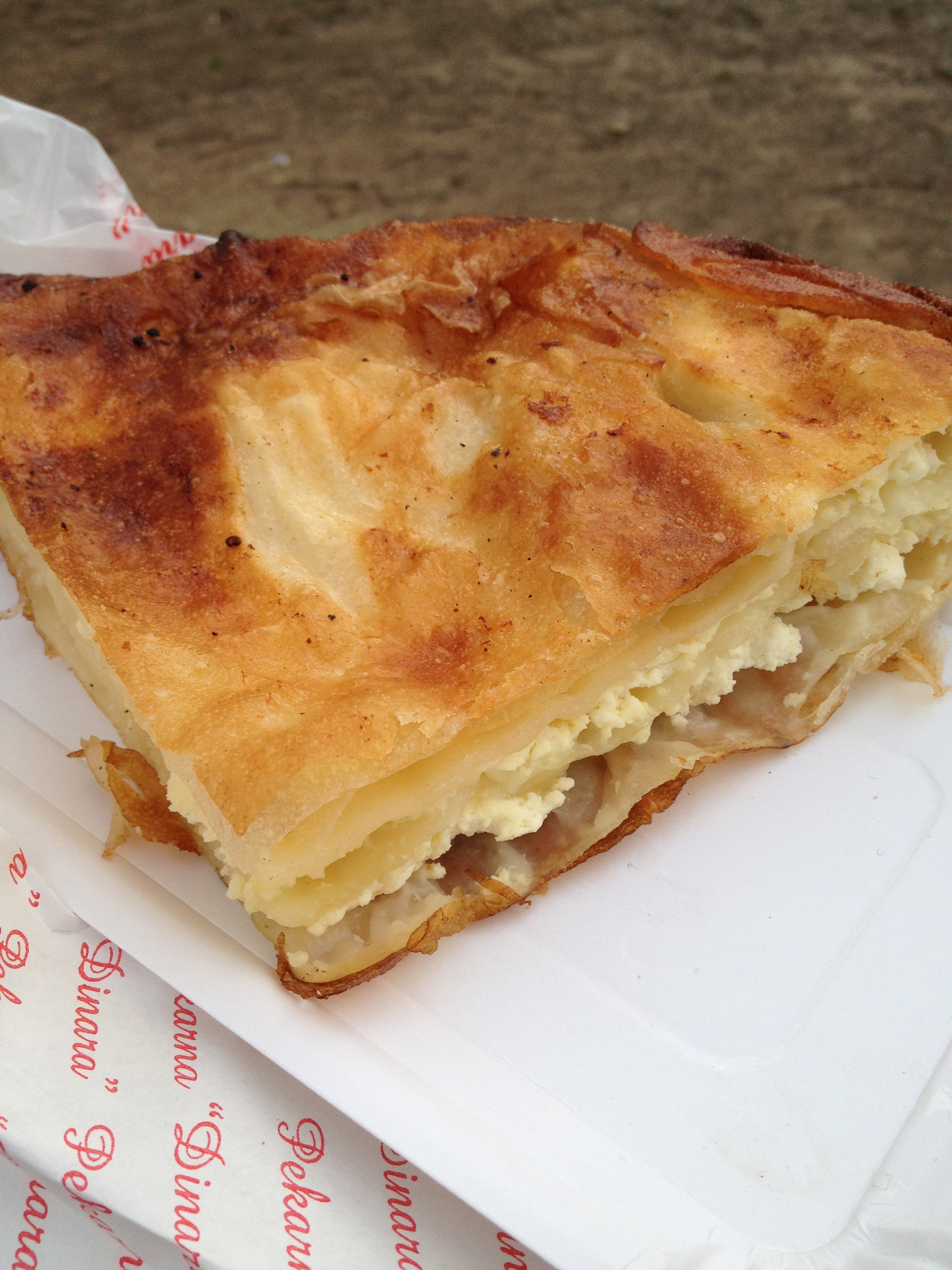
After taking a few minutes to check email, get myself oriented, etc, I left my hotel room in search of lunch and a few museums. While on my World at Play trip, I grew to love something called burek, the best of Balkan comfort food and originally from Bosnia. Burek is layers of greasy pastry stuffed with cheese (not sure what kind – something a bit like feta?), spinach, and potatoes. It is very heavy but is SO delicious! I crossed Jelačić Square and walked up the stairs to the Dolac market, a huge outdoor market filled with colorful produce stands. Just around the corner I found a bakery chain I’d read about, Dinara, and successfully procured some burek with cheese (sir). I sat down on a bench in front of the cathedral and savored it while watching passersby.

Dalnac market circa 2006

Dalnac market circa 2006

mmm, burek.

mmm, burek.


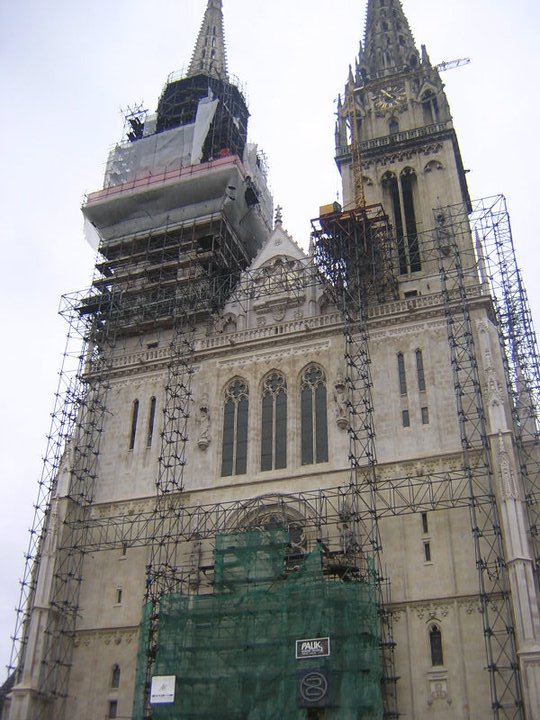
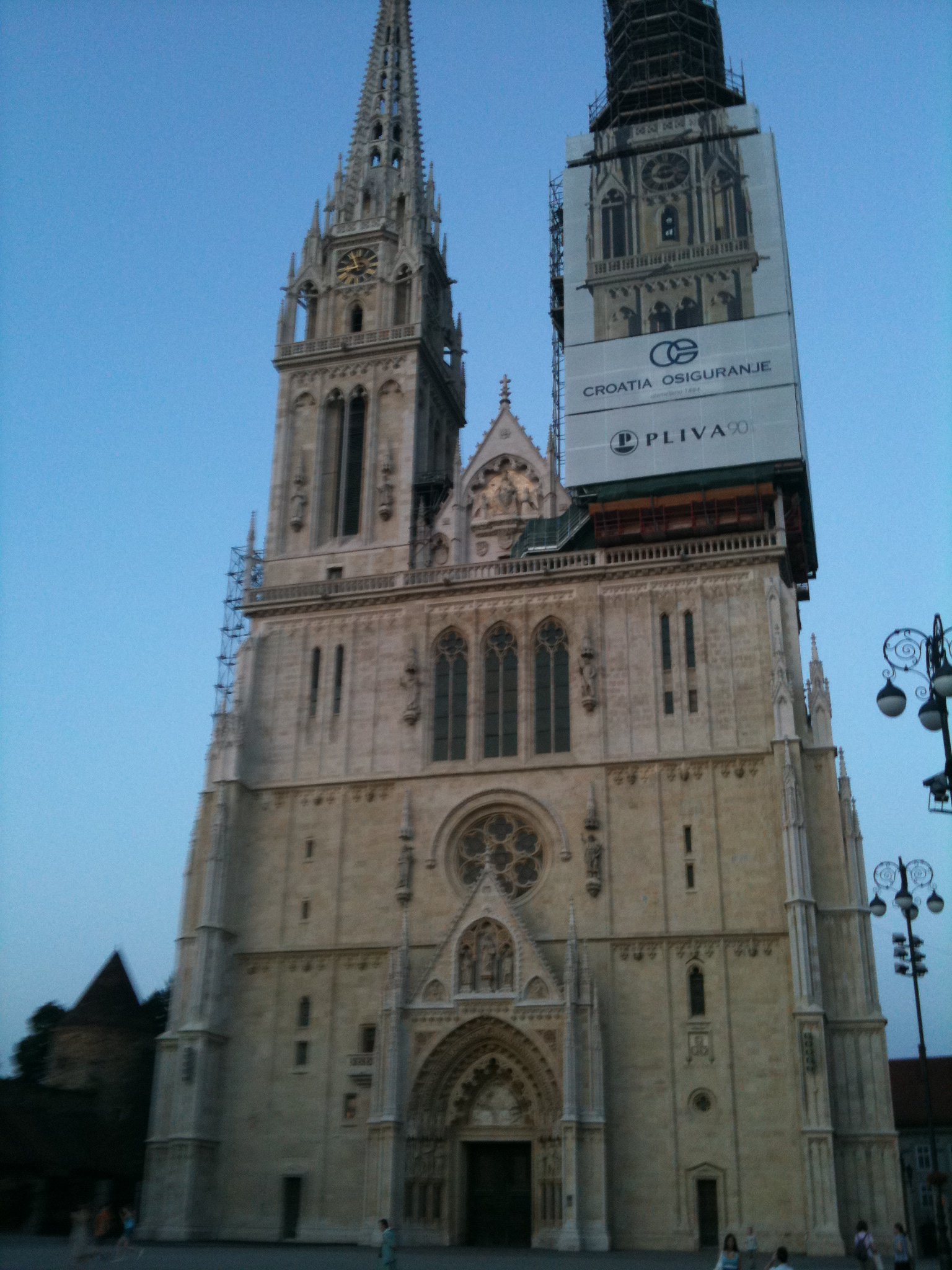
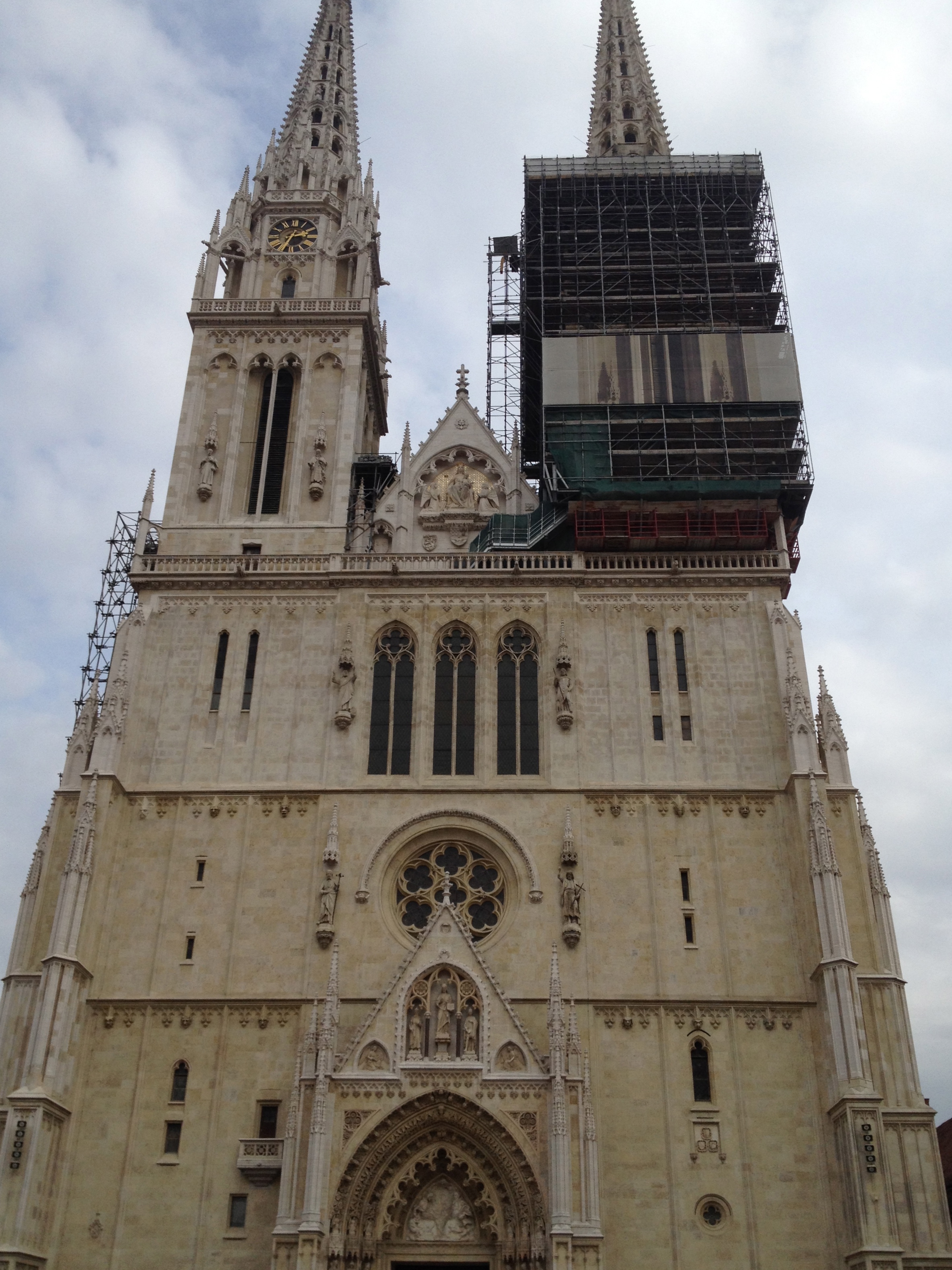
About the cathedral: I have never seen it without scaffolding somewhere. I really hoped that the restoration would be done by now! Here’s what it looked like when I first saw it in 2006:

168029_643384510197_6913346_n

And here it is in 2011:

279028_729265179647_1730604_o

I’m laughing now that I see that one, because not much has changed in the last three years; here’s the one from last week:

IMG_3274

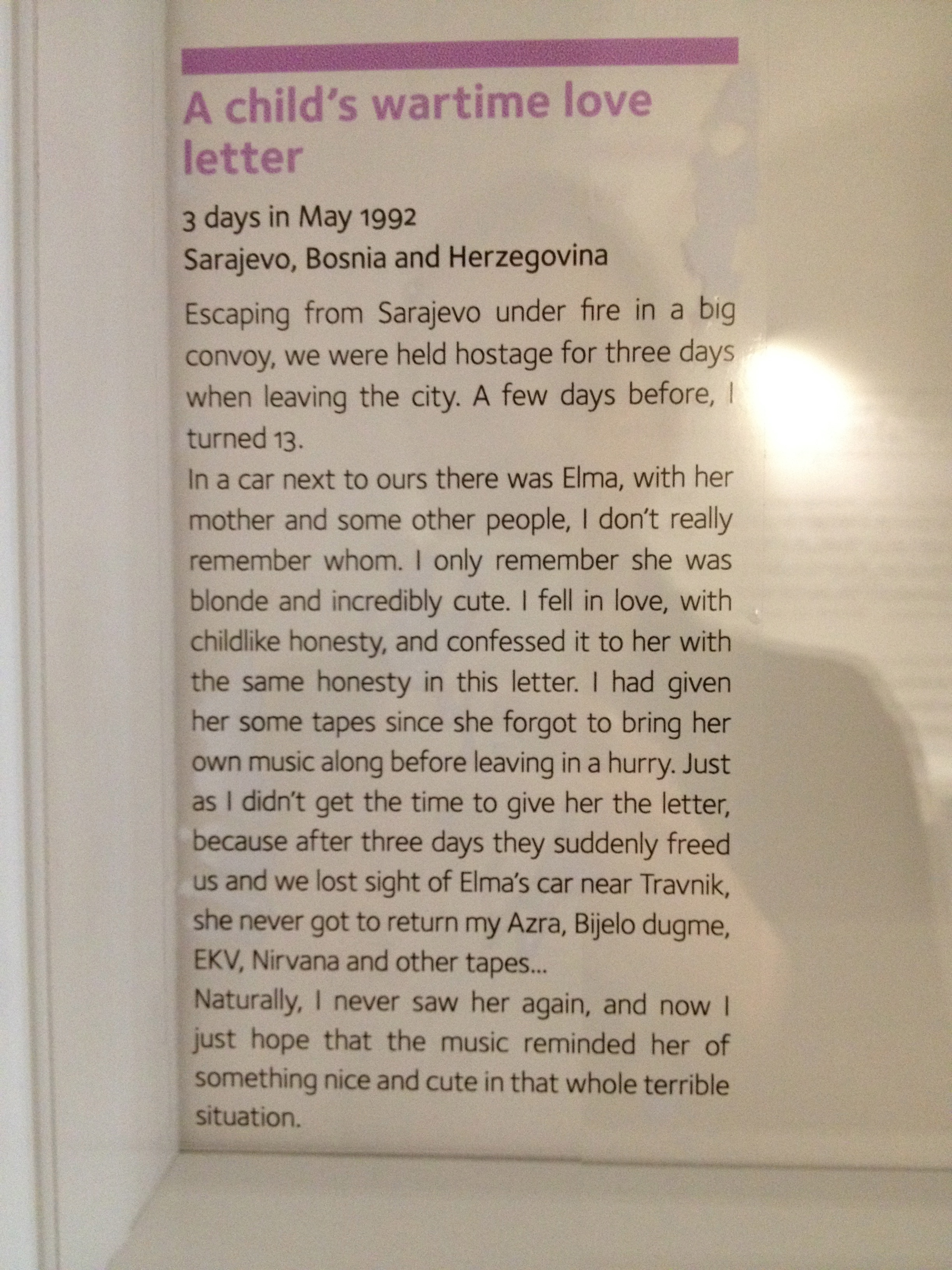
Anyway, after enjoying my first burek in nearly three years, I wandered northeast in search of a very unique museum that had been featured in a New York Times article: the Museum of Broken Relationships. People from all over the world (though with a curiously high concentration of entries from Paris and Denver) submit an object that they associate with a past relationship and then write an explanation – sometimes just a sentence but sometimes multiple paragraphs, explaining the significance of the object within the context of the relationship. It was a really fascinating collection of random curios and even more interesting insight into the nature of relationships and love.

IMG_3285

one of my favorite submissions

one of my favorite submissions

Next, I crossed the street to go through the Croatian Museum of Naive Art. Disclaimer: I still have no idea what Naive Art is. I had never heard of it before and thought maybe I’d figure it out while going through the museum, but ultimately I couldn’t find any unifying trend among the pieces I saw. I did see a few pieces I really enjoyed but otherwise didn’t find that the museum merited more than the 15 minutes I spent there.

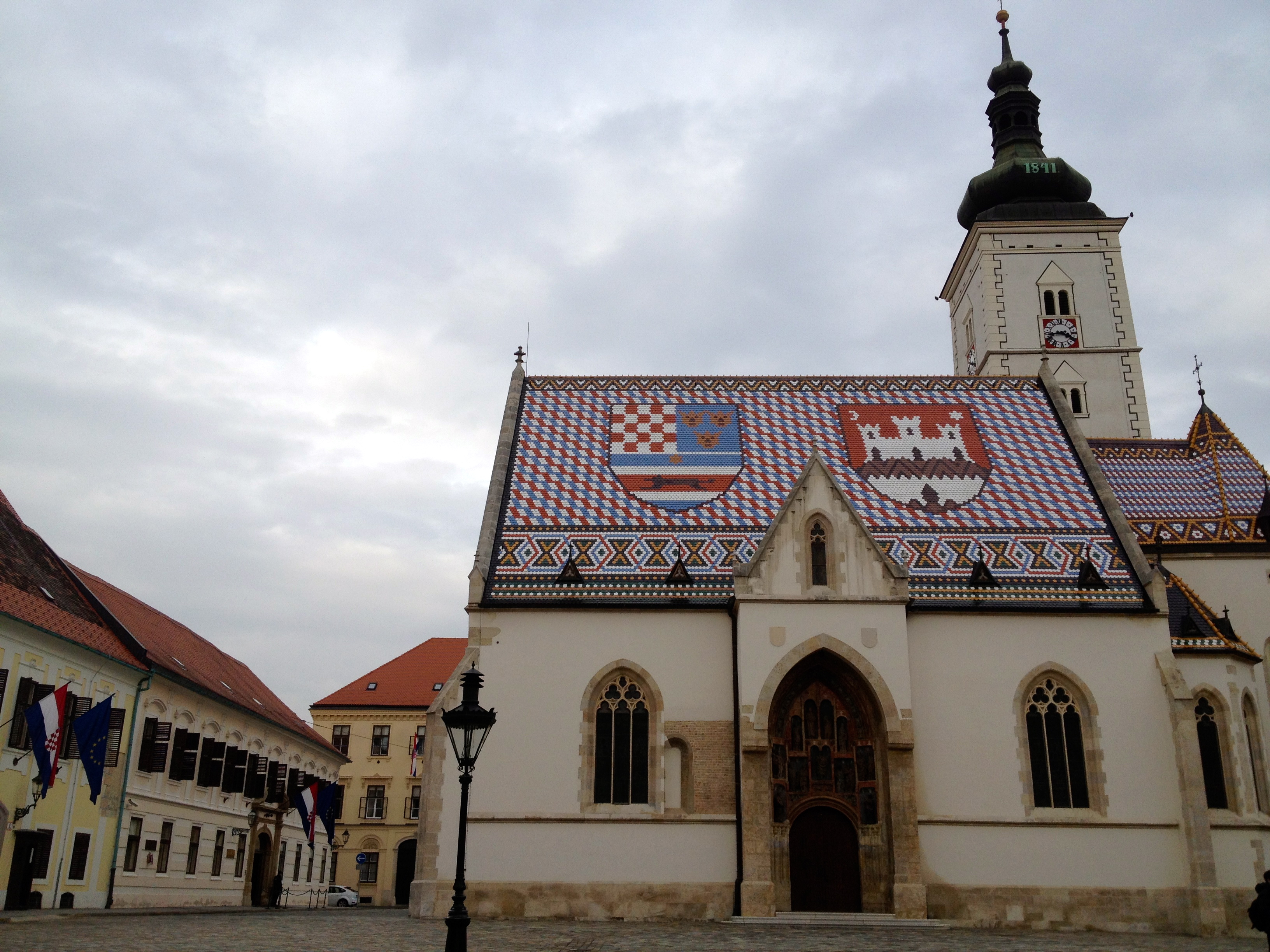
Both of these museums are just down the street from another famous church, St. Mark’s. I am not sure if I went inside this church back in 2006, but really the outside is the part that stands out:

IMG_3293

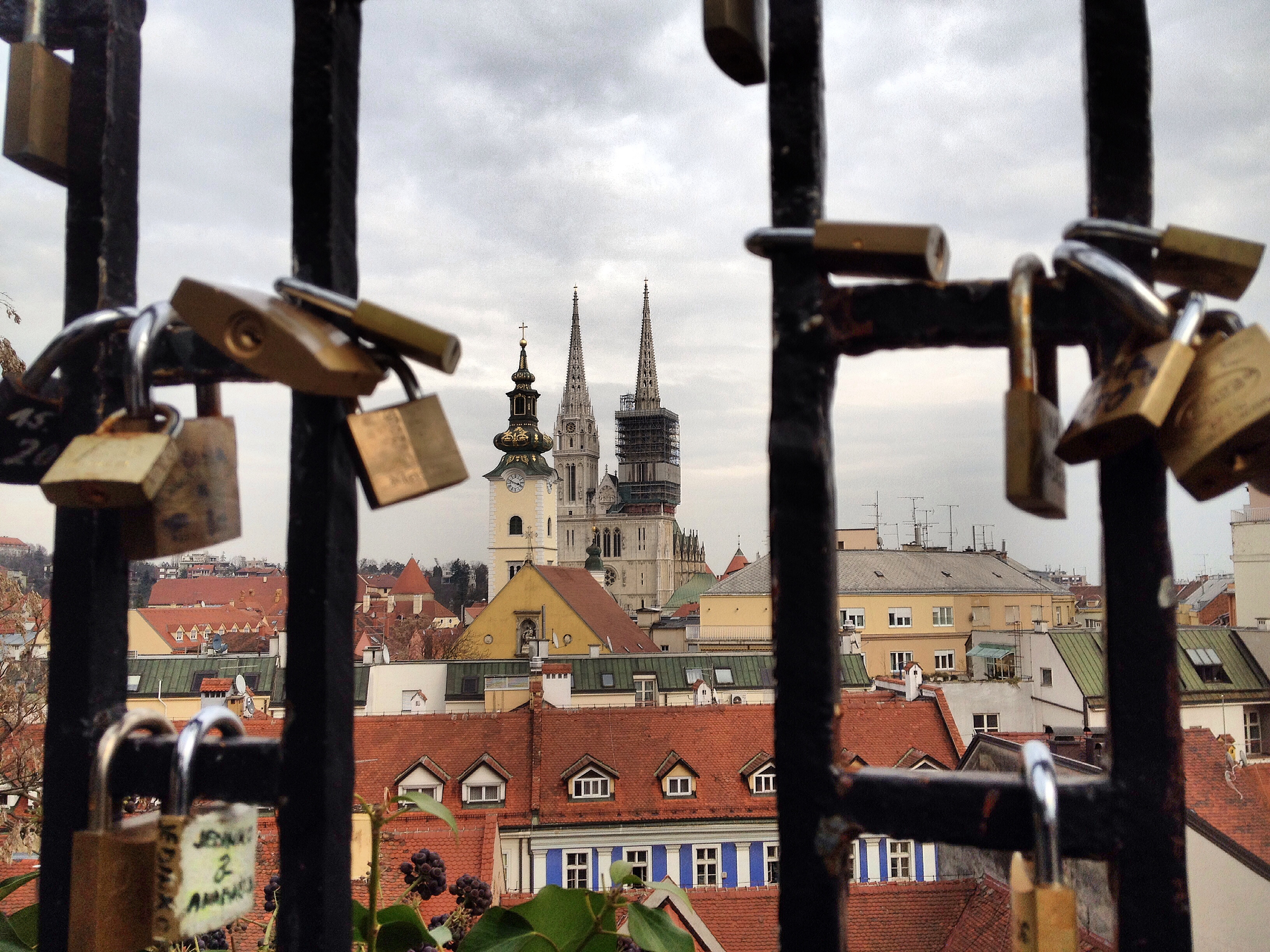
I enjoyed wandering around this part of the city. It’s up on a hill, and I remember that it was lovely during the summer evening we spent there in 2011. There are great views of the city, lots of cute restaurants and stores, and a lot of people strolling casually around. There are also elements of Paris (will I just look for Paris everywhere now?) – part of the area is called Strossmartre (like Montmartre), and Zagreb has a decent number of couples who have adopted the put-on-a-lock-and-throw-away-the-key approach to monogamy made famous by the Pont des Arts in Paris:

IMG_3309

On my way back to the hotel, I walked through a tented market in Jelačić Square. I wanted to take pictures but did not want to look too touristy, and it was pretty crowded. It was very similar to Eastern Market in DC – vendors from around the area were selling meats, cheeses, and liquors. I did a few laps before going over to a guy selling medica (MAY-deet-sa), a honey-flavored type of rakija (RA-kee-ya, or brandy). Rakija comes in all sorts of flavors (I’m a big fan of pear and apricot), but honey is my favorite. I used my VERY broken Croatian to talk to the vendor, who spoke about as much English, but I managed to explain that I’m half Croatian from my mother’s side, really like rakija and especially medica, and had never tried a red one that he was selling called višnjevac. As would probably not happen in the United States, this guy immediately proceeded to pour me a shot of each one so that I could sample both, and then when I indicated that I wanted to buy the big bottle of medica, he threw in a smaller bottle of višnjevac as a gift. I’ve never been more proud of such meager linguistic abilities!

In the evening, I met up with Iva’s friend Tomislav for drinks and an excellent walking tour. We went to a bar called Time that was exactly the sort of place I would have gone after work in DC and sipped višnjevac (which turns out to be cherry flavored and is pronounced VEEsh-n-yay-vats) while listening to fun mixes of techno and pop (my favorite was a blend of Fleetwood Mac’s “Everywhere” with something considerably more electronic in nature). Tomislav had been to San Francisco and Las Vegas and told me that he really missed the burgers; in Croatia they are too small! We also compared the systems of legal education in our respective countries: in Croatia a law degree is equivalent to a bachelor’s plus a master’s, and there is a mandatory apprenticeship for several years before you take the bar exam (which is, I think, harder to pass that the ones in the US).

After leaving the bar, we walked in a big loop around the city center, past the University of Zagreb’s law school building and then back up the hill into the Strossmartre area, through some side streets and alleys, and finally back down to the main square. Tomislav provided running commentary throughout, and I was very sad that he had to leave to do more work!

IMG_3314

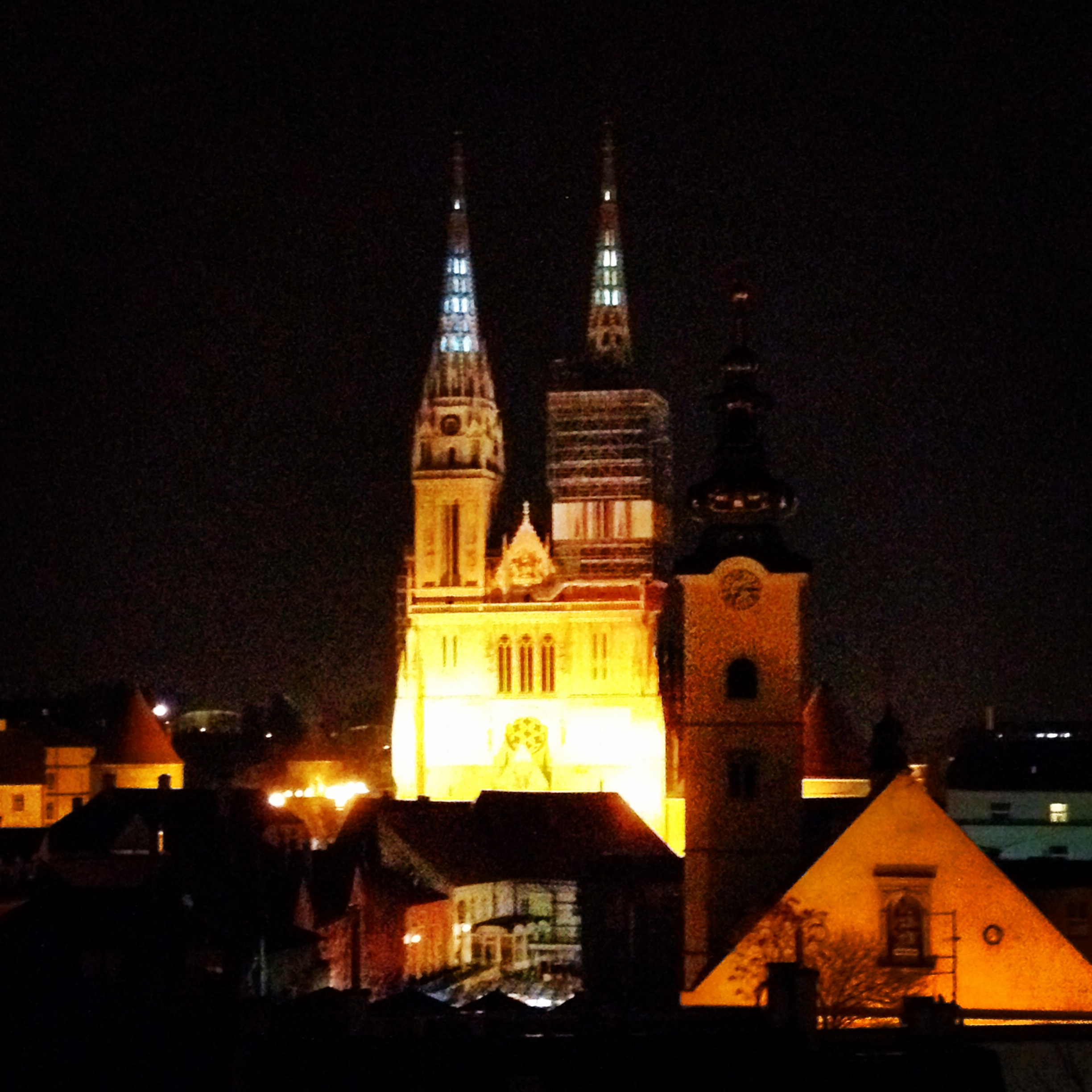
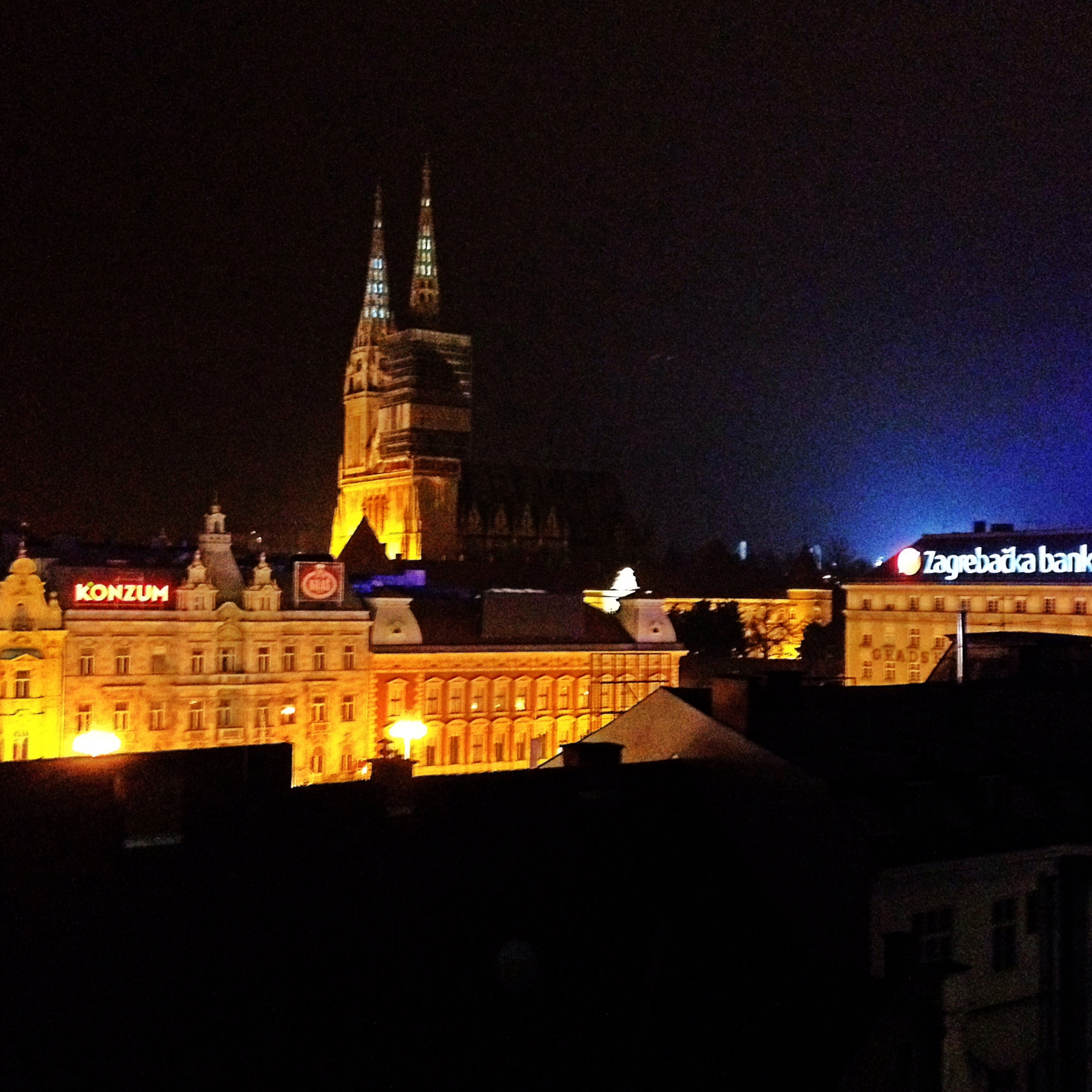
Because I am still not great about traveling by myself (that is, being in a foreign place alone, as opposed to getting there alone), I wimped out and couldn’t bring myself to go to a restaurant alone. I still haven’t done that even in Paris where it would be pretty normal. Instead, I found a place that made good salads for takeout, bought some Karlovačko beer and other snacks from the Konzum grocery store, and headed back to my hotel room for the rest of the night, which I spent being amused at trying to decipher Croatian coverage of Olympic curling. (Most non-Croatian language channels were in German, so there weren’t a whole lot of options either way.) Before I went to bed, I snapped this great picture of the illuminated cathedral behind the square:

IMG_3318

Catch-Up: World at Play in Croatia

I’m taking advantage of our last night in Mostar (where we have three wireless networks within two minutes of our apartment) to catch up and write about Croatia. I’m sitting outside sipping a drink with Dani, Hannah, and Libby, and techno-jazz plays gently behind us from our cafe/bar.

We arrived in Croatia on July 2 after an uneventful drive from Innsbruck. I got progressively more excited as the highway through Slovenia brought us closer to the border; I took several pictures of signs counting down the kilometers to Zagreb.

We hadn’t had to show passports (or even stop at a border) since leaving the UK, so crossing the border into Croatia was our first real border experience. Sion, who was part of the 2004 expedition, had some anxiety about it – on their trip, they were stopped at the Croatian border for six hours and ultimately had all their equipment confiscated! Fortunately, things went very smoothly for us. I think the border patrol men were fairly amused and intrigued by our van with people from four nationalities. I didn’t get a stamp, but that doesn’t matter much since I have two from our trip in 2006.

Our hosts met us on the other side of the border. Ivana and Silva were very welcoming and provided us with an early glimpse of our work for the week – we stopped at one of the adult “rehabilitation” centers on our way to our dorm.

The rehab center (an ill-fitting name for a home for mentally disabled adults) in Zorkovac was at the end of a long, winding road through the middle of nowhere. We met many of our future participants outside the charming yellow house, and to be perfectly honest, I think most of us were more than a little overwhelmed. I worked with a few kids in Special Ed while I was teaching, but I had zero experience with adults and was unprepared for the ones at Zorkovac. They were very friendly… but I couldn’t understand them (not simply because of the language barrier) and wasn’t sure how to react to them touching me (in an admiring, “I like your sunglasses!” kind of way). It was so hard to imagine getting them to play sports. I had learned a lot in Wales and Austria, but we’d worked only with general ed, semi privileged kids.

Our fears turned out to be wholly unfounded. During the four hours per day we spent with the adults at Zorkovac and Jaskovo, we accomplished a great deal and brought out hundreds of smiles on their faces and ours. We had favorites at each center. I worked a lot in Zorkovac with a woman named Slađana, who on day 1 was identified as someone with whom it would be more challenging to work. She rarely spoke and never produced more than a word or two when she did. She didn’t smile or otherwise respond much the first two days, either. Despite this, she participated in our activities and clearly recognized me on the second day – she came over to me on her own! By the end of the week, she was smiling at me and grabbing my hand or patting my shoulder.

We also loved a man named Saša who brought great enthusiasm to every game. He shuffled around on thin legs and had a default face that wasn’t particularly friendly looking, but his smile lit up the room. (Dani even called dibs on him for her team during our mini Olympics on the last day.) I also enjoyed Mario, who never said any words that were intelligible to me and often walked around seemingly in his own world. We learned that Mario loved music, and he and I had several dance parties together. (By “dance party” I mean that we held hands facing each other and swung our arms and hips from side to side for a minimum of five minutes.)

The home at Jaskovo was much larger, and its residents were significantly higher functioning. My favorite was Anka, a woman in her 70’s who reminded me a lot of my Grandma in terms of spirit and sense of humor. She was unfailingly happy and enthusiastic, always ready to dish out high-fives and try anything. I also befriended a woman named Tina who is probably in her 50’s. She was a little quieter than Anka but had an equally warm smile and game attitude. She started calling me “moja Jana”, which means “my Jana”. I found that “Kendra” was a tough name to understand, so I switched to a familiar one. (Not only does my mom happen to have a cousin Jana, but it’s a brand of spring water here. Now when I say it, people go “oh, like the water!”)

I’d love to describe each person at these centers, but I’m typing this on my iPhone, and it would take forever. Look for pics on Facebook when I get back. Suffice it to say: they were AMAZING, and I will really miss them. We made a very, very clear impact, and they made a huge impact on us as well.

Our third partner organization in the greater Karlovac area was an orphanage in the city center. We started our days there. It wasn’t quite what we expected. First, there were only about 15 kids. The rest somehow get to spend the summers with their families. Second, I for one was expecting a pretty dismal place. Instead, the home was lovely – bright, cozy bedrooms and genuinely caring staff. We worked with a range of ages. The youngest kids were about 5; the oldest were 17. I loved getting to bond with the teenage girls, who spoke a good amount of English and were eager to practice. I’m also proud that I got the three teenage boys to open up to me. They tended to sit on the sidelines and refuse to get involved (and no one forced them since technically they were on work breaks), so finally I broke away from the group, grabbed my Croatian phrasebook, and literally sat with them for 45 minutes asking things like “what football team do you follow?” and “what kind of music do you like?” We ultimately covered topics including Croatia joining the EU, the football rivalry between Zagreb and Split, the continued presence of Serbs and Bosniaks in Croatia, favorite movies and movie stars, and preferred Saturday night activities. (I can’t take all the credit for that – one of the boys spoke some English, so he supplemented where Lonely Planet didn’t suffice.)

My favorite day with the orphans was Friday (our last day), when we came in the afternoon and took them to swim in the river. I spent a full two hours in the water, and much of that time involved supporting the impossibly cute six-year-old Andrija as he spluttered his way around. After climbing to the top of the giant inflatable iceberg, he’d look for me in the water, cry “Kendra Kendra!”, count down, and leap into the water near me.

All in all, our work in Croatia was hugely rewarding. Our days were long and exhausting (six hours of sessions), but it was so obvious that we were making the days of all the kids and adults. They even showed their appreciation with gifts! The orphanage gave us art made by the children (presed flowers!), Zorkovac gave us beautiful beaded necklaces made by the residents, and Jaskovo gave us homemade jam and elephant necklaces (for happiness). We have been wearing those necklaces a lot!

Anyway, that’s a brief description of a great week in my family homeland. Look for lots of pics when I get home!