Croatia and Croatian: A Primer

The Country

I no longer have a sense of what, if anything, might come to mind for the average person when thinking about Croatia. I imagine that people with some knowledge of foreign affairs are aware that Croatia is a relatively new country and that its first few years were, to put it mildly, not the easiest. You might also know that Croatia became the newest member of the European Union last July.

Here’s my very abbreviated history of Croatia:

Croatia became an independent country in 1991 after it became the second Yugoslav republic to secede from Yugoslavia. (What was the first? Slovenia.) Although Tito placed a lot of emphasis on promoting “unity and brotherhood” during his time at the helm of Yugoslavia, any such cultural unification began to break down swiftly after his death in 1980. Longstanding ethnic rivalries and spirited nationalism that Tito had kept in check began to gain momentum again, and by 1990 Yugoslavia was essentially a powder keg moments away from explosion. The horrible fighting that took place in the former Yugoslavia during the first half of the 1990’s was, at its core, about each of the three big ethnic groups (Croats, Bosniaks, and Serbs) trying to fortify its claim on particular territories. I highly recommend watching “The Death of Yugoslavia,” which is a BBC documentary/mini-series that is available on YouTube, for a very in-depth look at this recent history.

As someone who’s driven across five former Yugoslav republics, I can tell you that Croatia is both distinct and indistinct from its neighbors. Where you are will heavily influence your impression of the country, and even though Croatia is a relatively small country, you can have a different experience in each of its regions. Zagreb, for instance, is visible proof of the former Austro-Hungarian dominance in the region, while Split and its magnificent Diocletian’s Palace is much more Roman in character, both physically and culturally. Dubrovnik, so close to the Bosnian border, reminds me more of Mostar, a Bosnian town that, like Dubrovnik, was hit very hard during the war.

On the whole, what I’ve seen in Croatia makes me feel like it’s more a part of Western Europe than its neighbors to the east. This is partially because the Austro-Hungarian influence was concentrated more heavily in Croatia and partially because I think there has been some effort among the Croatians (not just since independence) to reinforce those western ties. Many people in Croatia speak German, Italian, and/or French (and I really mean and/or – I’ve met many people who speak at least two foreign languages, in addition to English), and Croatia’s gorgeous coast has long been a source of tourism that eclipses what Bosnia and Serbia can attract as landlocked countries. Perhaps the main reason I see Croatia as more “Western” is simply because I haven’t spent much time in the big cities of Bosnia or Serbia, so it’s difficult for me to compare. The moderately-sized Serbian city of Novi Sad also looked and felt more Austro-Hungarian despite being much further east.

Still, to the extent that one equates “Western” with “modern,” Croatia has retained a very “old country” feel. If you’re not in a major city, you quickly get the feeling that you’re in the middle of nowhere. As someone who grew up on the east coast of the US in a capital city, I’ve always marveled at the rural nature of Croatia. Whether you’re driving or on a train, you’ll pass through lots of villages. That’s not a word I would ever apply to anything in the US (partially because “village” also seems to imply a sense of antiquity), but it’s definitely the right word for the tiny collections of homes scattered throughout the Croatian countryside. You can go for miles and miles without seeing any signs of civilization other than the occasional cluster of five or ten small houses together. And when you consider that there are over 1000 islands along Croatia’s coast, you really start to understand how many micro communities there are in this small country. And in that way, Croatia is indistinct from its eastern neighbors; Bosnia and Serbia are also largely rural and dotted with tiny villages. Other than the change in alphabet on the road signs, it’s impossible to tell where you are once you’re outside a big city.

Now, I’m someone who really loves big cities, and I’d probably go crazy if I lived in anything small enough to qualify as a “town” let alone a “village,” but I adore all of those “old country” features of Croatia. I love that you can drive along a two-lane road and find people roasting lamb in their yards. I love that there are still people playing the music and instruments that came over to the US with my grant-grandparents’ generation, and I love that the scene in Zagreb’s central market is almost identical to what Rebecca Black observed on her trip in 1937 and described in her 1100-page memoir Black Lamb and Grey Falcon (which I’ll be working through in the next two weeks). Croatia seems to be one of those truly timeless places.

I’m looking forward to many interactions on this trip that will help me to further distill my understanding of the country and people of Croatia. The nation’s history is so long, rich, and varied that describing it in any meaningful way requires both extensive knowledge and excellent writing skills, both of which I’m still pursuing. Perhaps I shall seek to adopt Ernest Hemingway’s goal of writing “one true sentence” each day during the trip in the hopes of being able to string together one true paragraph by the time I return.

The Language

I’m going to be including accurate spellings in my forthcoming blog entries (and perhaps a few vocabulary lessons!), so it will be helpful for anyone who plans on following along to have a basic understanding of the pronunciation in Croatian. Many words in Croatian look unpronounceable to native English speakers, but it’s not that difficult once you know the rules:

  • č and ć both sound like “ch”
  • c without an accent sounds like “ts”
  • š sounds like “sh”
  • ž sounds like the s in “measure”
  • đ sounds like the j in “judge”
  • h is pronounced, hence Hrvatska (the word for Croatia) is Her-VAT-ska
  • j sounds like a y (which explains why it’s actually spelled Jugoslavija), unless it’s on the end of a word, in which case it’s essentially silent.

The emphasis usually falls on the first syllable, which is the hardest thing for me to put into practice (mostly because this is not an absolute rule, and I have no idea when the emphasis goes elsewhere). We pronounce Dubrovnik wrong; we all say Du-BROV-nik when it’s actually DU-brov-nik. Same with Sarajevo: it’s actually SA-ra-yay-vo.

Practice:

  • Goran Višnjić (the Croatian actor from ER)is GO-ran VISH-nyitch
  • Ćevapčići (very delicious small sausages) is CHAY-vap-chee-chee
  • Hajde (“come on”) is HIGH-day or HIGH-da (I hear both)
  • Doviđenja (“good-bye”) is do-vi-JEN-ya
  • Ožujsko (a brand of beer) is O-zhoo-sko

Croatian is technically a separate language, but it is essentially the same language as that spoken in Bosnia and Serbia. From what I can tell, it’s like American vs. British English. We generally understand each other, but occasionally there’s a different word for something. At the Tribunal, we called the language BCS (Bosnian/Croatian/Serbian). Some might take offense to that, but it really does simply things and makes any language discussion more politically neutral. It’s my understanding that after the disintegration of Yugoslavia, each new country made an effort to differentiate its language, so there’s some nationalism attached to the name of the language. The major difference is that Croatian uses the Latin alphabet while Serbian uses the Cyrillic. When Yugoslavia still existed, children learned both alphabets in school, but now most Croatians don’t learn Cyrillic (hence the utility of my knowledge of that alphabet while working with Croatians at the ICTY).

And unfortunately, that’s the end of the “easy” part of the Croatian language. As I went through my big Croatian grammar book last night to make copies for the trip, I realized that the odds of my being able to put together any grammatically correct, semi-complex sentence without a teacher are slim to none. It appears that Croatian is like Latin and that, among other things, you have to decline nouns. I don’t really even know what that means because it’s not something I’ve ever had to deal with in my study of Spanish, French, Italian, or Portuguese! And unlike the Romance languages, Croatian verbs seem to fall into lots of categories, not the usual three root families (like -ar, -er, and -ir in Spanish). So… we’ll just have to see how this goes. I might just become a walking recitation of my Lonely Planet phrasebook!
The Art of Travel

I finally find myself in the position of being an American who lives abroad and can now observe my fellow American travelers more from the perspective of the locals. I’ve always aimed to be a model ambassador of America, and because I’ve traveled to South America, Europe, and Asia, I’ve had a lot of opportunities to practice the art of travel in different situations. Here are my suggestions for being an expert traveler.

  1. Do your research and plan ahead.

I’m not saying you have to plot out an hour-by-hour agenda for your trip (you shouldn’t), but you should read up on your forthcoming destination(s) and have a good idea of what you want to see, do, and eat while there. (Yes, eat – food is absolutely one of my motivations for traveling, and in my opinion if you’re not trying the local cuisine then there’s just no point in being there at all.) This is important even if you are visiting or staying with someone who lives in that place – it puts a lot of pressure on the host to have to come up with everything, and it’s much better for you as the traveler if you have your own ideas of what seems most interesting! Ideally, your pre-travel research should extend beyond guidebooks; for instance, if you’re going to Paris, watch a few movies set in Paris, and read some of the many memoirs written by Americans or other expats in Paris. Their perspectives on the culture, and inclusion of all sorts of random details about everyday life, will both enrich your own observations and help to minimize the number of surprises you encounter when you arrive. They can also help you to conform with important standards of politeness, such as knowing that in Paris you greet the owners of shops when you enter.

  1. Pack light, but with useful accessories.

You shouldn’t travel without an umbrella, period, unless you’re going to the desert. There are a few other items that I always bring, because you never know when they’ll come in handy:

  • earplugs (there is always street noise, even in a five-star hotel)
  • eye mask (I can sleep under a bright light, but if you’re sensitive to light, this is invaluable)
  • a small sleep sack or even a sleeping bag (my sleep sack folds up into a pouch that’s about 3×5”; my sleeping bag is also very compact and makes a great pillow when in its sack. It has served me well during two nights camping out at London’s Heathrow airport.)
  • travel towels (again, compact, and always useful – I like to have one in my carry-on so I can wash my face before and after long flights)
  • corkscrew (I have one of those combos that also has a little knife; great for wine and cheese picnics in Paris)
  • fold-up water bottle (I have one by Vapur that is completely flat when empty)
  • combination lock (this is a must if you’re staying in a hostel)
  • a Sharpie (you’d be surprised how often it can be helpful to have a permanent marker)
  • eye drops (great for long overnight flights to help you instantly feel less tired upon arrival)
  1. Leave your native expectations and habits behind.

Travel is about broadening your perspectives and experiences. This means eating the local food, attempting to speak the local language, and generally engaging with locals as much as possible. If you’re on a long trip and are dying for a taste of home one night, fine, but don’t be that person who orders only familiar food at the expense of trying new (and likely incredible) things.

It is also important to be aware of differences in culture so that you are better about blending in. For example, Americans are almost always the loudest people in the room when they’re outside the United States. You don’t realize how loudly we talk until you are suddenly sitting with French people next to a table of Americans and realize that you can hear every single word of their conversation because the French all speak relatively softly in comparison. Small linguistic differences can be useful to know, too: saying “pants” in the UK means something very different from “trousers.”

Other things that are likely to surprise less-traveled Americans:

  • Hotel rooms and bathrooms are TINY in comparison to the ones in any standard American hotel. This is because, particularly in Europe, each square foot of real estate is much more expensive, and thus space is at a premium. Don’t expect a full bathtub, and know that a double occupancy room is likely to have two twin beds pushed together rather than a double or queen-sized bed.
  • Some Europeans tend to be less dependent on shower curtains (in my experience, Spain, Italy, and France). In such cases, the shower head most likely detaches from the wall, and with some care you should be able to avoid getting water all over the room. Think of it as a fun challenge!
  • In many countries, you can’t flush paper or anything else down the toilet. You’ve just got to get over that. In some places, you may not even have an actual toilet. Again, try to see it as a fun challenge (and take a deep breath of fresh air before you go in).
  • Standards of service vary from country to country. Accepting that fact is essential for the benefit of all concerned. You can’t get angry at your Parisian waiter for not coming to check on you every five minutes; that’s just now how it’s done in Paris, and lack of attention does not mean that you have a bad waiter.
  • Waiting in line can be a verrrrrrry different experience in some countries. You may encounter lines that are are more wide than they are long or where people are constantly cutting or where everyone is yelling or where there is only one person dealing with the line despite its absolutely massive length. This is why it is essential to pack your patience (and maybe a flask).

It’s easy to become anxious in countries that are less developed, where for instance you can’t drink the water. Act cautiously (I’m paranoid about digestive illnesses when I travel) but don’t let this become the entire focus of your trip.

  1. Choose Your Travel Companions Carefully

I’ve been extraordinarily fortunate in the people with whom I’ve done all of my big trips, and that’s largely down to luck because I’ve never actually evaluated potential travel partners or thought “so-and-so would be really great to see _____ with; I should see if she’s interested!” My trips have come together pretty organically. Nearly all of my international travel before the end of college was with school groups (three weeks in Italy during high school, summer in Spain during college, various Model UN trips), so not only did I have friends with me; I had a lot of friends with me. In big groups, the dynamics aren’t so important – if you don’t jive with someone, you don’t have to spend time with them. Where your companions really matter is when there’s a smaller group or just the two of you – anytime that you’re expected to spend the majority of your time exclusively with those people.

I don’t think there’s a particular rule to follow when considering whether to travel with someone. My trips to Venezuela, Colombia, Panama, and Romania were with a male friend of mine who is in many ways my polar opposite, and all were awesome. In such situations, it’s important to be aware before the trip of any potential sources of conflict. (I am not averse to taking risks while traveling, but I am nowhere near adopting Greg’s mantra of “live by 30 or die trying.” I adjusted the boundaries of my comfort zone, and he exercised a little more caution. Compromise is key.) Personality is a major factor, but other things matter too. Know how much money you’re willing/able to spend during the trip and how that compares to your companions. Do you like the same kind of food? How willing are you to try local cuisine? (It’s a bummer to arrive somewhere and learn that your companion has no interest whatsoever in eating like a local.) How much physical activity are you up for? (Will you want to rely on public transportation, or are you willing to walk everywhere?) Are you more interested in working from a checklist of tourist activities or just wandering around? Are you an active tourist, or are you more interested in just relaxing? Do you need some alone time every day? If you’re part of a group, are you willing to do things on your own, or do you need the reassuring presence of the others at every moment? There are no wrong answers to any of these questions, but you should know your own answers and those of your travel companion(s) before you leave, or preferably even before you book.

Having a conversation ahead of time can save some frustration during the trip. Try to get on the same page about everything so that you can manage expectations and minimize situations of diplomatic indecision. You might consider establishing a codeword for use in situations of tension. (My mom and aunt would say “bananas” to each other while in Paris if they were getting frustrated with each other.) You should not have to be someone other than who you are while you’re traveling. You should be willing to compromise, but if you think you’re going to miss out on a significant number of things because of your travel companion(s), you should rethink your trip. In all likelihood, you’ll only go to a particular place one time in your life. Make sure you can make the most of it!

Coming up: Croatia, round 4!

Hello readers,

After spending my last year of graduate school and the best year of my life in Paris, and after 12 weeks of almost non-stop studying for the bar exam, it’s time for the longest-anticipated trip of my life as a traveler: I leave in a few days for Croatia, the ancestral homeland of my mother’s family.

As you’ll know if you scroll back in time on this blog, I’ve been to Croatia three times: in 2006 with my family (including my grandmother, who grew up speaking Croatian in the US), in 2011 as a volunteer with World at Play (described in posts on this blog), and earlier this year during my spring break while studying in Paris. Why then do I want to go back?

Being Croatian has influenced me in numerous ways. If you actually know me, it’s very likely that you know that I’m Croatian and that for a long time I’ve wanted nothing more than to go to Croatia and learn the language. I’m only 50% Croatian by blood, but because my mom grew up in a very Croatian community in northwest Indiana, her childhood was heavily influenced by that heritage. My own connection is much more tenuous. I grew up in Virginia, unaware of any other Croatians in the area, and the only way in which I can truly make a legitimate claim of being Croatian is by pointing out that I look Croatian. I have an olive complexion, dark hair, and dark eyes, and for as long as I can remember I’ve had random people ask me my ethnicity because I “don’t quite look American.” It’s true, and people have taken me for a native each time that I’ve been in Croatia.

My mom’s pride in her heritage transferred to me, but it has always bothered me that the only truly Croatian part of me is my genes. In particular, I’ve always wished that I spoke at least some of the language. My grandparents and their peers in the 1940’s and 1950’s saw no value-added in teaching their children Croatian, a decision heavily influenced by a desire for full integration into their new country. As a result, my mom and the others of her generation grew up speaking only English, with a smattering of Croatian words and phrases thrown in for good measure. The central difference between me and my mom is that she grew up in a Croatian community that kept much of the culture alive; she attended a Croatian Catholic church (where I was baptized and where it is still possible to attend a mass in Croatian) and went to events at Croatian Center. The food, music, and dancing of her childhood was all Croatian.

In an effort to make up for my linguistic and cultural deficiencies, I’ve attempted over the last several years to at least become conversant in the history, geography, and politics of Croatia and its neighbors. Volunteering with World at Play in 2011 brought me back to Croatia and also introduced me to Bosnia-Herzegovina, Kosovo, and Serbia, which helped to give me a more complete picture of the former Yugoslavia as a whole and expanded my vocabulary to about 200 words (many of which are useful only in that context, like “Make a big circle! Run! Faster!”). I also learned the Cyrillic alphabet, which is not used in Croatian but is used in Serbian (more linguistic notes to come). I spent the following summer working at the International Criminal Tribunal for the former Yugoslavia, where I focused on a case concerning Bosnia but gained a much more in-depth understanding of the disintegration of Yugoslavia in the early 1990’s and how that experience, and the much longer history of the region, continues to shape the culture and politics of today. While there, I met my friend Iva, who lives in Split and is now one of my closest friends. She was always happy to give me random vocabulary lessons and often invited me to join her and the rest of the interns from the region on their coffee breaks. They would speak BCS (Bosnian/Croatian/Serbian) to each other while I happily listened, occasionally picking out a familiar word or phrase. They also enjoyed looking through my Croatian phrasebook and laughed to no end about its inclusion of the phrase “lakše malo mačore,” which in the book translates to “easy tiger!” (on the page with bedroom vocabulary…) and which they said would be essentially unintelligible to someone in that context. Duly noted. Croatians and others from the region have been universally supportive of my desire to reconnect with my ancestral homeland, and that means a great deal.

I started thinking about going to Croatia to do an intensive language course sometime in college, before I’d even visited the country for the first time. Each time in the last decade that I’ve had a gap period, I’ve pondered the possibility of going to Croatia. When I started law school three years ago, I emailed my Croatian cousins to suggest a group trip to the homeland in August of 2014 once I’d taken the bar exam. One of my cousins took note and is coming with me!

I start work in London next month and so, once again, I lack the time and timing necessary for doing an intensive language course. However, I’ve acquired a number of Croatian textbooks over the last several years, and I plan to study a bit of grammar and vocabulary each day during the two weeks that we’ll be there. As of now, my vocabulary is entirely limited to words and phrases – I have no knowledge of grammar whatsoever. I’ll be pleased if I can end this trip able to conjugate some verbs and form complete sentences in at least one tense. It’s a big help that I already understand how to pronounce the language; I made that my goal during the trip in 2006. (This, coupled with my ability to read Cyrillic, came in handy a few times while working at the Tribunal. We occasionally encountered documents that were written in Cyrillic, and the Croatian interns couldn’t read them, so I would read them out loud. I had no idea what I was saying, but my pronunciation was good enough that the Croatians were able to figure out what the text said. Teamwork!)

My cousin Rachel is coming with me on this trip, and I’m ready to have a great time. I plan to write and post pictures daily. We’ll be visiting Split and Dubrovnik (both of which I saw in 2006) along with the islands of Brač, Hvar, and Vis. I’m thrilled because we’ve booked all of our accommodations through Airbnb, and in several of the places we’ll actually be staying with real Croatians in their home. All of them know that I am studying their language and have expressed a warm willingness to be of assistance. I’m also looking forward to seeing Iva in her hometown and to generally relaxing after a very stressful summer of studying!

Stay tuned for an introduction to Croatia and its tricky language! You’ll want a pronunciation guide for my upcoming posts.

Recommendations from 8 Months in Paris

Hello readers,

You know how the tagline of this blog identifies me as “an aspiring expat”? I’ve finally managed to make that a reality. After spending eight months in Paris, I’m back home in the US for a few months before I move to London in September… for an indefinite duration. (Given the size of my law school loans, I’ll be there for at least three years doing big law, but I have no intention of coming back even if I leave that job.)

I kept a separate blog about my life in Paris (kenfrancais.blogspot.com), but I’d be remiss if I didn’t post something here!

Here’s a list of my favorites. It should be noted that I am in the minority among Parisians in the first four, but trust me, they’re the best!

  • MONUMENT: Parisians are totally jaded about it, but for me, there’s no question: the Eiffel Tower is my favorite thing in Paris. I love it at any time from any vantage point, but the best is watching it sparkle (for the first five minutes of every hour once it’s dark, until 1:00) from Trocadéro. I still haven’t been to the very top, but I took the stairs to the second level.
  • MUSEUM: For me, this is a no-brainer. The best museum in Paris is the Orangerie, located in the Jardin des Tuileries. Monet’s famous water lily paintings are here, and I never tire of seeing them. The museum also has a small but potent collection of other Impressionist works, including pieces by Renoir, Manet, Cezanne, Picasso, and others by Monet. It’s the perfect size and lacks the crowds of the Louvre.
  • PARK: Paris turned me into a garden lover, and I’ve already been to two parks since returning to my hometown five days ago. My favorite in Paris is the Jardin des Tuileries. Yes, it’s busy and filled with tourists in the summer, but it’s filled with beautiful flowers; has views of the Eiffel Tower, the Champs-Élysées, and the Louvre; includes four fountains surrounded by chairs to lounge in; and couldn’t be more centrally located. I could truly stay there all day.
  • SQUARE: It’s a tie between Place de la Concorde (which just has such an amazing view; you get the Eiffel Tower, the Champs-Elysées, the Arc de Triomphe, and the skyscrapers at La Défense) and the Place des Vosges (in the Marais, which is a great little park if you want a smaller place to chill).
  • CHURCH: Sacré Coeur is my favorite on the inside (it’s brighter than its older peers), but Notre Dame can’t be beat on the outside. The view from its south tower is the best in Paris. My favorite time to go to Notre Dame is at night, when the plaza is almost empty – you feel a real sense of peace and history.
  • COCKTAILS: Hands-down the best bar in Paris is Le Calbar at 82 rue de Charenton in the 12th arrondisement, about 10 minutes’ walk east of Bastille. Its three bartenders Thierry, Christophe, and William are personal friends of mine and are truly great people in addition to being legitimate artists when it comes to mixology. My dad, a connoisseur of martinis who was convinced it was impossible to find decent ones in Europe, says that William made him the best martini he’s ever had. Their menu is helpfully organized according to base liquor, but they regularly concoct things for you that aren’t on the menu. Of the regular drinks, my favorite is the 1980’s, which is vodka-based. The best part is that these drinks are significantly cheaper than those on offer at more famous bars, where €13 is the standard price. At Le Calbar, some are as low as €9, and most are under €12. Go and tell them Kendra sent you! Great atmosphere too.
  • CRÊPES: The best I’ve had are at Café Breizh at 109 rue Vieille du Temple in the Marais. I love the complète oignon, which comes with onions marinated in cider, and the simple yet delectable salted caramel for dessert. (Note that others claim that Crêperie Josselin in Montparnasse has the best crêpes, but I’ve been there a few times and was never as impressed.)
  • RESTAURANT: The site of my first ever meal in Paris (back in July 2012) and what is still the best meal of my life, Autour d’un verre at 21 rue de Trevise in the 9th arrondisement remains my favorite restaurant. Everything they make is amazing; I’ve had duck, steak, sea bass, and lamb that all brought me to tears. Try the pears soaked in red wine for dessert, if you can save room! This is also a great deal – a starter, main course, and dessert is only €31.
  • MEAL(S) OF CHOICE: You can definitely find fancy food in Paris, but my go-tos are simple: salade de chèvre chaud (warm goat cheese salad) and croque madame (essentially, grilled cheese with ham inside and a sunny-side-up egg on top). They’re available pretty much anywhere and never fail to satisfy. Oh, and I can’t forget the falafel at L’As du Falafel in the Marais. It’s a classic.
  • WINE: I’m still no expert by any means; I will just say that, on the whole, wines from Bordeaux have been the most consistently pleasing.
  • PICNIC LOCATION: The western tip of Île de la Cité (at the Square du Vert Galant) is the place to see and be seen in the afternoon and evening on a warm and sunny day. Bring a bottle of wine and dangle your feet over the Seine while watching the boats of tourists pass by.
  • METRO LINES AND STATIONS: I lived on line 4 and remain partial to it because it’s fast and goes to so many useful places. That said, the single best stretch of the metro is on line 6 between Bir-Hakeim and Passy because you go over the Seine with an incredible view of the Eiffel Tower. My favorite metro stations (or more accurately, platforms) are: Concorde, line 12 (because it has the Declaration of the Rights of Man written in tile on the walls); Bastille, line 1 (because it has a mural of the history of Paris); Bastille, line 5 (because it marks the original foundations of the Bastille prison on the platform); and Saint-Germain-des-Près (because it projects literary quotes on the walls).


Last Spring Break Ever, Part 2: Budapest

The bulk of my last spring break ever (since I’m graduating from law school in May, and at the moment at least, have no plans to seek further higher education) took place in Budapest with my Croatian friend Iva.

The Journey to Budapest

Iva and I reunited after 19 months of separation at the train station in Zagreb early on Friday afternoon. After lots of hugs and some staring at each other (in that “wow I can’t believe you’re actually here!” way), we wheeled our bags into an adjacent underground mall to kill time before our train at a cafe. I whipped out my two Croatian books and read aloud, which served the dual purpose of practicing my pronunciation and making Iva laugh.

Our seven-hour trip began at 2:30. This was my first train trip outside western Europe, and Iva seemed to think we’d end up getting delayed, but it went really smoothly. The train was fairly full as we left Zagreb, but a lot of those people were just traveling elsewhere in Croatia and got off at various points along our route. I was excited to see a different part of the country as I had never been east of Zagreb before. We passed through a lot of “villages,” which prompted a discussion about the use of that word instead of “towns.” I consistently hear people from the Balkans refer to “villages,” and I explained to Iva that, at least in the US, villages imply something so small (and perhaps an element of age, or even backwardness) that I’ve never heard anyone call a modern-day establishment in the US a “village.” Nonetheless, “village” is definitely the appropriate word in the former Yugoslavia, and trust me, there are some tiny ones. Six houses in the middle of nowhere might constitute a village. We saw some larger ones, including a couple with a church that I said I would probably have called “towns.” I told Iva that I always think it’s really interesting to travel through the Balkans because the land looks SO different to me – while we obviously have countryside in the US (and in other European countries that I’ve traveled in), there are not these random sprinklings of inhabitants – you’re either in a town (I would say with at least 100 people) or you’re nowhere. Much of the land in the Balkans seems to fall somewhere in between, and I find that fascinating and timeless.

Anyway, it took us close to three hours to get to the Hungarian border. The train stopped on the Croatian side first, and Croatian border patrol officers came through the train to inspect our passports. As always in the EU, my American passport required significantly more attention; everyone else can just get a quick glance at their documentation, but they had to scan my passport, wait for the information to load on their little handheld device, and then finally give me a stamp. The two Croatian guys seemed to take great interest in mine while they waited for my information to load; I swear it looked like they scrutinized each stamp in my passport as if to say “let’s see where this American girl has been!” After that it was about 10 minutes before we stopped again on the Hungarian side. (We knew we were in Hungary because suddenly the signs were completely unintelligible to us.) The Hungarian border patrol agents (who were very cute) repeated the procedure, and eventually we got underway again.

Rural Hungary on a wet day at dusk is more than a little creepy. We were quickly chugging our way through a forest where mist crawled between the trees, and I half expected to see wolves running around. The light soon disappeared entirely, and we went at least an hour without seeing anything out the windows. On top of this, we were now almost alone in our train car – there were only three other people in there with us, including an older Romanian woman (who spoke Croatian and reminded me a lot of my grandmother) and then two other people sitting at the other end. If we’d been entirely alone, I would absolutely have turned up the music on my phone and just had a private dance party in the train. As it was, I settled for wandering to the cafe car and buying a beer to bring back to the seat.

We eventually found civilization again, and some Hungarians got on the train. There was still plenty of space, and we retained control over our little square of four seats. Iva and I each put in an earbud and went through songs on my phone that reminded us of our time together in The Hague – an exercise we repeated frequently over the next several days.

We rolled into Budapest’s Keleti train station around 9:45, stepped out into the rain, hailed a cab, and arrived at our hotel about 15 minutes later. I could tell from the drive that I was going to like Budapest and that it was not what I had been expecting – in a good way.

Buda + Pest = Budapest

We didn’t stray far from our hotel on Friday night; we walked about ten minutes away and ended up getting a late dinner at an Italian restaurant. Iva had taken a five-hour bus ride from her hometown that morning, so it had been an especially long day for her, and we went to bed pretty much as soon as we got back.

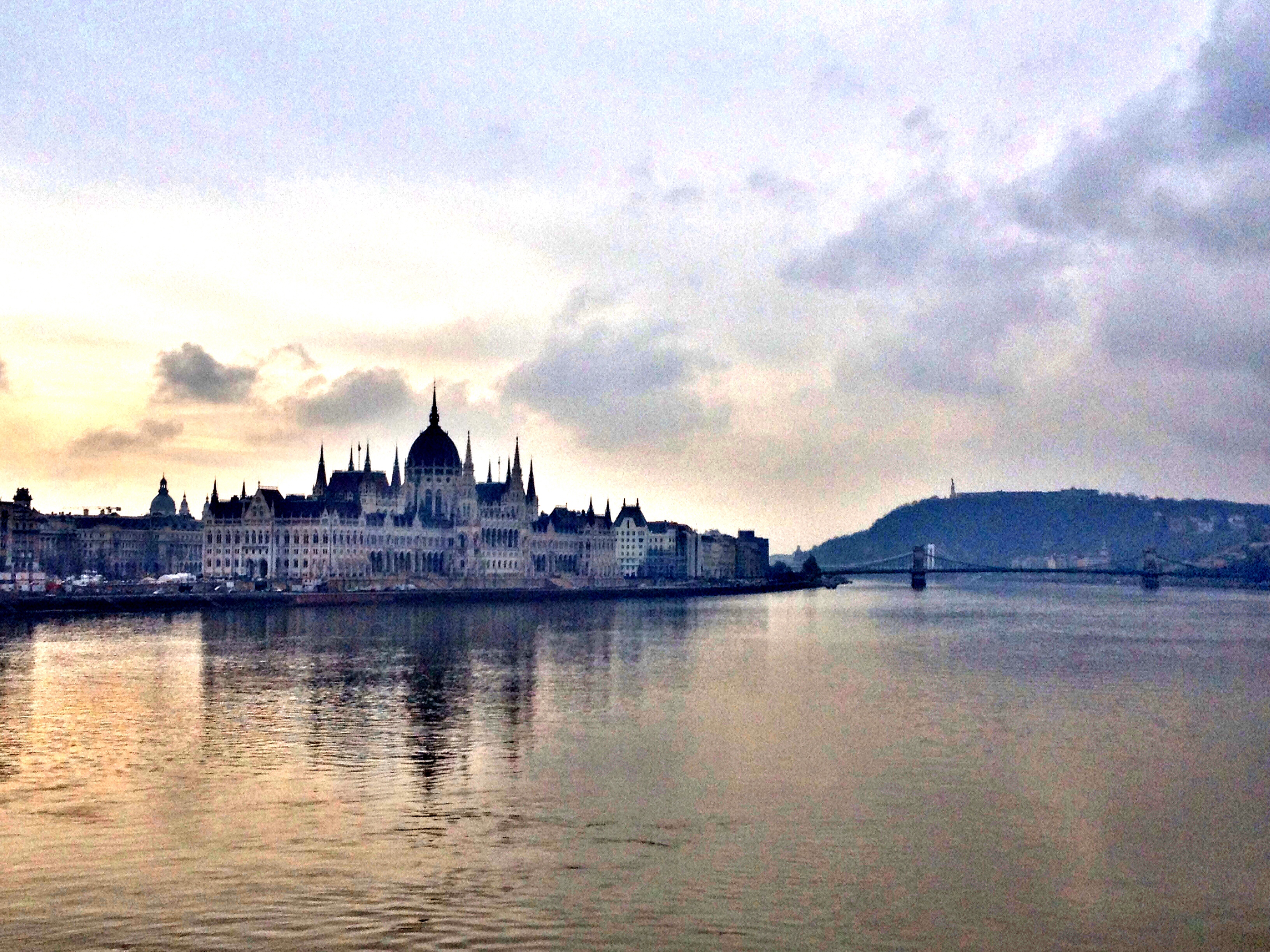
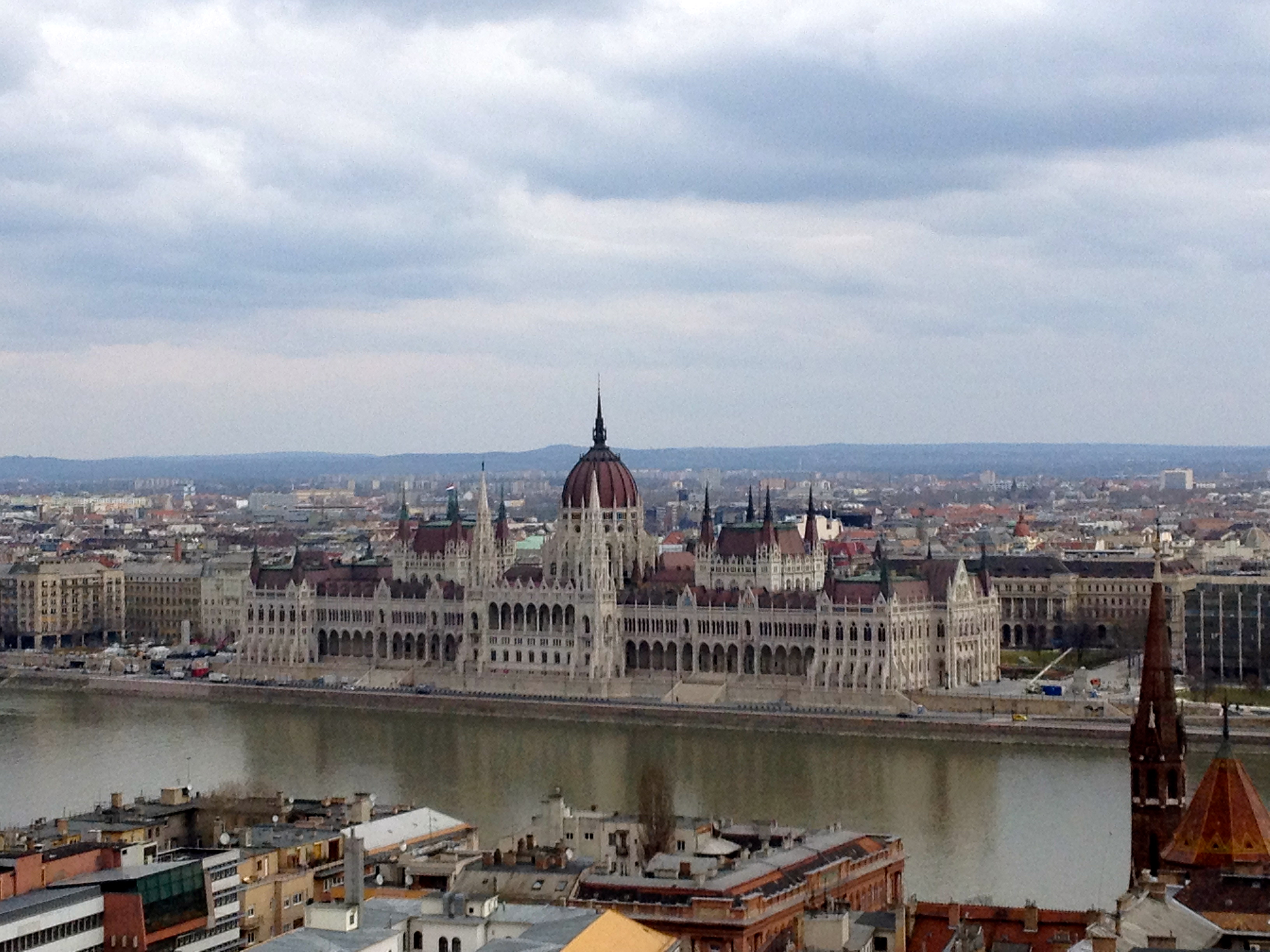
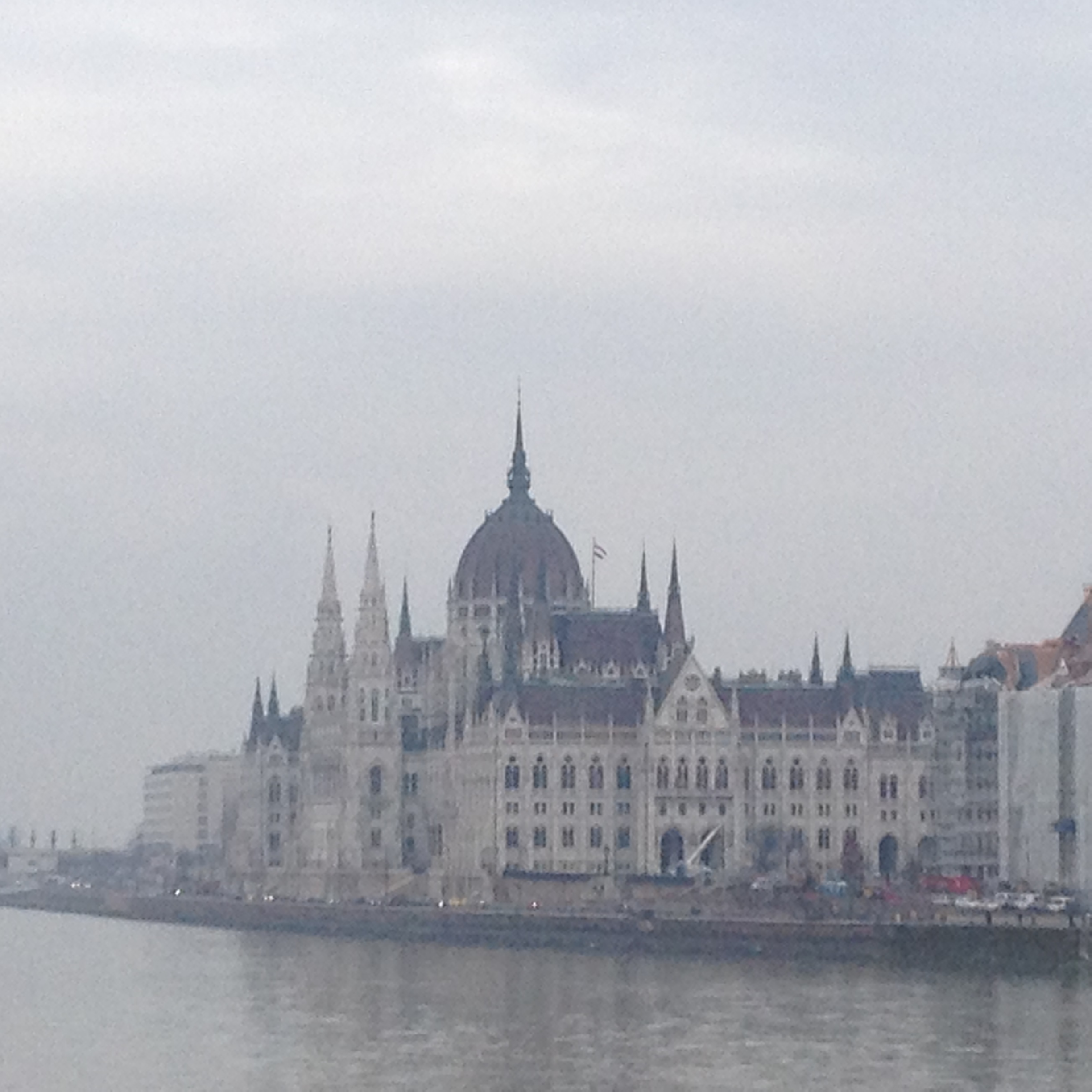
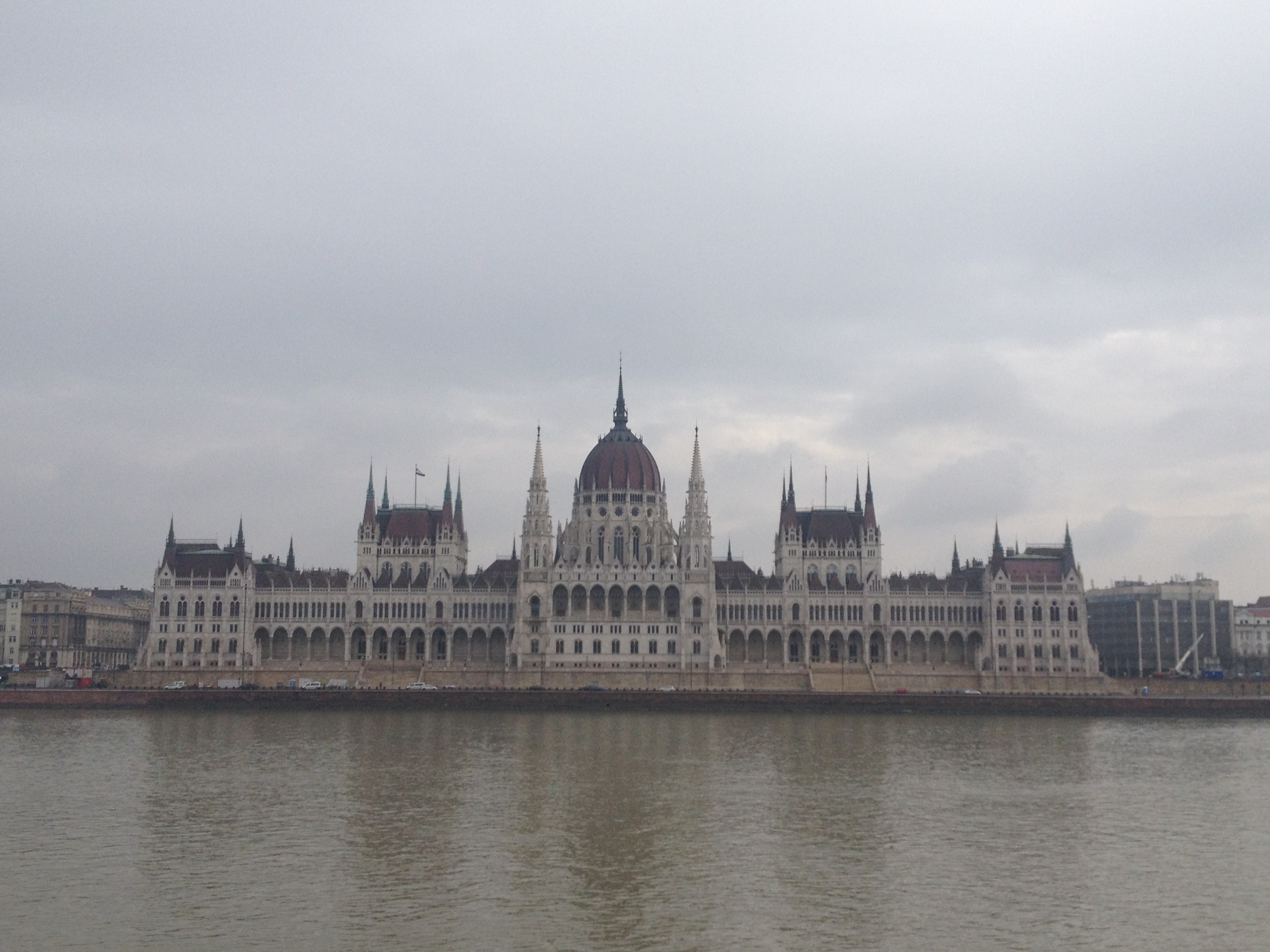
Saturday morning dawned chilly and wet, but fortunately it was misting more than raining. We figured we might as well start with the main point of interest: the Hungarian Parliament building. Like our hotel, it is on the Pest side of the Danube and was a 15-20 minute walk northwest from us.

I took a TON of pictures of Parliament from various vantage points around the city over the course of our time there. Here is a sample from Saturday, when the weather was the worst (so they get better from here!):

IMG_3342

IMG_3347

IMG_3351

Anyway, the Parliament building is just stunning from all angles, inside and out. We went on a tour and learned that it took 17 years to construct. My other favorite factoid from the tour was that the stained glass windows inside the main entrance hall had been taken out and stored before the World War II bombings, so the originals were preserved! Pretty cool (and what good foresight).

part of the ceiling of the great entrance hall

part of the ceiling of the great entrance hall

IMG_3353

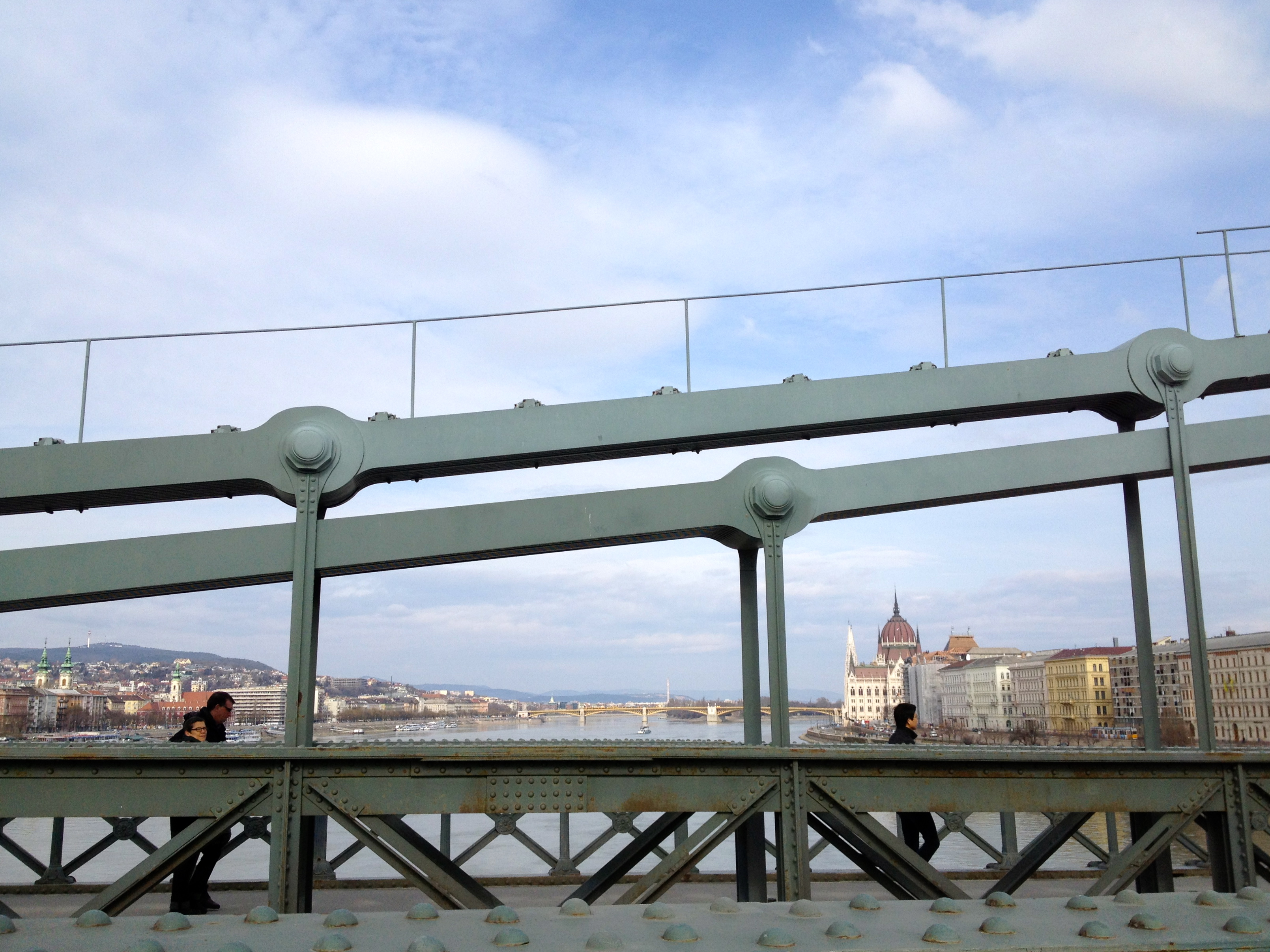
We walked a huge loop around the Danube that morning – from Parliament down to the famous Chain Bridge, across the river to Buda, and then back north to the other bridge that connects to Margaret Island in the middle. The Buda side has a lovely, paved promenade along the river where lots of people were running, and it made for easy walking. (On the Pest side they’re doing some sort of construction in the blocks south of Parliament, and this disrupts pedestrian traffic.) I’ll wait and post pictures of these same things, which we saw every subsequent day, for later on when we had better weather.

We ended up doing some further wandering back on the Pest side in the afternoon and found a mall with a lot of the stores we had shopped at together one day in Rotterdam. We spent a couple of hours in there and eventually had a very late lunch at a restaurant there, but I didn’t buy anything from the stores.

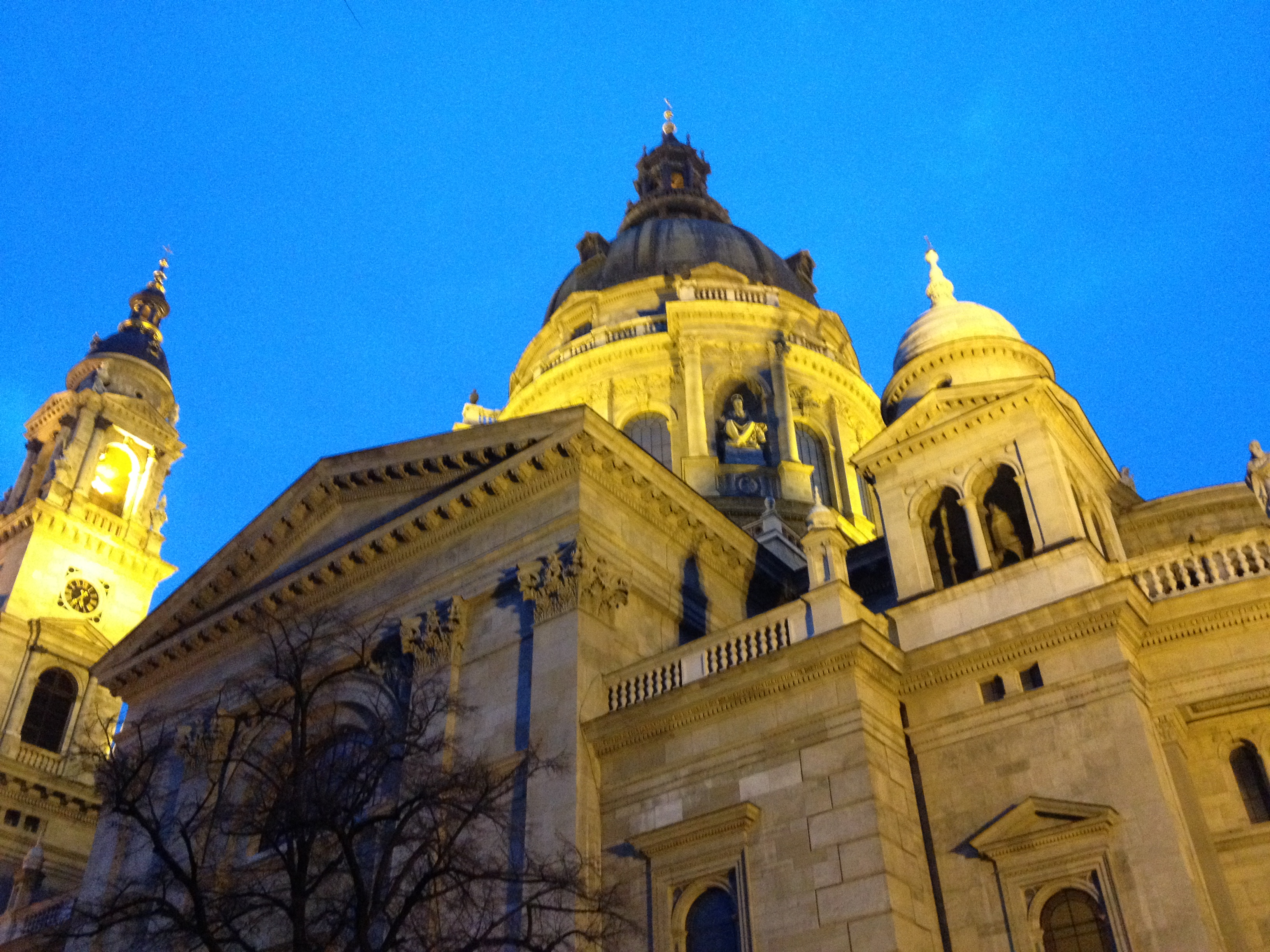
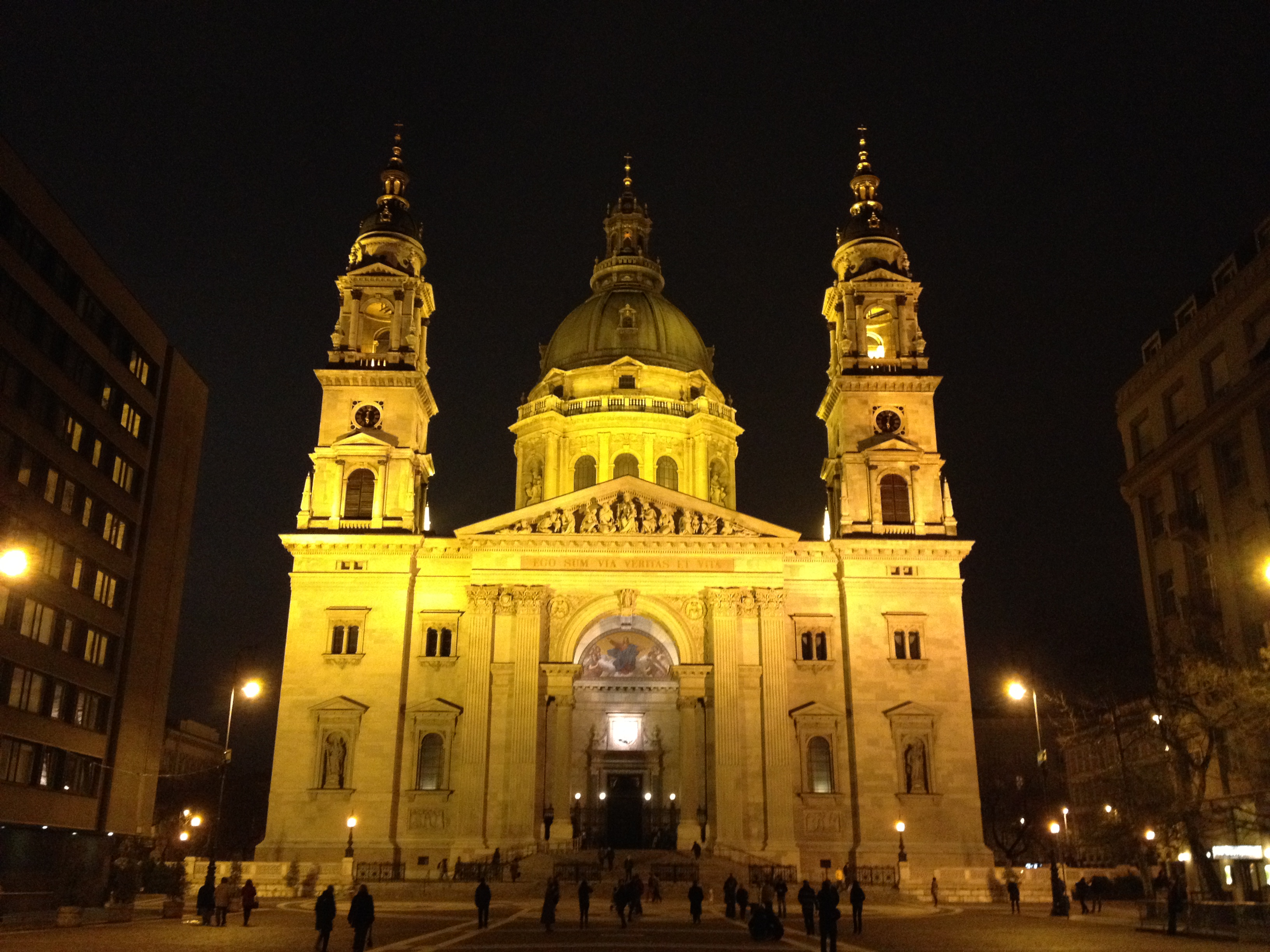
In the evening we ended up at Saint Stephen’s Basilica in the center of Pest. It’s a lovely church, inside and out.

IMG_3360

IMG_3368

That evening we dressed up (Saturday night!) and set off planning to go to an Irish pub (Iva loves all things Irish) and then another bar called Morrison’s that had rave reviews on TripAdvisor. The Irish Pub turned out to be closed, so we continued on to Morrison’s. As seems to be the trend in Budapest, this bar was built in the courtyard of a building (though it had a dancefloor and other areas inside the buildings). There was some sort of ceiling, so it was plenty warm, and the less observant would not have been aware they were actually outside. We secured a table in the main open area, and I got us drinks from the bar.

Now, we had generally been admiring the Hungarian men over the past 24 hours. For me at least, Hungary (and Croatia!) are great places because almost all the men fit the physical description of my type: dark haired, olive skinned, and handsome. I had had many occasions during the day to think to myself “mmm, Magyars.” There were, as always, SOME attractive men in this place, but on the whole we were a little underwhelmed, especially when a young, drunk kid (Iva and I are both 28, and at this point anyone more than a year or two younger than us just seems like a teenager) planted himself at our table and started talking to us. I will give him points for his persistence despite his very much less than perfect English, but he persevered FAR beyond the acceptable point, and eventually his friend joined us too, making things even more awkward. Iva and I were not there to find lovers, but we would much rather have preferred each other’s company to that of some random guys whose conversation was awkward more than anything else. We finally managed to excuse ourselves after about half an hour and headed to the dance floor, where things were much better. Still, this bar was closing at midnight (I have no idea why), so we didn’t stay that much longer. We walked home thinking that if we passed another bar we’d check it out, but we didn’t really see anything.

On Sunday morning I went out for a run (I am running the Paris half marathon in three days, agh!) and came back feeling cautiously optimistic about the weather: I had seen patches of brighter cloudiness that hinted at the forthcoming appearance of the sun, something I haven’t seen much of lately in Paris. We left the hotel at just the right time and enjoyed about 40 minutes of actual sunshine, which helped us capture these pictures:

the Chain Bridge

the Chain Bridge

view of Parliament from the Chain Bridge

view of Parliament from the Chain Bridge

Parliament from Castle Hill in Buda

Parliament from Castle Hill in Buda

There is a funicular that goes up the steep hill to Buda Castle, but we opted for the winding pathway instead (which didn’t actually take that much time or energy). Buda Castle is a bit of a misnomer – there’s not a castle there now; some of the wall built into the hill might have been part of a castle at some point, but now there’s just a large palace housing some sort of art museum. We were there for the views, which were great.

IMG_3397

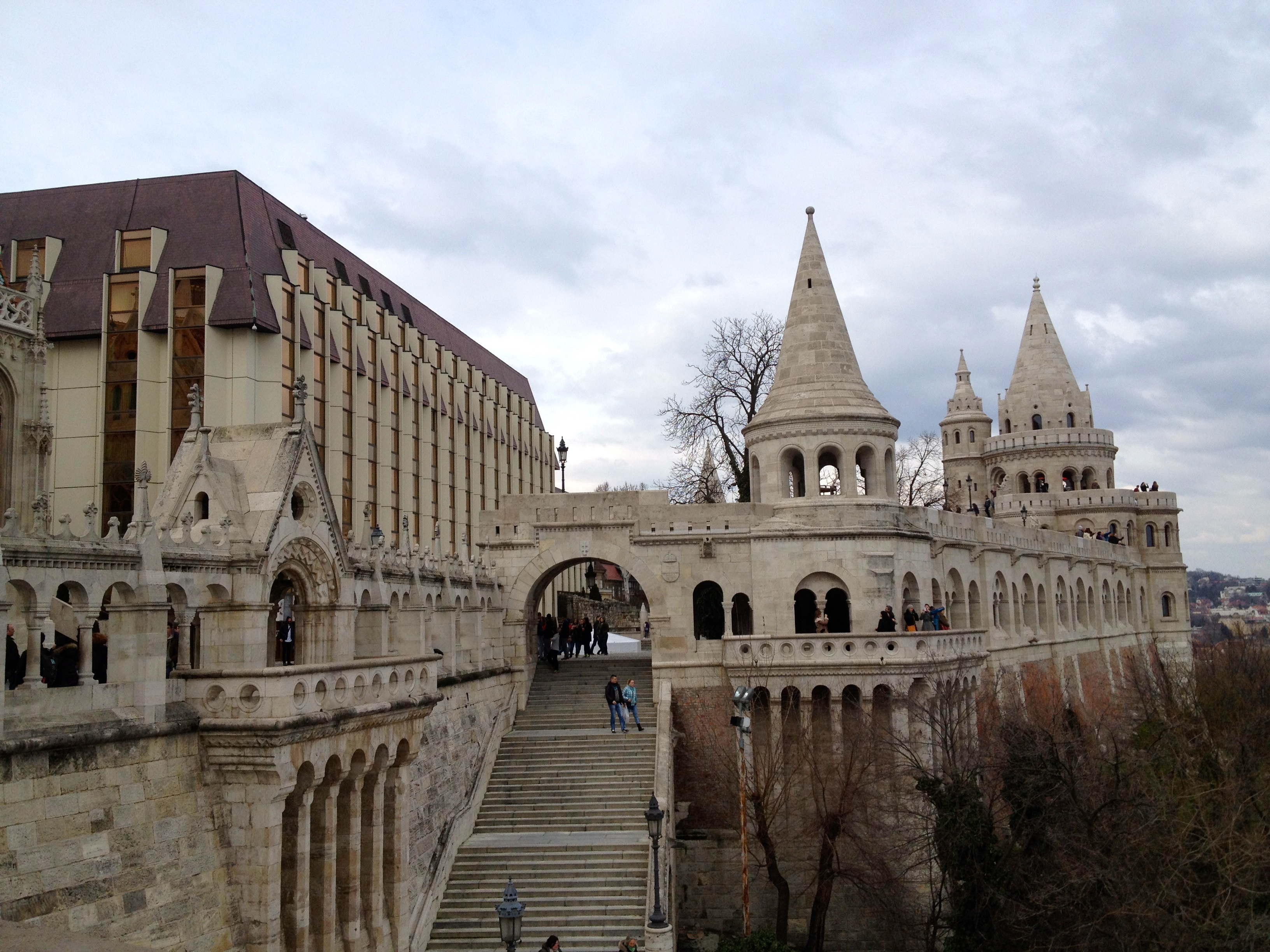
We witnessed a fun sort of changing of the guards, which involved about a dozen Hungarian men in uniform twirling their long guns and marching around while someone else played a typical drum selection. From there, we worked our way north through the Castle District to Saint Matthias Church and Fishermen’s Bastion (I have no idea why it’s called that).

The church is lovely on the outside, and though I was a bit affronted at having to buy an entry ticket, it was amazing on the inside too.

IMG_3400

IMG_3403

IMG_3417

IMG_3420

Fishermen’s Bastion is sort of like the front wall of a castle, with some turrets. It’s fun to walk through, and if we’d had more time, I would have enjoyed sipping a coffee in the cafe at the top of one of the turrets.

IMG_3408

IMG_3411

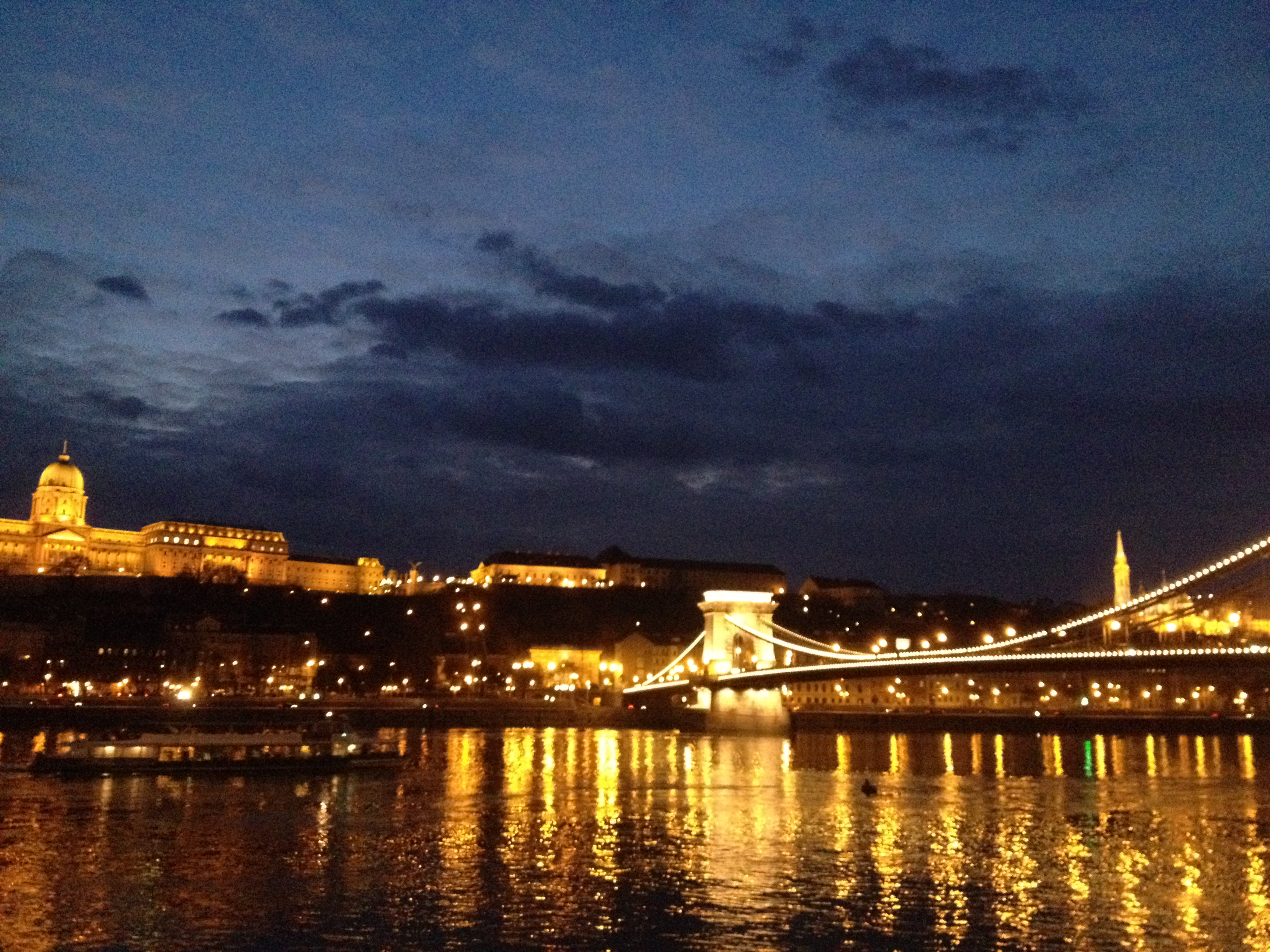
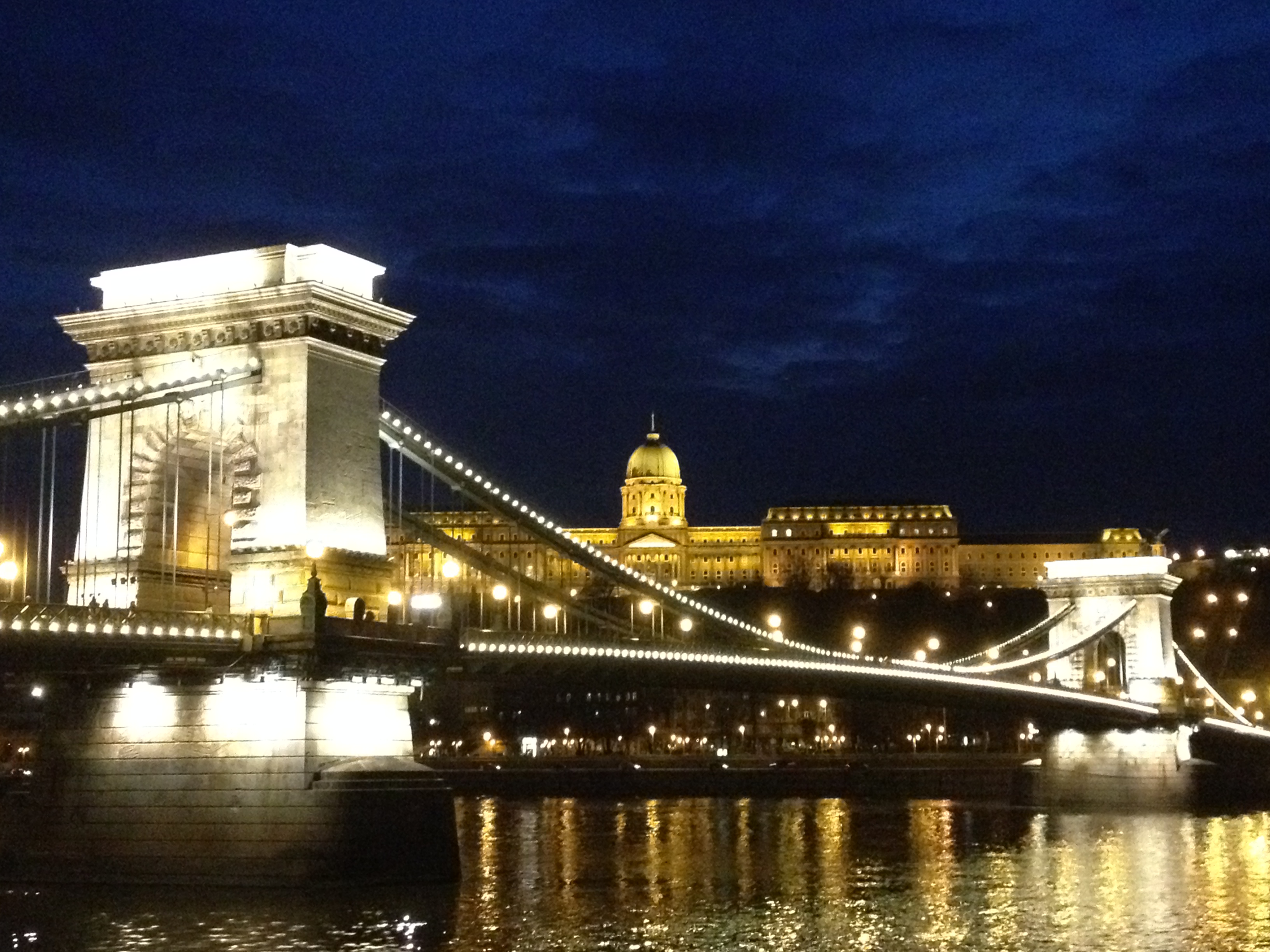
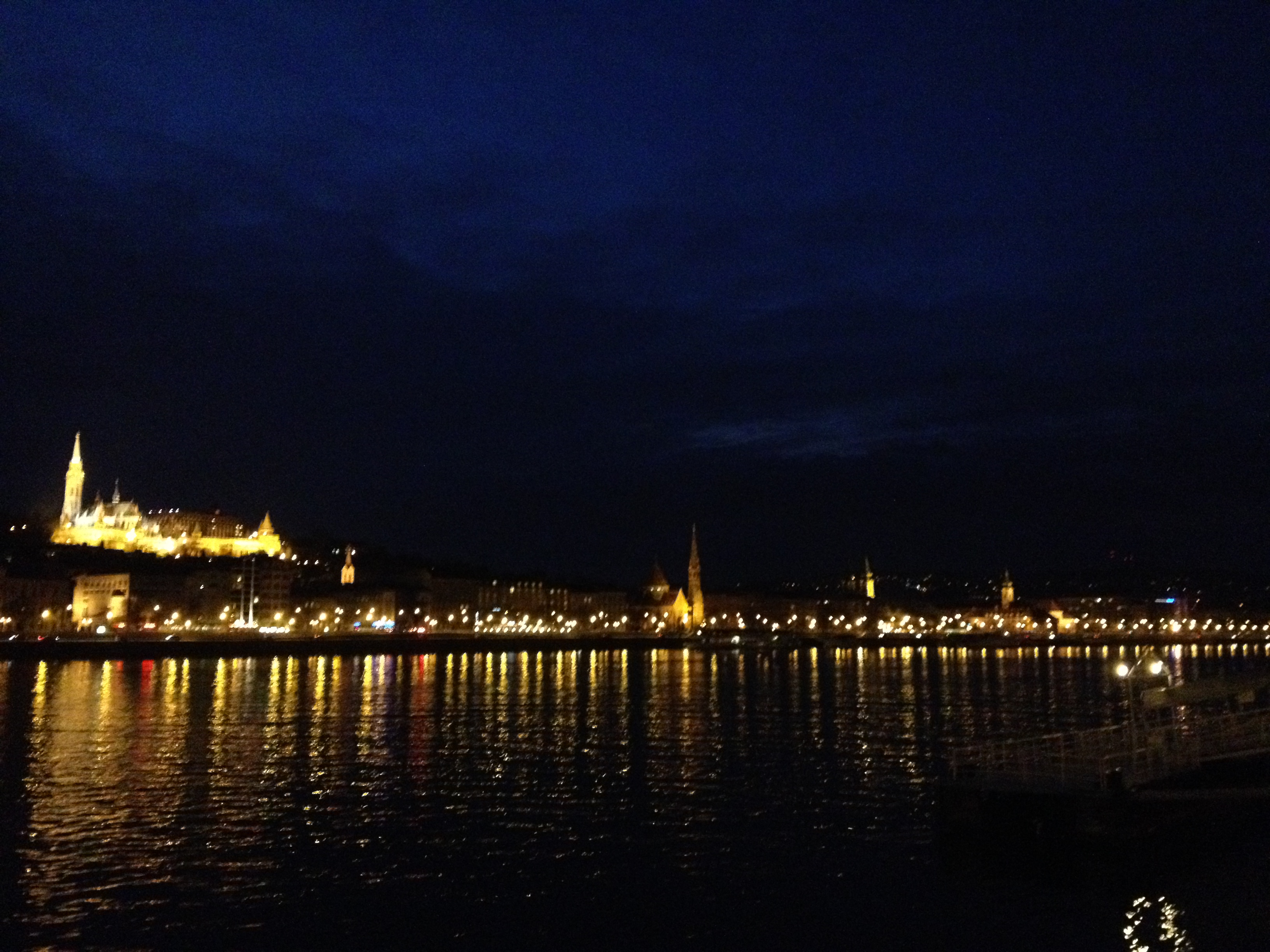
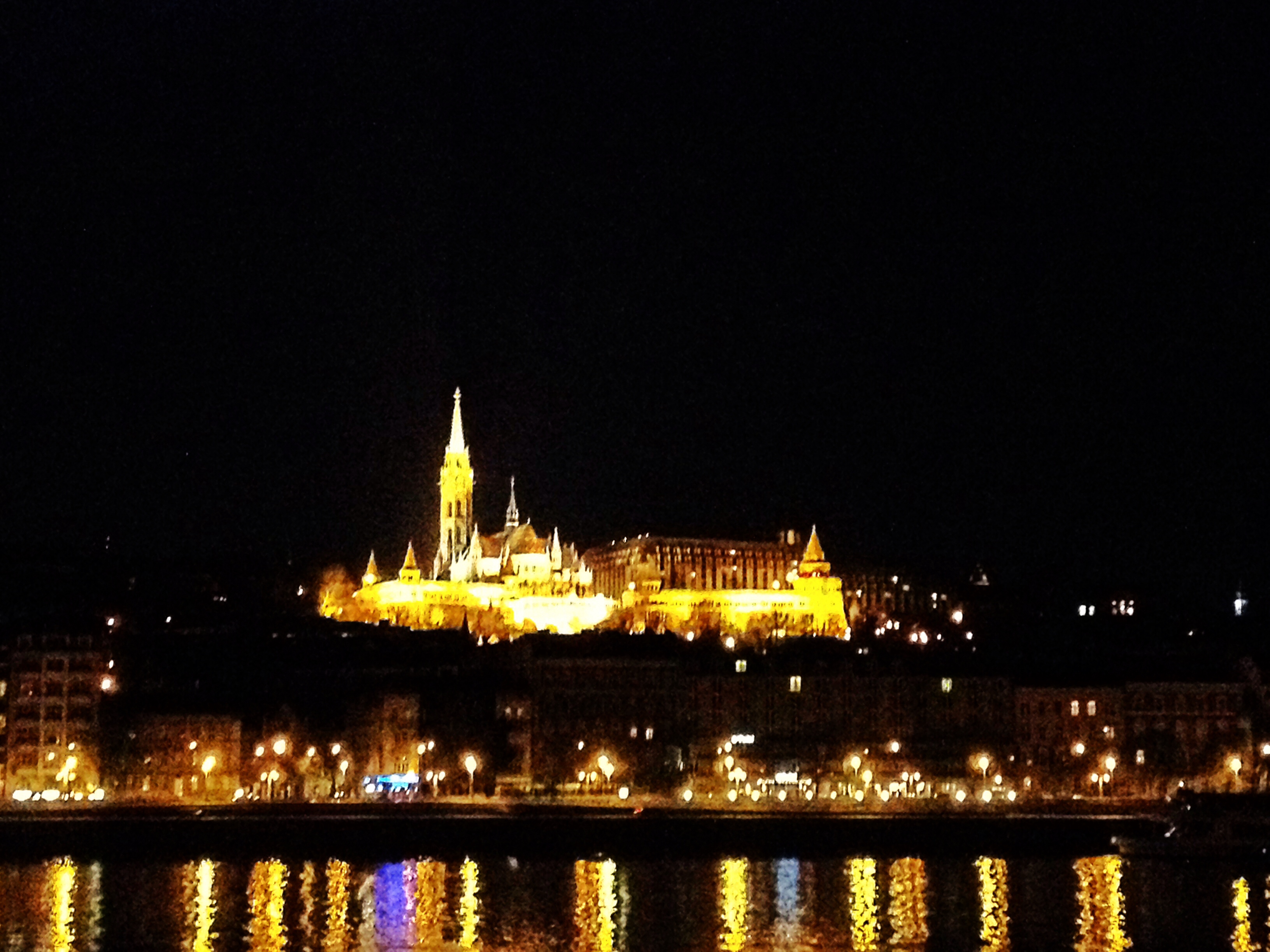
Later in the day, after additional walking and sightseeing (none of which I found remarkable enough to merit pictures or further description here), we discovered that Budapest at night is a real rival to Paris at night in terms of beauty. It was stunning, and I really wish I had a camera that took good night photos.

the Chain Bridge, with Castle Hill on the left

the Chain Bridge, with Castle Hill on the left

Chain Bridge and Buda Castle

Chain Bridge and Buda Castle

Buda

Buda

Saint Matthias lit up - it looks like something out a fairy tale in real life

Saint Matthias lit up – it looks like something out a fairy tale in real life

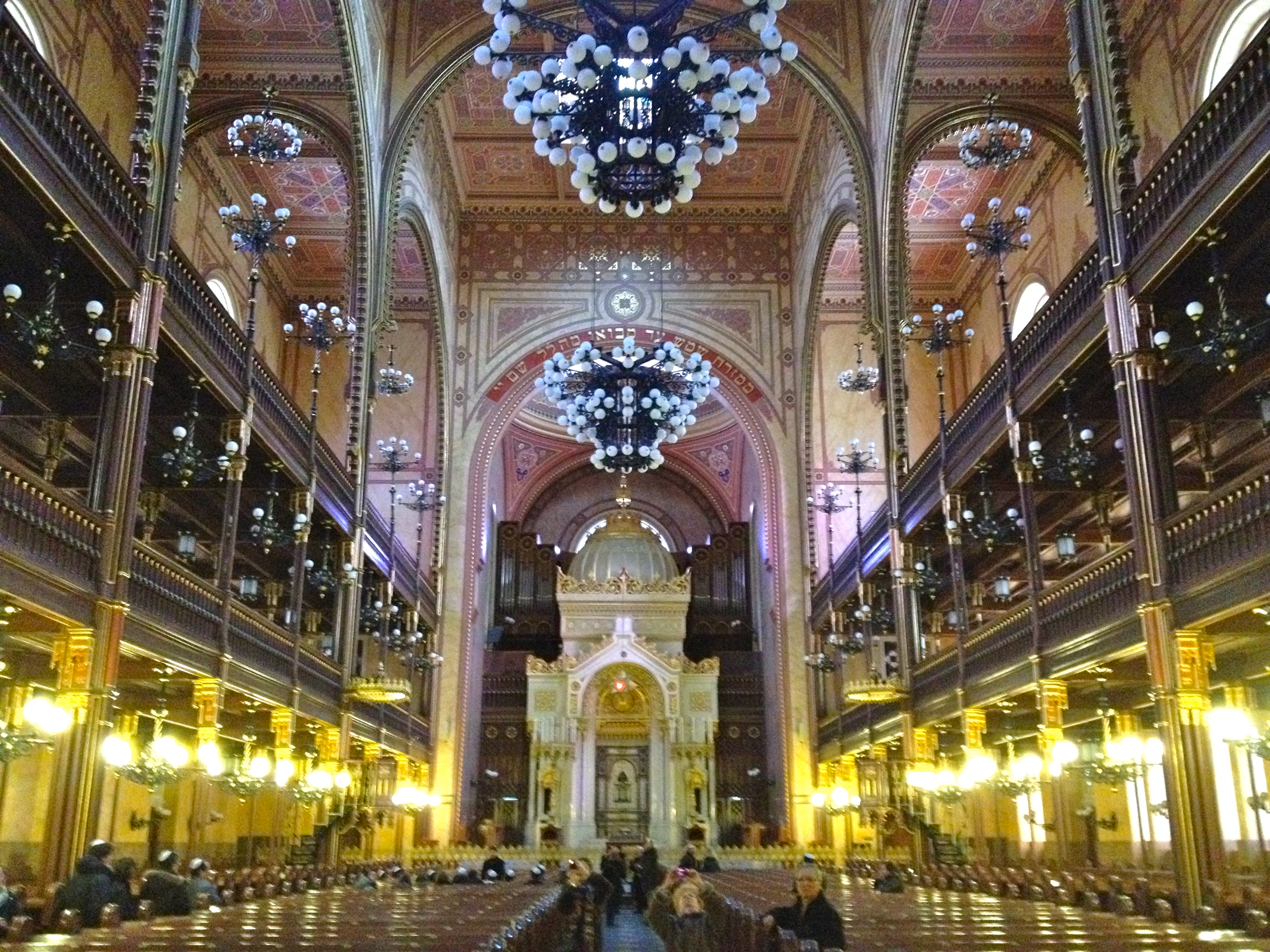
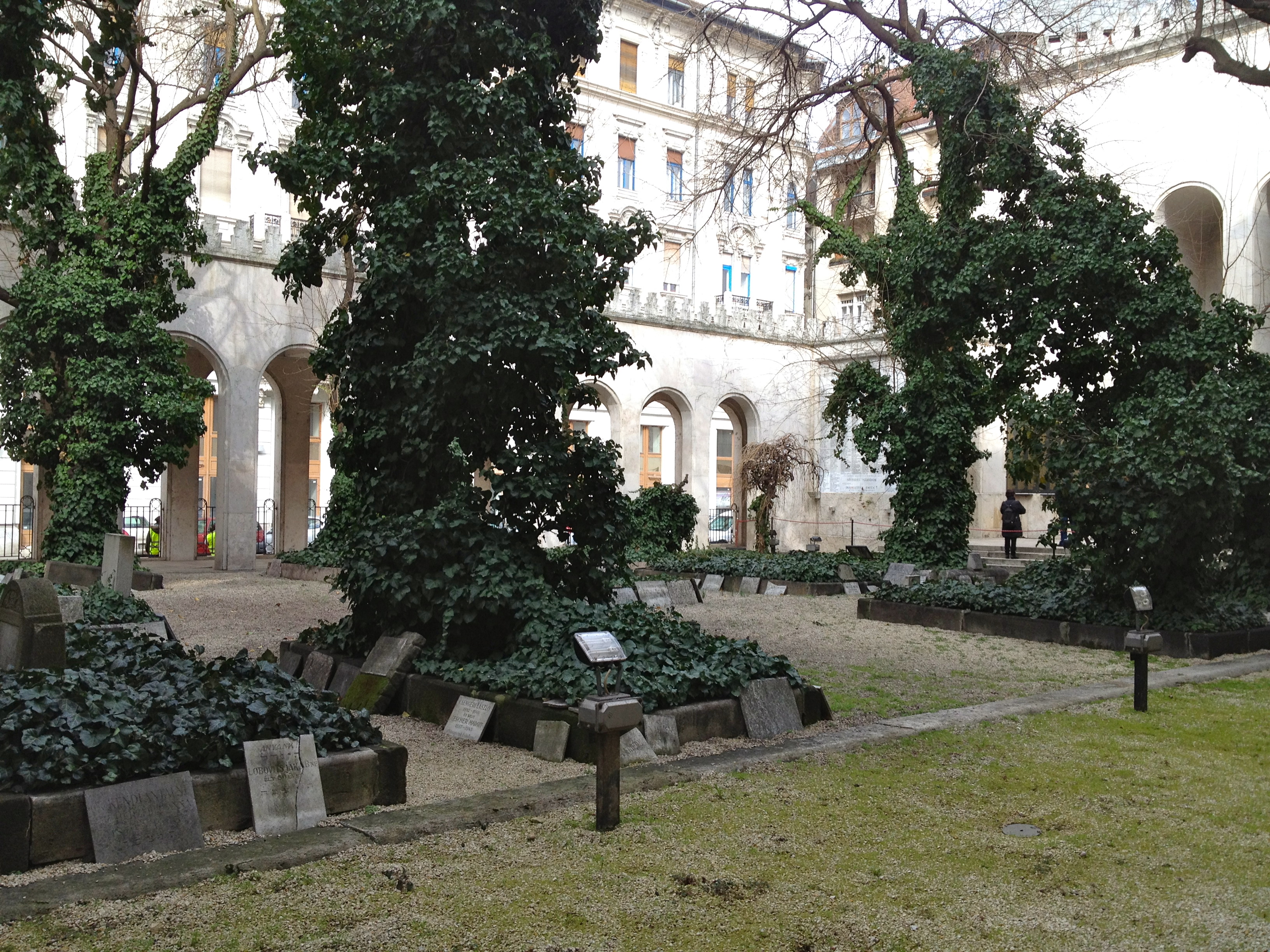
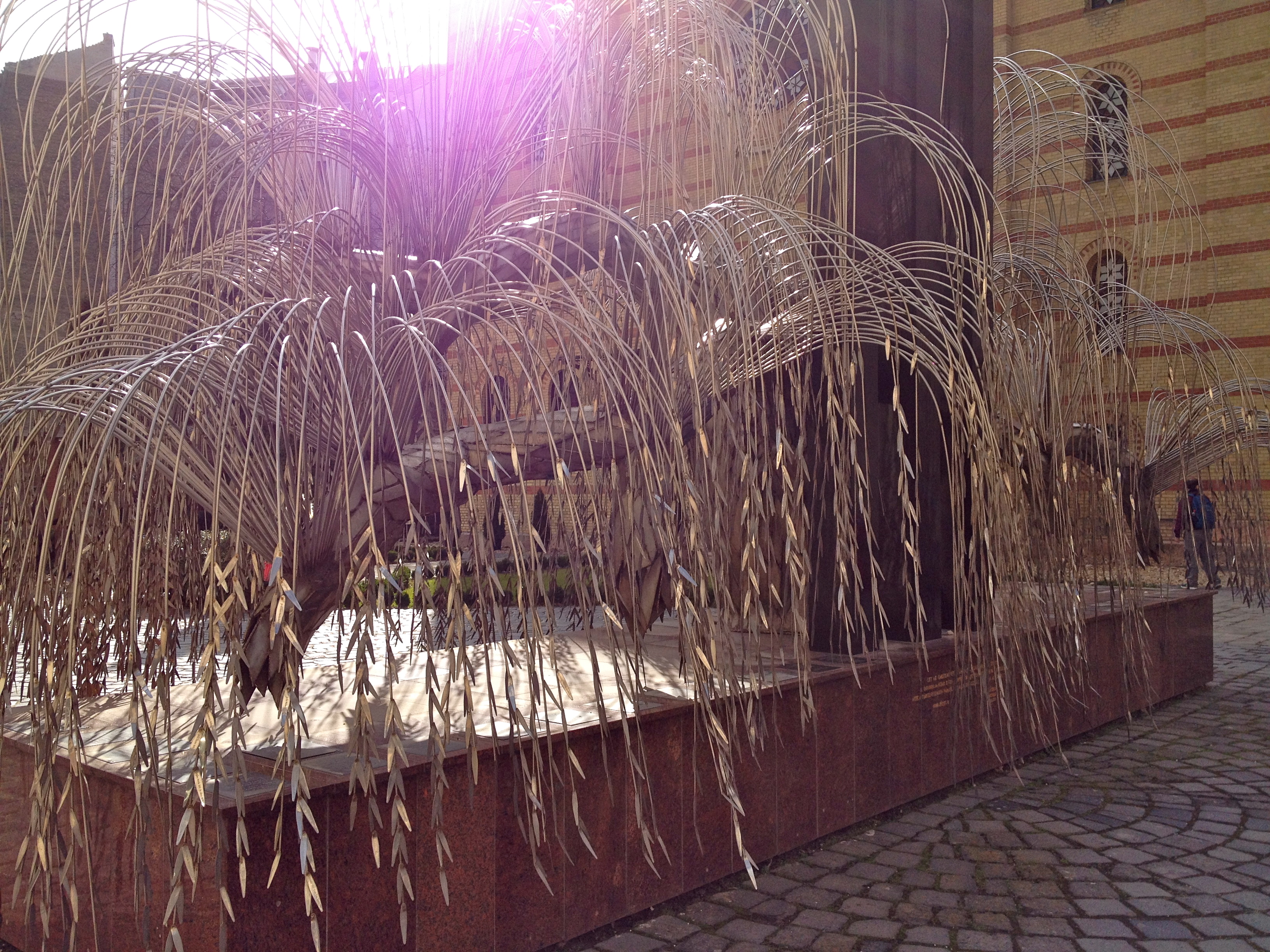
On Monday morning, having completed our sightseeing in Buda, we stuck to the Pest side of the river and walked to the southern end of the city. We stopped first at the second largest synagogue in the world and spent about an hour walking around its various areas and exhibitions. I think I had only been in one synagogue before (though I have no idea where), so this was an interesting change from the usual routine of seeing churches. I thought the interior of the synagogue was lovely (and in most ways exactly like a Christian church), but the real treasure was the rest of the grounds that dealt with the experience of the Hungarian Jews during World War II. The synagogue is in the middle of the Jewish neighborhood which became the Jewish ghetto during Nazi occupation, and thousands of Jews starved or froze to death within its walls. Several thousand of those victims are now buried in a garden within the walls of the synagogue, and there are various other memorials within the grounds.

the interior of the synagogue

the interior of the synagogue

the Memorial Garden, home to 24 mass graves of over 2000 Jews

the Memorial Garden, home to 24 mass graves of over 2000 Jews

each leaf has the name of a Holocaust victim on it.

each leaf has the name of a Holocaust victim on it.

After this sobering experience, we shifted gears and walked further south to go to the Central Market. If Anthony Bourdain has ever done an episode of No Reservations in Budapest (hmm, should check that out), he MUST have come here. It’s a huge building filled with beautiful piles of colorful vegetables, butchers selling all sorts of sausages and meat that was not immediately identifiable to me, bottles of palinka (the Hungarian version of rakija), and a few restaurants serving traditional Hungarian food (which smelled INCREDIBLE, and unfortunately I didn’t get to have any).

100% coming back here the next time I go to Budapest.

100% coming back here the next time I go to Budapest.

The most highly anticipated moment of the trip, at least for me, finally came on Monday afternoon when we went to a thermal bath. There are a bunch of these in Budapest, and I want to go back to experience all of them. We went to the Szechenyi baths in the northeastern part of the city (getting there was a whole other adventure that isn’t worth recounting here, but suffice it to say that my dead-tired legs were so happy to soak in that warm water). We arrived around 5:30 and spent the next 80 minutes or so rotating through the various thermal pools. Some were actually really cold (which would have been fine in the summer), so we stuck to the ones that were between 34 and 38 degrees celsius. It was  strange to be in something that looked like a pool or hot tub that was not chlorinated! The signs weren’t in English, so I’m not sure what differentiated each one other than the temperature, but there were definitely differences in the color and smell of the water. Some were more green and had an almost menthol-like scent wafting off the top. It was LOVELY, and if I lived in Budapest, I would go at least once a week.

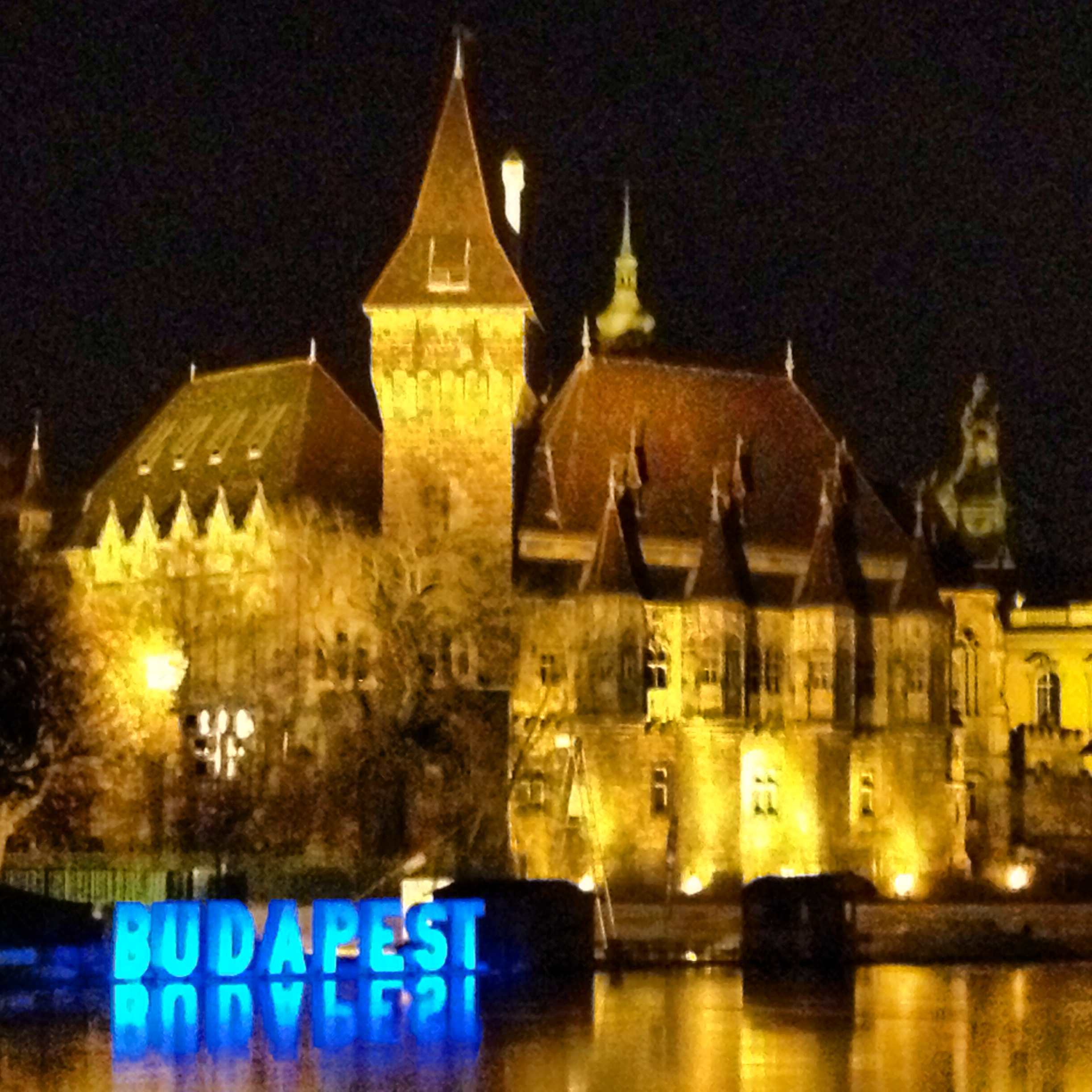
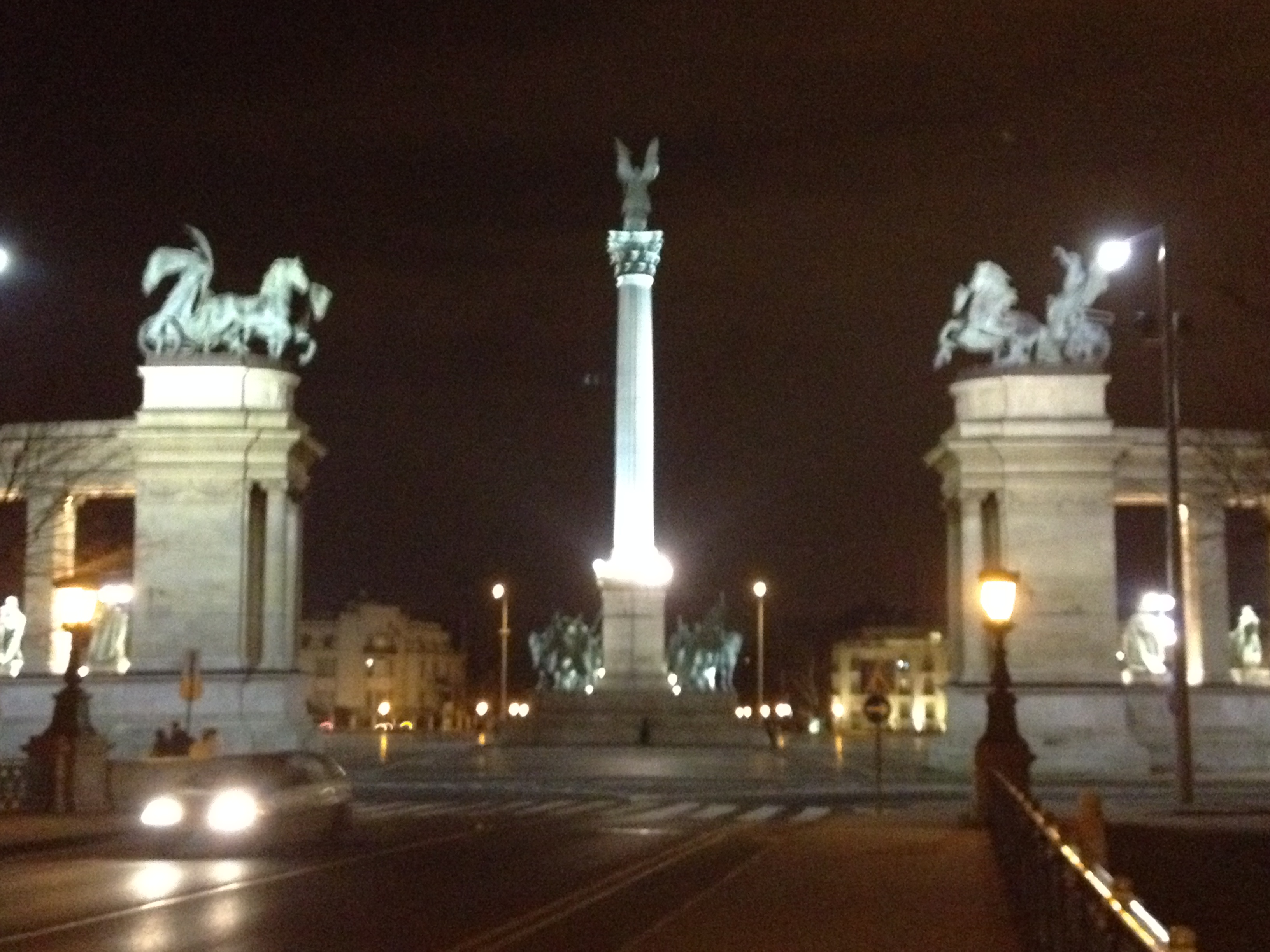
On our way home we passed an ACTUAL castle and then went through Heroes Square, both of which were, per the city standard, beautifully lit up:

the color of the Budapest sign changes every few seconds!

the color of the Budapest sign changes every few seconds!


Heroes Square

Heroes Square

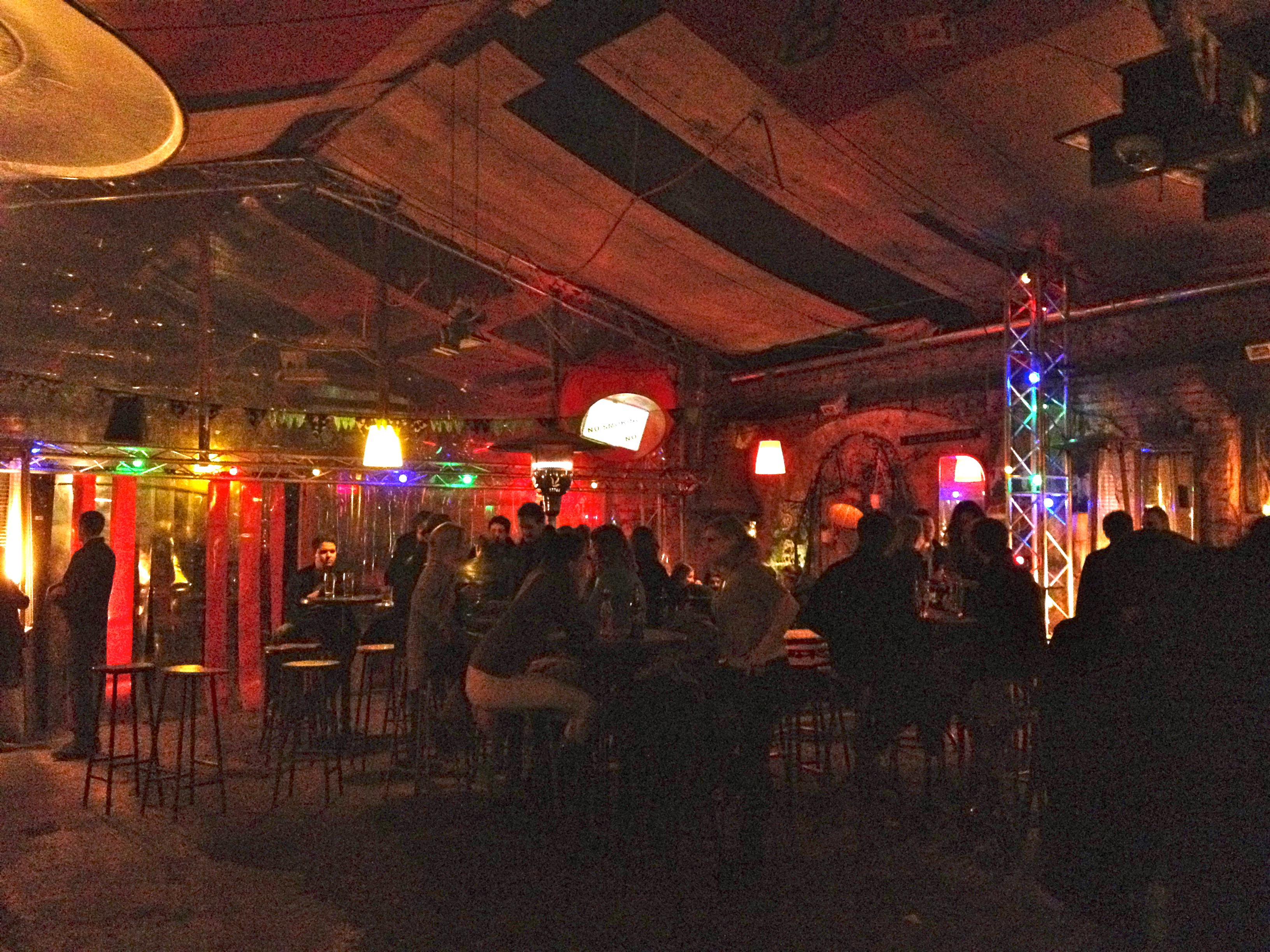
Our final act of tourism in Budapest was to go to a ruin pub on Monday night. I’d read about these ruin pubs but still wasn’t really sure what they were. This is a good opportunity to discuss how my expectations of Budapest compared to what I actually saw in Budapest. Having seen a solid amount of formerly (or, in the case of China, currently) communist countries, I was expecting the city’s appearance to reflect a lot more of that history. Instead, Budapest could just as easily be a city in western Europe; it is chock full of grand architecture and is one of the most aesthetically pleasing cities I’ve ever seen. Thus, I’d expected the ruin pubs to tie in the visual element of post-communism that I had anticipated in the rest of the city.

The ruin pub we visited was, in a word, awesome. Like the bar we went to on Saturday night, this place was build into the exterior space between a set of buildings. It was a huge amount of area – there were at least six separate rooms, some of them larger than entire distinct bars. Iva’s assessment of the decoration was very accurate: “it’s like all the stuff that no one wanted anymore ended up here.” The “ceilings”, walls, and other surfaces of this ruin pub were decorated with all sorts of random stuff – disco balls, buckets, netting, toys, old radios, shovels, fake flowers, dolls, etc. This is another situation where a video would be a lot better at conveying the overall atmosphere. There were plenty of people there despite it being Monday night.

IMG_3486

IMG_3488

…and that about sums up Budapest! We took an afternoon train on Tuesday, but we didn’t do anything else of note on Tuesday morning. The journey back to Zagreb was much the same as the journey to Budapest, though with fewer people on the train.

My last spring break ever may not have been spent on a tropical beach somewhere, but it was still great! (It was my first and only European spring break!)


Last Spring Break Ever, Part 1: Zagreb, Croatia

Hi readers! It’s been a very long time since my last post, but as some of you probably know, that is because I’ve been living/studying in Paris since August and have been maintaining a separate blog for that experience! I love Paris so much that I have not been very motivated to leave, but I finally left France (for the first time since August) last week to take advantage of my last spring break ever.

I flew to Zagreb last Thursday to reconnect with my Croatian friend Iva, whom I met while working in The Hague during the summer of 2012. We hadn’t seen each other in 19 months, so this reunion was well overdue! Iva lives in a different city, but we agreed to meet in Zagreb and then take a train from there to Budapest the day after I arrived.

IMG_3305

I had been to Zagreb twice before: first in August 2006 with my family and then again (just for an evening) in June 2011 while I was working with World at Play in the nearby city of Karlovac. Zagreb is quite different from the coastal cities – it’s surrounded by small mountains and lacks the beautiful aquatic vistas that make Dalmatia such a treasure. It’s also a grittier city – although it doesn’t bear many scars of the war (unlike the pockmarked streets of old town Dubrovnik and the many abandoned homes you’ll pass while driving through countryside), it bears the signs of a politically restless populace. When I first saw Zagreb in 2006, I was aghast at the amount of graffiti. It was hard to find a building or tram car that didn’t have something scribbled on it – even the beautiful national theater. I had much the same impression in 2011. It’s also pretty small as far as capital cities go – it has a population of 790,000, making it about 2/3 the size of my own hometown in Virginia. The city center is a fairly confined (though very charming!) geographic area, so there just isn’t a ton of city to see.

It’s fair to say that while I didn’t dislike Zagreb, it has never ranked among my favorite cities. I tend to favor big, beautiful cities with water (Paris, London, Rome, Rio, etc), and the graffiti really bothers me. But as is obvious to those who know me, I really love Croatia since it’s the ancestral homeland of my mom’s family. I am always excited to go back and try to make use of the ~200 words and phrases that I’ve accumulated over the last several years, and this was the first time I would be in Croatia since my time at the ICTY and learning so much more about the war through that work and subsequent research that I completed last year. Plus, Croatia’s in the EU now! (There’s really mixed public opinion about that.)

I really enjoyed the 24 hours I had in Zagreb last week. I landed at the little airport around lunchtime, successfully withdrew kunas from an ATM (sidenote, traveling in Europe is so much easier with a European bank account!), and made my way outside to see about taking a bus into town. It wouldn’t have been super expensive to just take a taxi to my hotel, but after I successfully managed to go by myself by a regular city bus from the airport in Bucharest (when I spoke zero words of Romanian), I figured this would be a reasonably low-stress undertaking. Thankfully, I was right! The bus came when and where it was supposed to, and while we were waiting for it to leave, I fell into conversation with a man who had originally asked me (in Croatian) what time the bus was leaving.

This man, probably in his mid-sixties, turned out to be a philosophy professor from Rijeka (a city on the northern end of the coast) who spoke not only English but also French, so when I revealed that I was visiting from Paris, we started chatting in French. I explained why it is that I look Croatian but don’t speak much of the language, and we ended up discussing a host of different issues during the 30-minute trip into the center.  At some point I revealed that I had spent a summer working at the ICTY. (It is important to note that I don’t just blurt that out to people from the region; I don’t remember how it came up, but I only mentioned this after feeling it would be neutrally or positively received.) I of course would have loved nothing more than to talk Balkan politics with a bunch of people, and I was very glad that this professor was very willing to discuss some of these issues with me; as soon as I said I’d worked at the Tribunal, he asked for my opinion on the acquittal of Ante Gotovina, a Croatian general whose appeal process was going on during my first week in The Hague and who was ultimately acquitted several months later, to great consternation and anger on the part of Serbia. (I actually wrote a paper last year on the impact of various recent acquittals, starting with that one, on the peace process in the region.) I’m not an expert on the Gotovina case (I’m much more familiar with what happened in Bosnia), but I offered my perspective and got a positive response. The professor went on to say that he had been in Zadar during the war and that he had had the surreal experience of seeing former students among those firing on the city. It’s hard to imagine such a thing.

I parted ways with the professor once we arrived in Zagreb, and after a quick taxi ride, I arrived at the Hotel Dubrovnik just around the corner from the main square. I was already thinking my trip was off to a good start, and I was even more pleased when I arrived at the desk, greeted the two people with the usual “dobar dan” (“good day”), and prompted a flurry of responses in Croatian because, as they explained, “oh! you said that so perfectly we thought you were Croatian.” This is another reason I enjoy being in Croatia: I really do fit in perfectly in terms of physical appearance. I have, on numerous occasions, watched people (such as security agents at the airport) go from speaking English to someone else to switching back to Croatian to address me because they just assumed that I was one of their own. I can pass for a native of most of the countries I’ve visited, but I think Croatia comes out on top for the number of instances of someone thinking I was a from that country. (Curiously, in Paris I am frequently assumed to be Brazilian – not that I object to that!


Jelačić Square

Jelačić Square

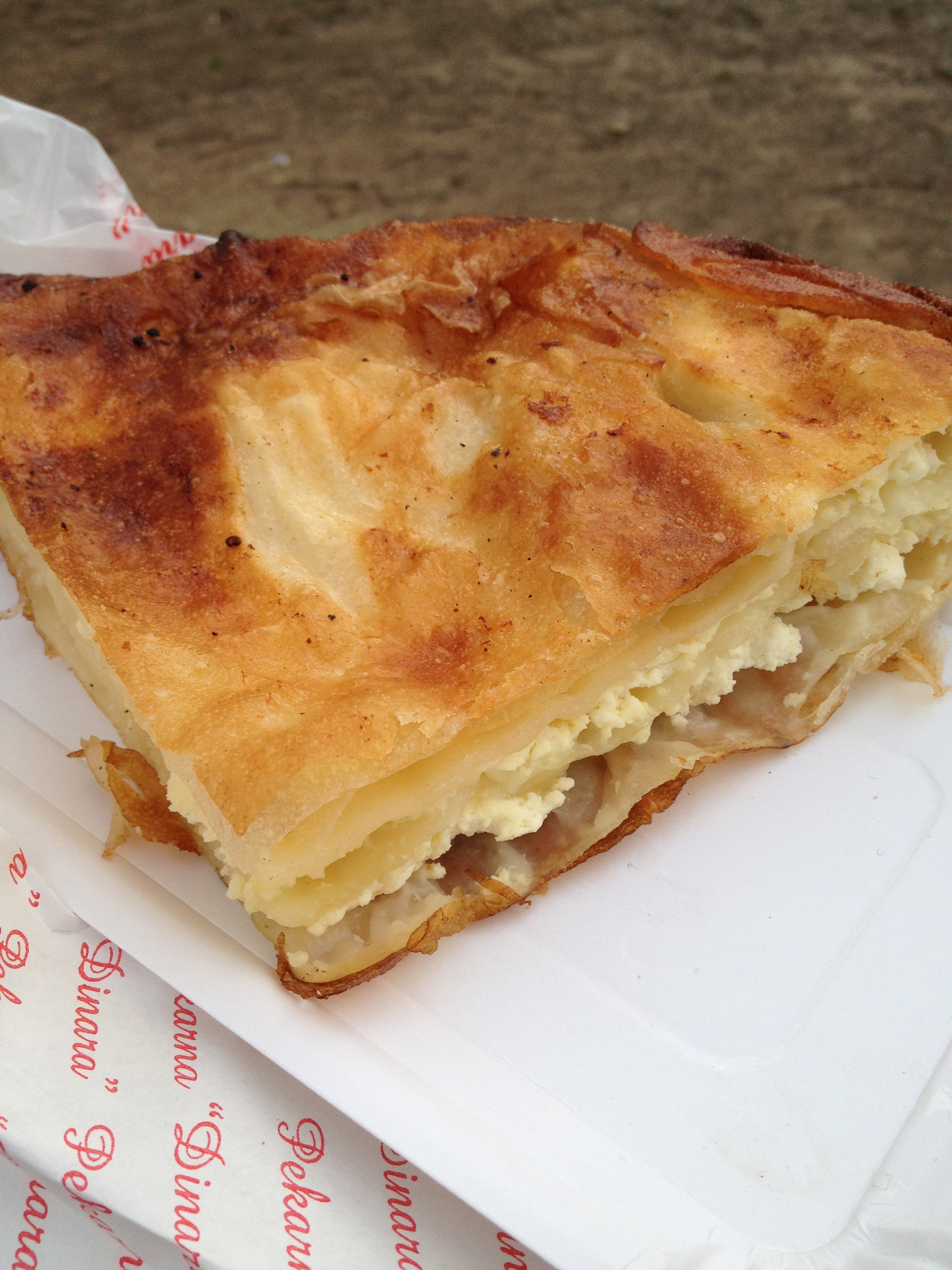
After taking a few minutes to check email, get myself oriented, etc, I left my hotel room in search of lunch and a few museums. While on my World at Play trip, I grew to love something called burek, the best of Balkan comfort food and originally from Bosnia. Burek is layers of greasy pastry stuffed with cheese (not sure what kind – something a bit like feta?), spinach, and potatoes. It is very heavy but is SO delicious! I crossed Jelačić Square and walked up the stairs to the Dolac market, a huge outdoor market filled with colorful produce stands. Just around the corner I found a bakery chain I’d read about, Dinara, and successfully procured some burek with cheese (sir). I sat down on a bench in front of the cathedral and savored it while watching passersby.

Dalnac market circa 2006

Dalnac market circa 2006

mmm, burek.

mmm, burek.


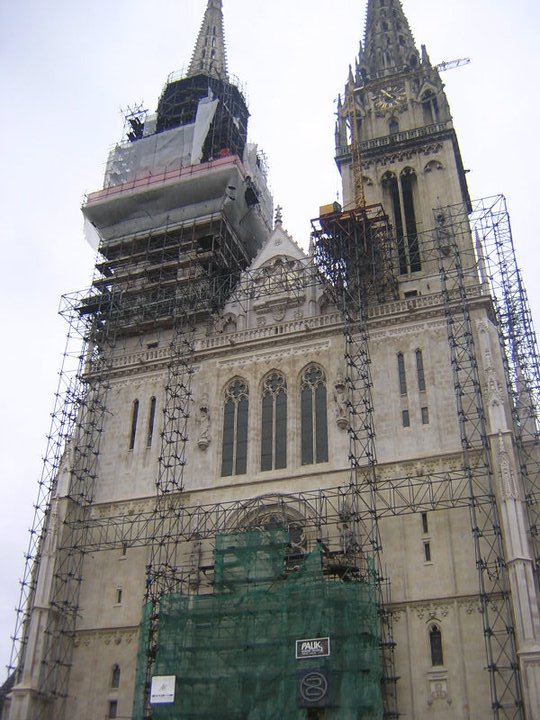
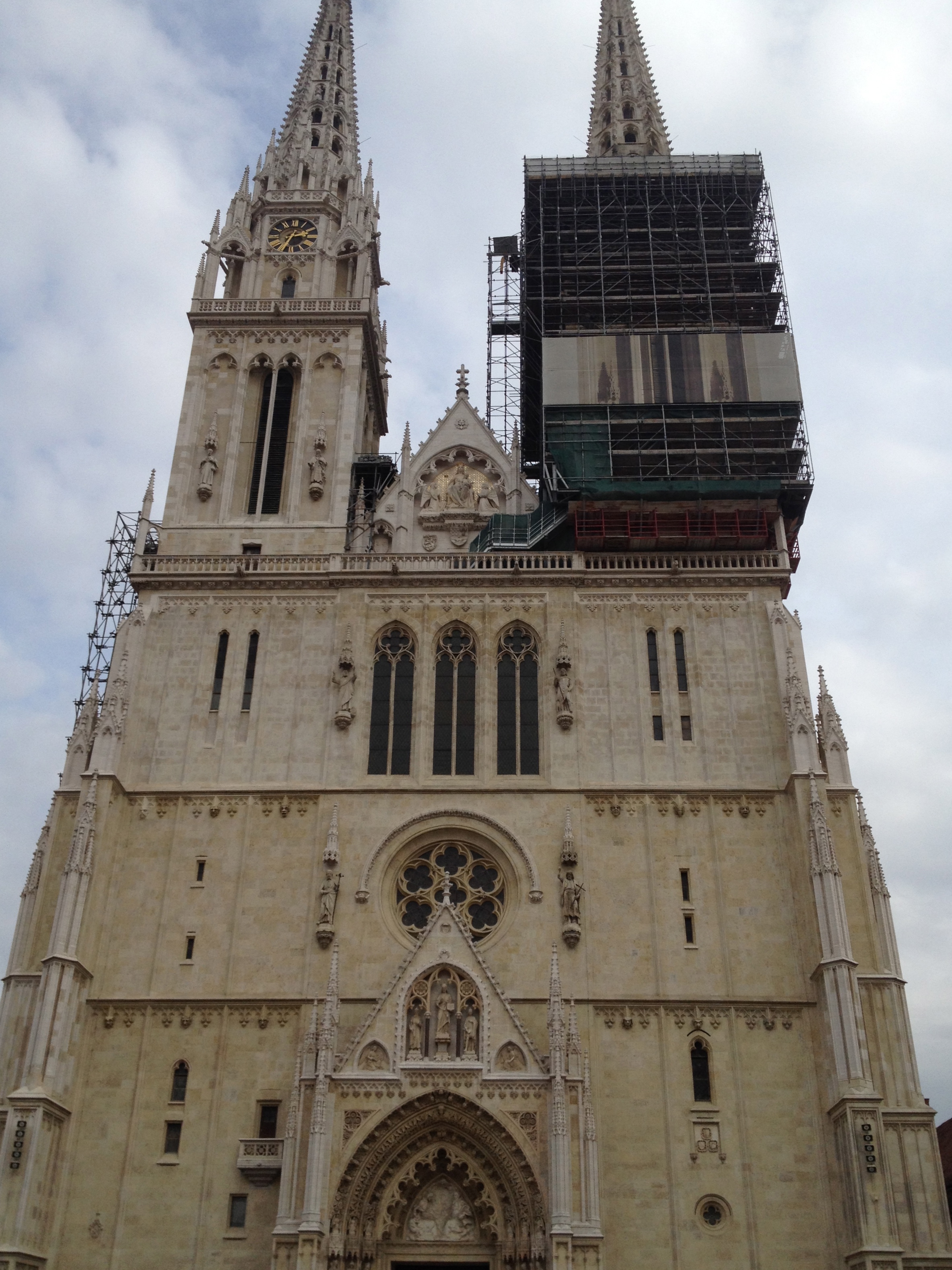
About the cathedral: I have never seen it without scaffolding somewhere. I really hoped that the restoration would be done by now! Here’s what it looked like when I first saw it in 2006:

168029_643384510197_6913346_n

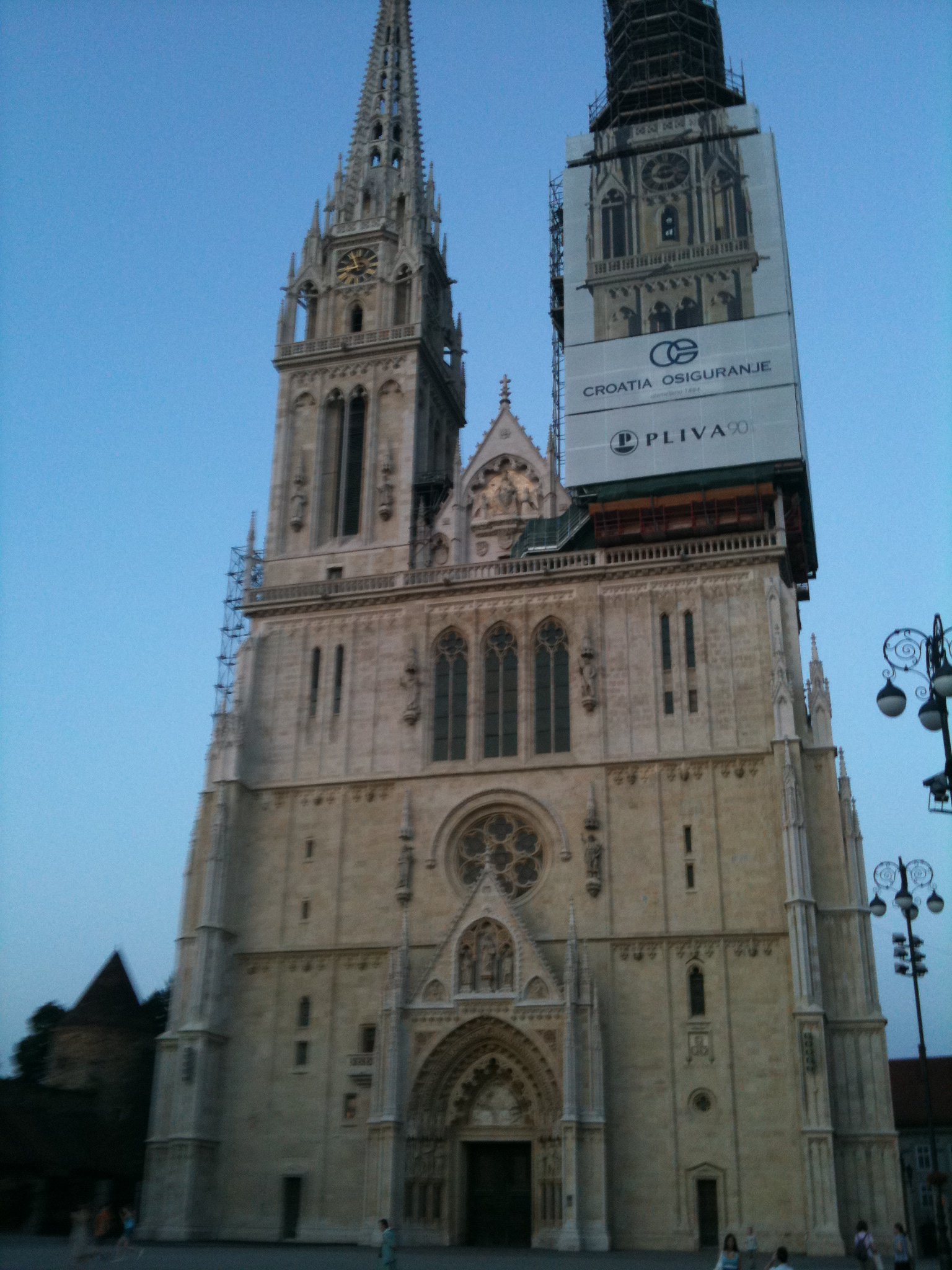
And here it is in 2011:

279028_729265179647_1730604_o

I’m laughing now that I see that one, because not much has changed in the last three years; here’s the one from last week:

IMG_3274

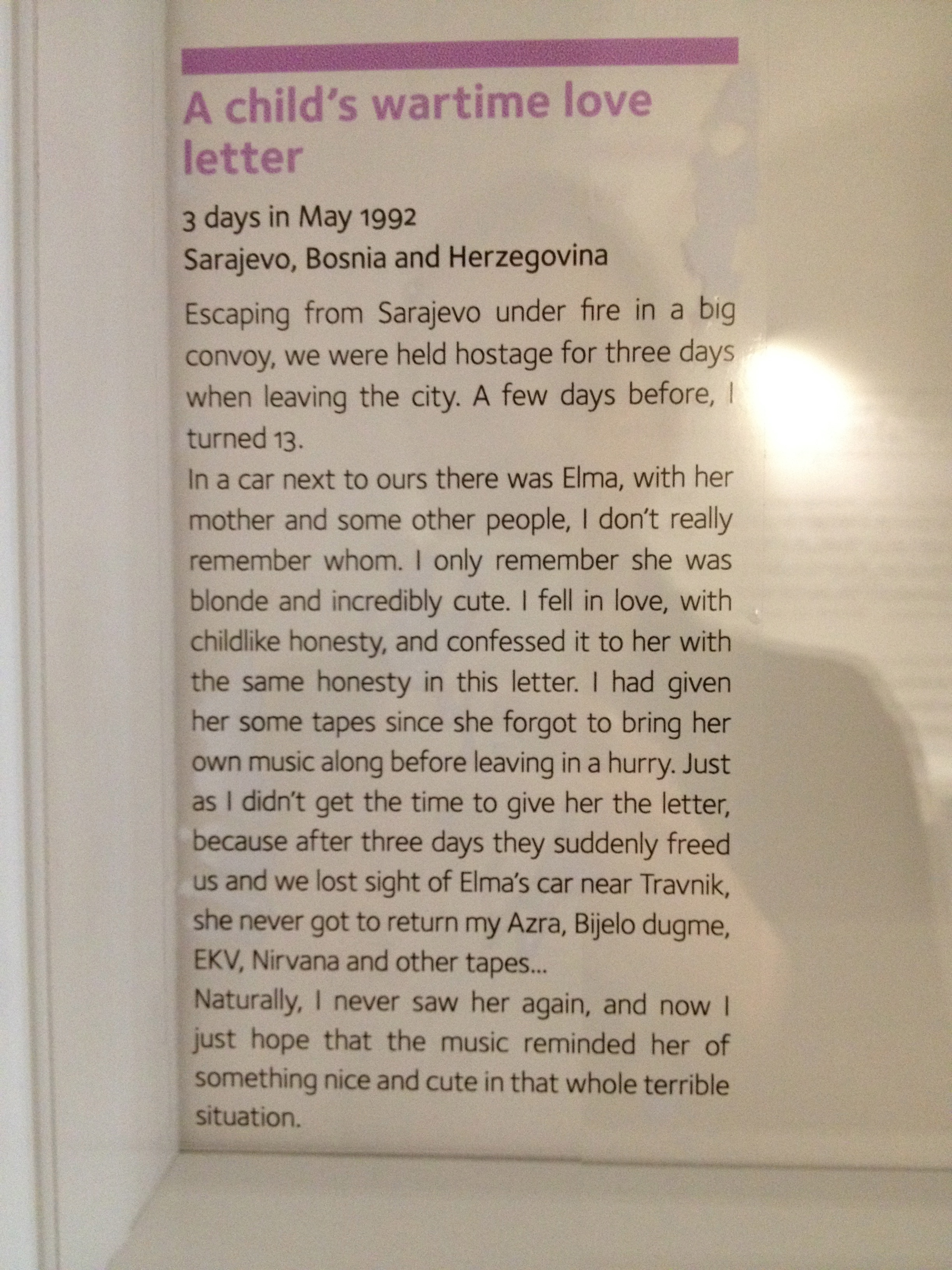
Anyway, after enjoying my first burek in nearly three years, I wandered northeast in search of a very unique museum that had been featured in a New York Times article: the Museum of Broken Relationships. People from all over the world (though with a curiously high concentration of entries from Paris and Denver) submit an object that they associate with a past relationship and then write an explanation – sometimes just a sentence but sometimes multiple paragraphs, explaining the significance of the object within the context of the relationship. It was a really fascinating collection of random curios and even more interesting insight into the nature of relationships and love.

IMG_3285

one of my favorite submissions

one of my favorite submissions

Next, I crossed the street to go through the Croatian Museum of Naive Art. Disclaimer: I still have no idea what Naive Art is. I had never heard of it before and thought maybe I’d figure it out while going through the museum, but ultimately I couldn’t find any unifying trend among the pieces I saw. I did see a few pieces I really enjoyed but otherwise didn’t find that the museum merited more than the 15 minutes I spent there.

Both of these museums are just down the street from another famous church, St. Mark’s. I am not sure if I went inside this church back in 2006, but really the outside is the part that stands out:

IMG_3293

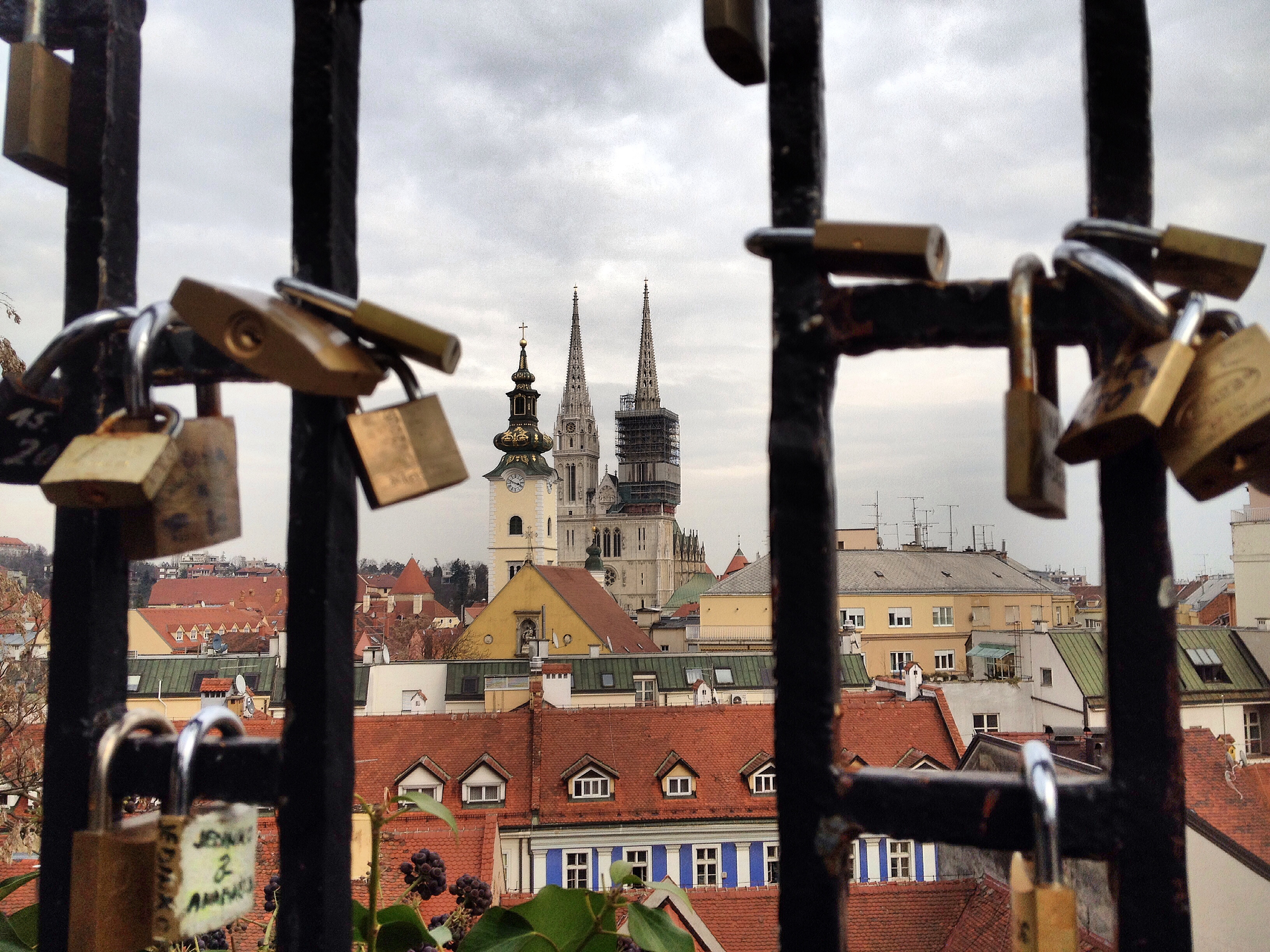
I enjoyed wandering around this part of the city. It’s up on a hill, and I remember that it was lovely during the summer evening we spent there in 2011. There are great views of the city, lots of cute restaurants and stores, and a lot of people strolling casually around. There are also elements of Paris (will I just look for Paris everywhere now?) – part of the area is called Strossmartre (like Montmartre), and Zagreb has a decent number of couples who have adopted the put-on-a-lock-and-throw-away-the-key approach to monogamy made famous by the Pont des Arts in Paris:

IMG_3309

On my way back to the hotel, I walked through a tented market in Jelačić Square. I wanted to take pictures but did not want to look too touristy, and it was pretty crowded. It was very similar to Eastern Market in DC – vendors from around the area were selling meats, cheeses, and liquors. I did a few laps before going over to a guy selling medica (MAY-deet-sa), a honey-flavored type of rakija (RA-kee-ya, or brandy). Rakija comes in all sorts of flavors (I’m a big fan of pear and apricot), but honey is my favorite. I used my VERY broken Croatian to talk to the vendor, who spoke about as much English, but I managed to explain that I’m half Croatian from my mother’s side, really like rakija and especially medica, and had never tried a red one that he was selling called višnjevac. As would probably not happen in the United States, this guy immediately proceeded to pour me a shot of each one so that I could sample both, and then when I indicated that I wanted to buy the big bottle of medica, he threw in a smaller bottle of višnjevac as a gift. I’ve never been more proud of such meager linguistic abilities!

In the evening, I met up with Iva’s friend Tomislav for drinks and an excellent walking tour. We went to a bar called Time that was exactly the sort of place I would have gone after work in DC and sipped višnjevac (which turns out to be cherry flavored and is pronounced VEEsh-n-yay-vats) while listening to fun mixes of techno and pop (my favorite was a blend of Fleetwood Mac’s “Everywhere” with something considerably more electronic in nature). Tomislav had been to San Francisco and Las Vegas and told me that he really missed the burgers; in Croatia they are too small! We also compared the systems of legal education in our respective countries: in Croatia a law degree is equivalent to a bachelor’s plus a master’s, and there is a mandatory apprenticeship for several years before you take the bar exam (which is, I think, harder to pass that the ones in the US).

After leaving the bar, we walked in a big loop around the city center, past the University of Zagreb’s law school building and then back up the hill into the Strossmartre area, through some side streets and alleys, and finally back down to the main square. Tomislav provided running commentary throughout, and I was very sad that he had to leave to do more work!
IMG_3314

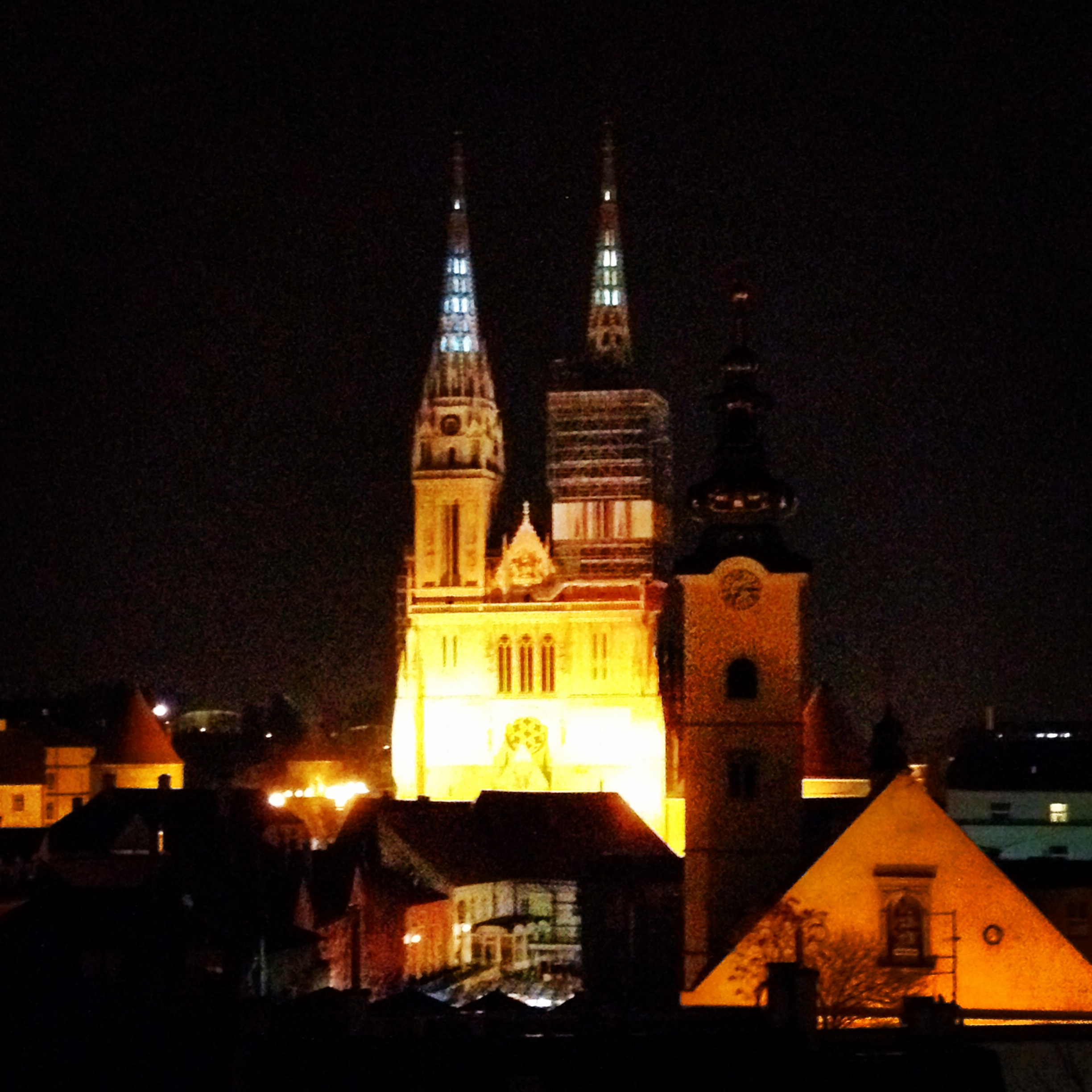
Because I am still not great about traveling by myself (that is, being in a foreign place alone, as opposed to getting there alone), I wimped out and couldn’t bring myself to go to a restaurant alone. I still haven’t done that even in Paris where it would be pretty normal. Instead, I found a place that made good salads for takeout, bought some Karlovačko beer and other snacks from the Konzum grocery store, and headed back to my hotel room for the rest of the night, which I spent being amused at trying to decipher Croatian coverage of Olympic curling. (Most non-Croatian language channels were in German, so there weren’t a whole lot of options either way.) Before I went to bed, I snapped this great picture of the illuminated cathedral behind the square:

IMG_3318

Seeking Justice for Genocide in Guatemala

It’s 7:00 on Saturday, April 20, and I’ve just returned from a week in Guatemala City, where I was part of a delegation of lawyers observing the genocide trial of former president Ríos Montt, who took over Guatemala in a coup and ruled for about 18 months between 1982 and 1983. During that time, the Guatemalan army conducted a scorched earth campaign against the many indigenous groups in the country, saying that they were part of the counterinsurgency that had put the country into a civil war (a war that didn’t end until 1996). An estimated 200,000 people died during the course of the 36-year war, but nearly 81% of the human rights violations reviewed by a UN truth commission occurred during 1981-1983. This trial is the first of its kind; no other country in history has tried a former leader in its own courts for genocide committed against its own people.

 I know that many of you reading this aren’t lawyers, so I’m not going to focus this on the legal aspects of this historic trial. Instead, I’m writing this now as an attempt to process the many things I observed and the many things I feel now that I am back in the United States.

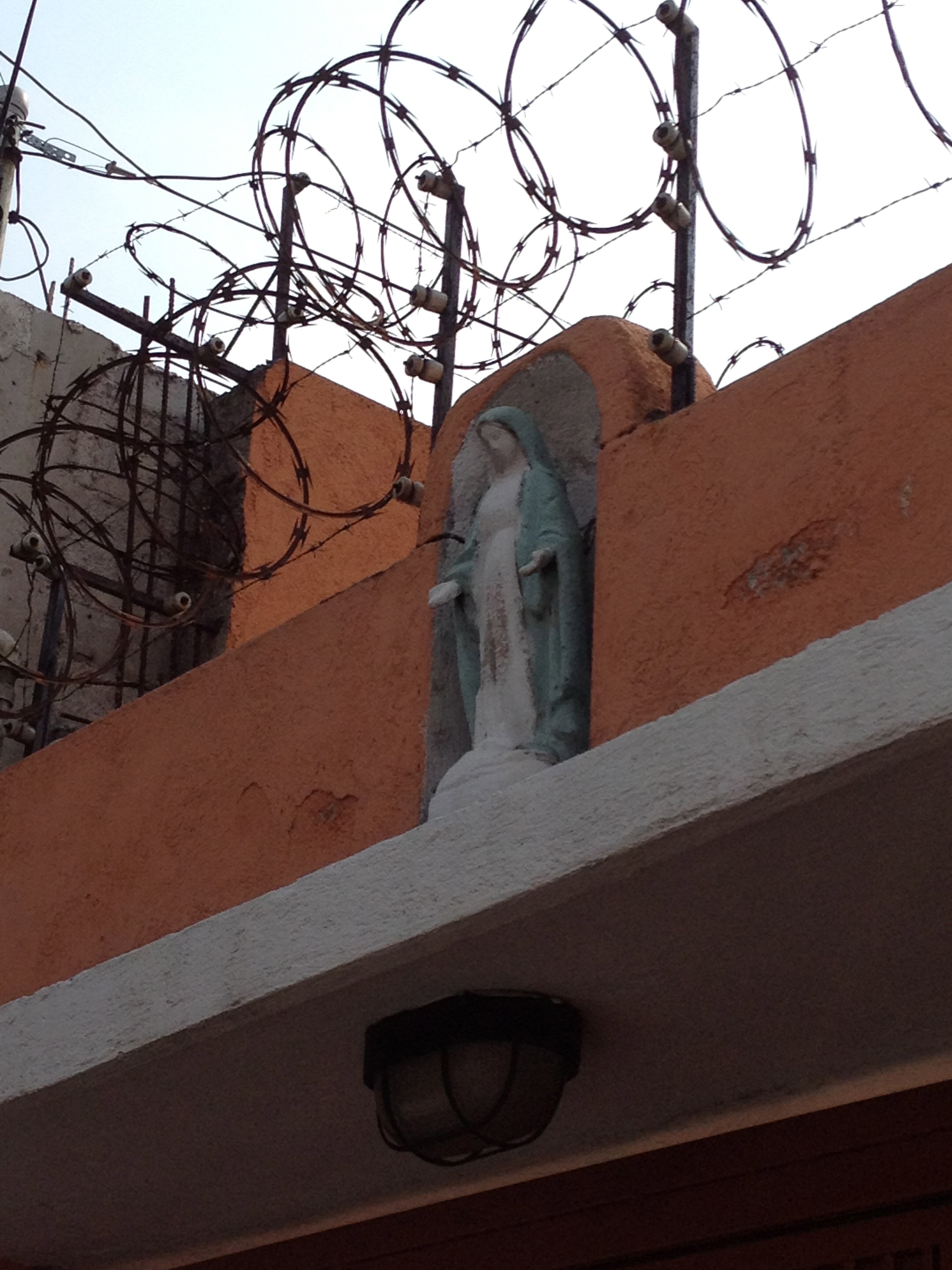
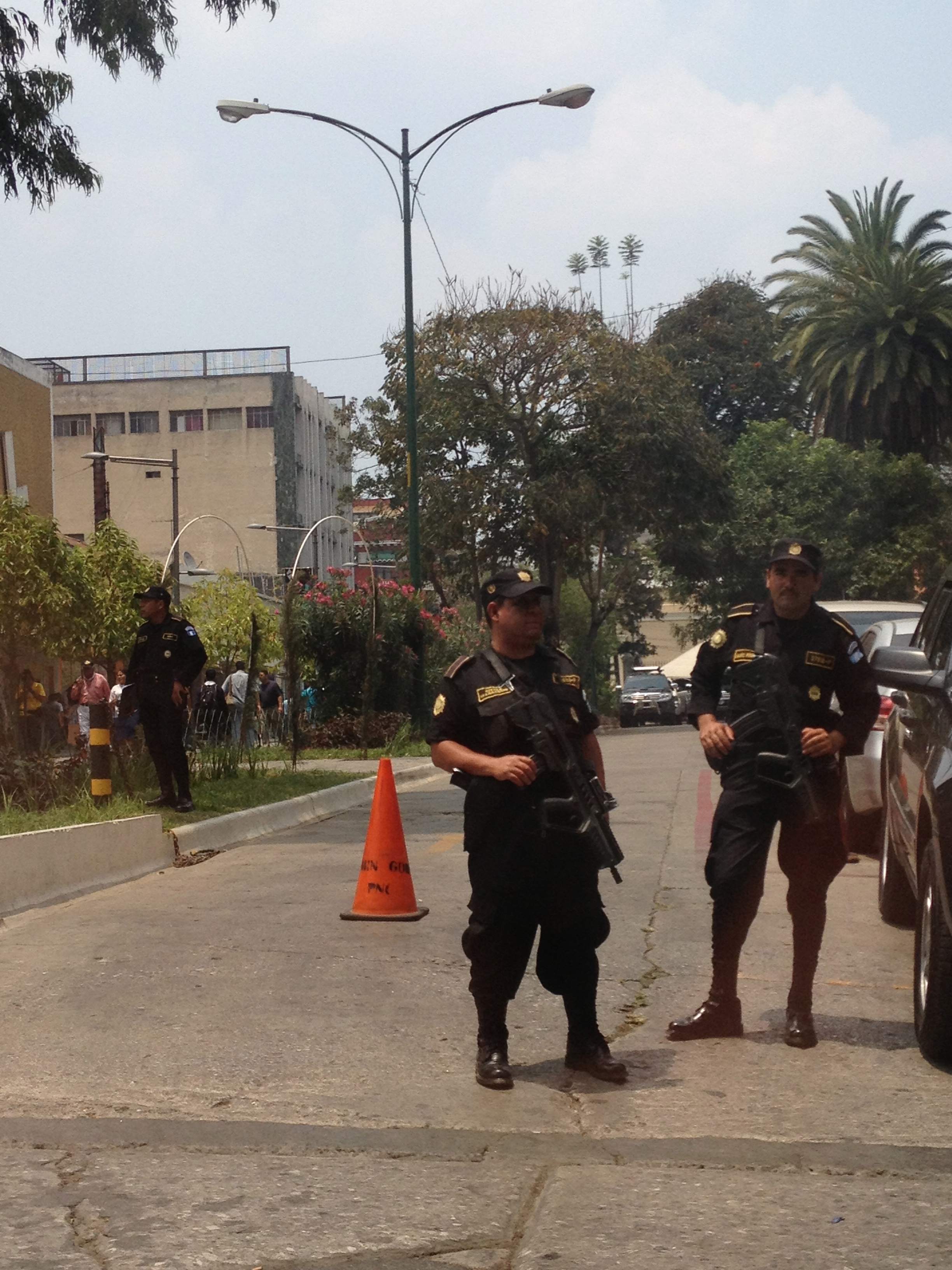
To put this in context, Guatemala is the 27th country I’ve had the good fortune to visit. It isn’t the first politically unstable country I’ve spent time in (Venezuela, Colombia, Bosnia, and Kosovo come to mind), but it is the poorest – at least based on what I saw in Guatemala City. The travel books I consulted prior to the trip make an effort to manage expectations; consider the following opening description from the Rough Guide to Central America: “Guatemala City is now the largest city in Central America, home to over three million people. Characterized by an intensity and vibrancy that simultaneously fascinate and horrify, Guatemala’s capital is a shapeless and swelling metropolitan mass… Not even a wild imagination will be able to make it out as a pleasant environment – indeed, for many travelers time spent in the capital is an exercise in damage limitation.” Most of the city that I saw (and it is perhaps important to note that I saw only a very small portion of a pretty large spread) reminded me of a slightly more organized and better maintained version of the favela (slum) I toured in Rio de Janeiro. 95% of the buildings look entirely run down and reflect the violence permeating the city and the rest of the country; I’ve never seen so much barbed wire before (on rooftops, around doors, around windows). There’s also hardly any greenery, and the air is so polluted that the sky remains grey and the mountains around the city are practically invisible on the horizon behind all the hazy air. Cars, trucks, and buses clog the streets and make driving with the windows down very ill-advised unless you’re attempting to strengthen your lungs’ tolerance for carbon dioxide, smoke, and dust. It’s a visually exhausting and depressing city. Then of course, as is common in many developing countries, you can’t drink the water, so even the most basic routines like brushing your teeth require additional effort. I mentioned Kosovo above; Pristine (the capital of Kosovo) is much more comfortable than Guatemala City. Even if you haven’t been to Pristine, that should give you an idea of how disheartening Guatemala City is.

IMG_0884

I mention none of this to complain; it is part of (and indeed, the point of) traveling to experience life as others do and, for those of us from the U.S. or other countries of relative economic and political stability, to appreciate what we have. I include this description as a means of providing additional context for this trial and illustrating the many struggles that exist in Guatemala. It is this stark contrast between Guatemala and the United States that has left me feeling frankly overwhelmed by the privilege I enjoy as a white, middle-class, educated American woman (or simply as an American of any race or socioeconomic level). Aside from the simple comforts I take for granted like being able to drink our tap water, I live in a country where my government – despite its many flaws – generally protects my basic human rights. I did not grow up amid violence and widespread poverty or political instability. I have never known hunger or homelessness; I have never experienced persecution of any kind. I have never had family members targeted or killed by an army that once protected us; I have never been sexually assaulted by a member of the police or military; I have never been forcibly displaced from my home. And, significantly given our observations this week, I have never doubted that my country’s judicial system will uphold the law and do so with at least some effort towards impartiality and fairness. (You public interest lawyers and other activists reading this no doubt have many disagreements with this previous sentence, and I share them – but there is absolutely no comparing the flaws of our system to the reality in Guatemala.)

IMG_0927

One of the things that most impacted me this week was the constant repetition of gratitude from the Guatemalans with whom we met, whether they were lawyers, judges, human rights activists, journalists, or survivors of the genocide. (And there is no doubt in my mind that “genocide” is the appropriate term for what happened in Guatemala.) I think for many of us this was the first time we found ourselves in a situation where we were truly meant to observe rather than act. We had all gone to law school to advocate, to be active participants in shaping our country’s legal, social, and political future. Whenever we asked, “what else can we do to help you?” the answer was always “it is so important just that you are here.” Guatemala, and the rest of the countries in Central America, are consistently ignored by most Americans despite their proximity to our country and our government’s history of active (and often negative) involvement in their internal affairs. We most likely think of drugs, violence, and illegal immigrants when we think of countries south of the border. I certainly never learned about Central America during my primary and secondary education, and I only learned about that area during college because I chose to do so as an International Relations and Hispanic Studies double major. It is thus crucially important that all of us who observed the trial and the corresponding political frenzy this week share what we saw with everyone we can at home. As I said on a radio show on Thursday, we ALL have a responsibility to prevent genocide, crimes against humanity, and other violations of human rights – regardless of where we live or what work we do. (And for genocide specifically, the Genocide Convention actually obligates countries to intervene when genocide is suspected – an obligation which sadly has been grievously under implemented.) I couldn’t put on my suit jacket and join the prosecution team in court or help to protect any of the lawyers, judges, witnesses, or other activists, but I CAN write about what I saw to raise awareness and, hopefully, make people care.

In a nutshell, here’s what we saw during our five days of trial observations and meetings: a highly polarized battle for justice in the face of overt political opposition and danger.

I arrived on Sunday to a 20-page supplement in one of the newspapers denying that genocide ever took place. The current president of Guatemala, Otto Pérez Molina, went on to officially support this view later in the week despite having been implicated for genocide himself during witness testimony last week. He has also stated concern that this trial will endanger the peace in the country.

At this point two things are worth pointing out: first, the tensions highlighted by the trial are not the results of the trial but rather reflections of the many problems lingering from the civil war. A society does not recover quickly from a 36-year civil war, especially one involving genocide. The trial may provide more reason to bring these tensions to the forefront of daily media coverage, but it’s certainly not a cause of the underlying struggles for rights and recognition. Second, it appears that many members of the general public reject the idea that genocide did not take place in Guatemala during the early 1980’s. I saw numerous graffiti pieces saying “justicia genocidio” (justice for genocide) or “sí hubo genocidio” (yes there was genocide), and on Thursday night when we were among the audience of at least 300 people at a documentary film premiere, I witnessed the majority of the audience start to chant “ge-no-ci-dio” after the Minister of Culture, while welcoming the crowd, said the current president’s name. This chanting lasted for at least a full minute and briefly recurred when Ríos Montt himself appeared in the film.

The courts have proved a very complicated arena for fighting this battle for the right to determine history. I am still trying to understand the system of many different courts which have made various contributions to the progress of this trial. Guatemalan law provides for amparos, appeals made in-the-moment rather than after judgment and sentencing (as it works here in the U.S.). Three judges sit on the actual trial bench, and a different judge or set of judges will make the decision for each amparo. From my perspective, it’s very much a “too many cooks spoil the broth” type of situation, particularly in a country not known for its rule of law or lack of corruption. This week we got to observe directly how the presiding trial judge, Jasmin Barrios, handled the actual trial, and we joined the rest of the public in attempting to understand the decisions of judges in other courts and how those decisions would impact the trial’s progress.

Jasmin Barrios is, quite simply, one of the most inspiring people I’ve ever had the privilege to see in action. My incomplete knowledge of Spanish combined with the imperfect sound system limited my understanding of her, but I always understood her attitude: her professionalism, strength, and commitment to a fair trial practice shone through in everything she said and did. Despite ridiculous antics by the defense lawyers, who seemed bent on delaying the proceedings and creating opportunities for appeal rather than actually presenting a case, Judge Barrios remained calm and patient (though still very forceful) in moderating the proceedings. This is a woman who accepts no nonsense in her courtroom.

On Thursday, while I was part of a small group meeting with the former president of the Constitutional Court (the country’s highest court and one of the bodies making decisions impacting the trial), we heard the news that another judge, Carol Patricia Flores, had annulled the trial because of what she apparently perceived as procedural errors and based on her reading of a recent decision by the Constitutional Court. Many have disagreed with this reading as an illegal or at least overbroad interpretation of the Constitutional Court’s decision; the former president of the CC said as much to us and to a reporter while we were with him. An annulment would erase everything that had happened with this trial since November 2011 (including all of the prior procedural work; the trial itself didn’t begin until March 19 of this year) and would obviously be a tremendous step backwards, on numerous levels. The attorney general, Claudia Paz y Paz (with whom we met on Wednesday afternoon), issued a statement late Thursday evening calling the annulment illegal and promising that they would appeal the decision with all due force.

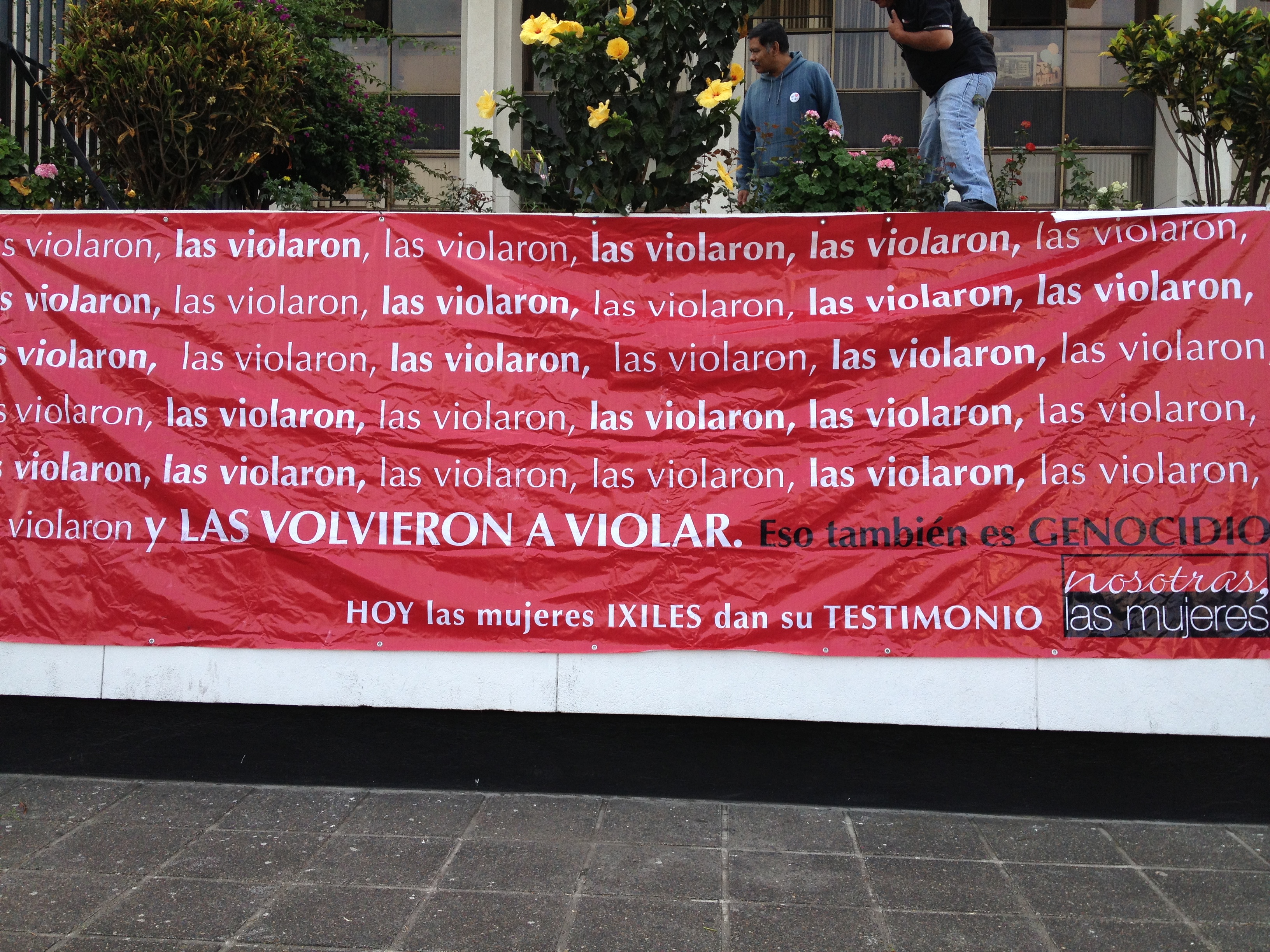
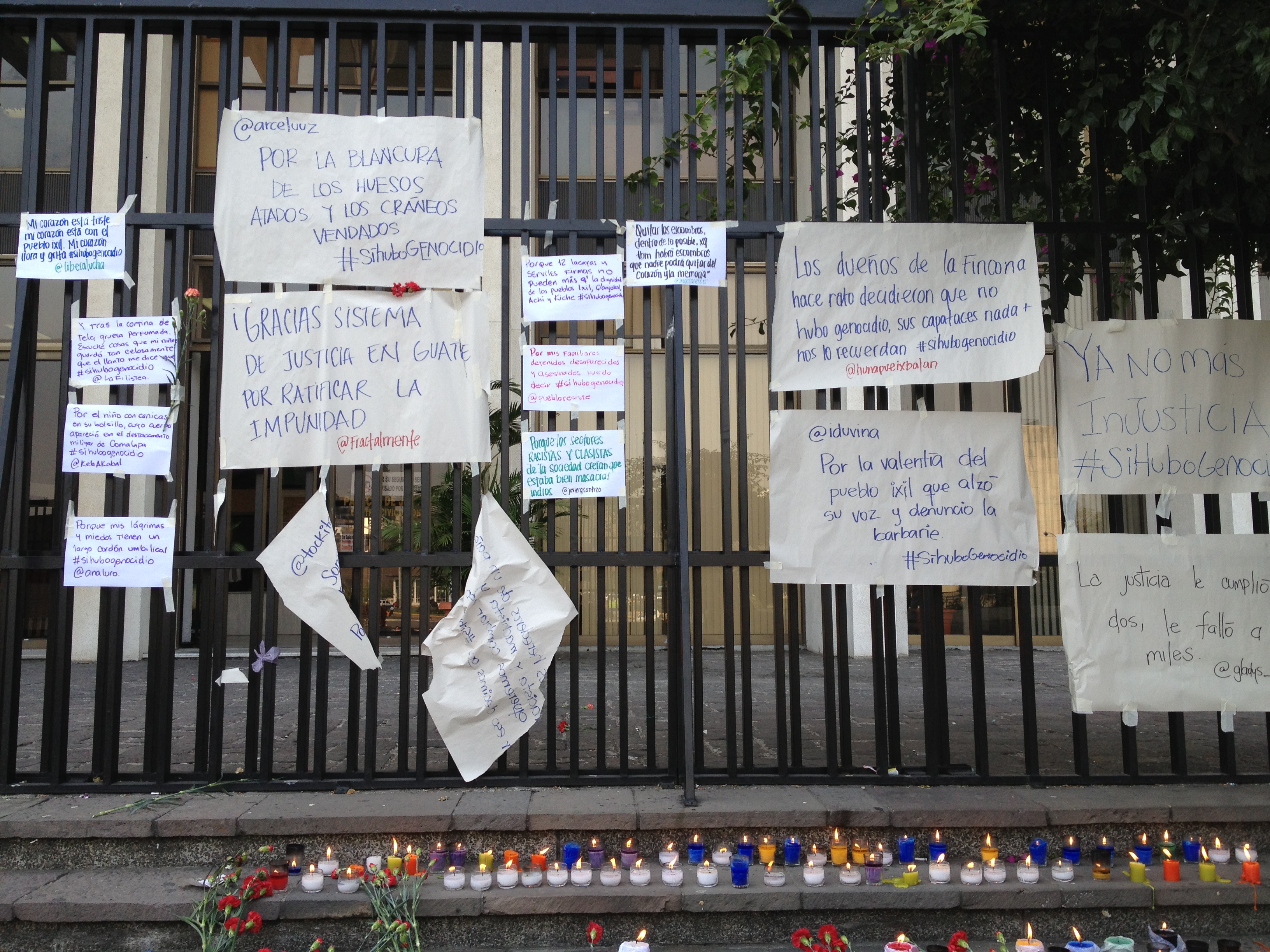
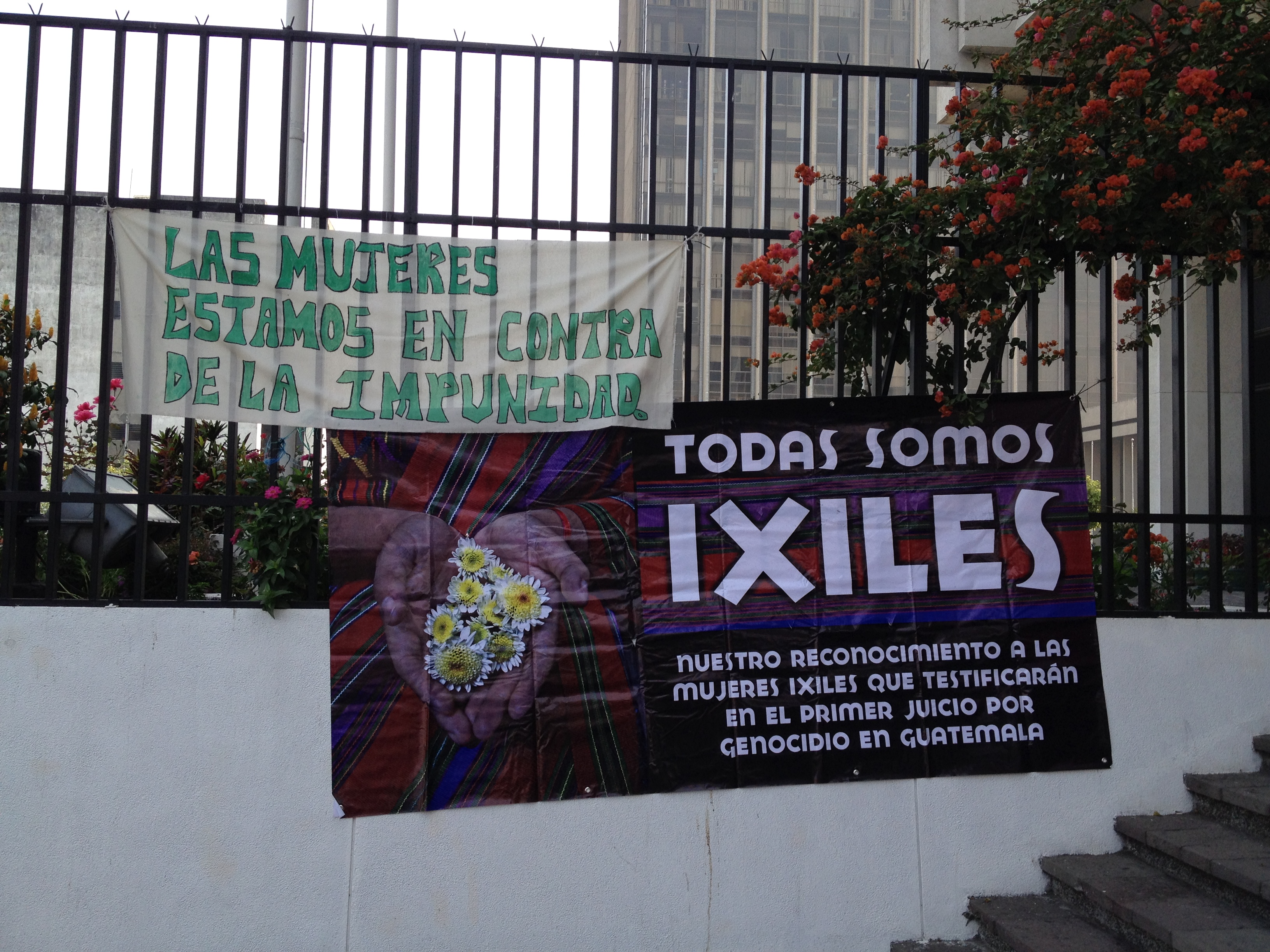
We entered a packed courtroom on Friday morning anxious to see how Judge Barrios would react to the decision of Judge Flores. On top of the annulment decision, she also had to deal with the fact that the defense counsel had walked out of court the previous morning in protest, leaving Ríos Montt and his co-defendant, José Mauricio Rodríguez Sánchez, without lawyers – a constitutional right that exists even in the troubled judicial system of Guatemala. Protesters of the annulment decision had spent the night in front of the courthouse and left signs, banners, flowers, and lit and melted votive candles as symbols of their opposition to this obstruction of justice. One handwritten sign read “you’re killing my Guatemala with all of this impunity.” A large printed banner said “they raped them” over and over again, finally ending with “this is also genocide.” (Rape is one of the central acts at issue in this trial, along with killing and forcible displacement.)

IMG_1003

IMG_1005

IMG_1008

It was in this context that Judge Barrios marched into court on Friday morning and read a decision in which she rejected the annulment as illegal and non-binding on her court. For once, I understood everything she said, and thus I was able to join the rest of the breathless audience (comprised of many survivors along with other observers and even some foreign ambassadors) in applauding immediately when she read that sentence. She then proceeded to accept the prosecution’s motion to assign public defenders for the two defendants given that their lawyers still had not appeared in court (and I believe she may also have accepted a motion to penalize the lawyers for abandoning their clients, a violation of their professional responsibility). When she adjourned court 10 minutes later, she received a standing ovation and took about a minute to stand still and acknowledge the applause, finally saying something like “I thank you for your confidence in our impartial judicial system” before walking out of the room. It was, without a doubt, one of the most incredible – and brave – things I’ve ever witnessed.

Speaking of brave, I have to take a few moments to discuss the tremendous courage that Judge Barrios and many others exhibit on a daily basis in the face of so much public pressure and very real threats against their well-being. One of our hosts, a prominent human rights activist, was himself a target of government threats during the 1980’s; he spent seven years in exile after several attempts on his life (including a bomb placed in his car). He told us on Thursday and Friday that he is anxious to find some way to leave the country again, at least for a little while, because he feels increasingly unsafe. He said that he has accepted the risk inherent in his work (although of course that doesn’t make for any additional peace of mind). To make this even more real, he took us to the Historical Archives of the National Police on Friday after the trial, and we saw his ficha (the index card summarizing his police file) on display, indicating that the police had closely followed his movements during the early 80’s before he fled the country. When he says he doesn’t feel safe, he means it – he knows the signs all too well from prior experience. We’ve also heard that some human rights organizations are planning to close temporarily whenever the trial is finally complete. Activists know that they are pushing their safety to the limits right now and will need some time for things to cool down.

I’m continuing to grapple with the concept of risking my life for a cause. I would of course love to think that I have such courage. I feel profoundly grateful – and also somewhat guilty – that I live in a country where I do not have to fight the same kind of fight as our friends in Guatemala and where, even if I were to ruffle some feathers in high-up places, I would not ever seriously fear for my personal safety or that of my family. How does one reconcile that amount of privilege? What can I do, what must I do, as a holder of such privilege, to help the many people, in Guatemala and elsewhere, who desperately need the help of people outside? You can see why I and the rest of the group struggled when we were told how our simple presence in the country made such a difference.

You can also appreciate why, based on everything I’ve described above, it is so significant that this trial is even happening. Nearly all other genocide trials have taken place in international courts like the International Criminal Tribunals for the former Yugoslavia and Rwanda or the hybrid international-domestic tribunals like the Special Court for Sierra Leone. (Rwanda has also conducted domestic proceedings for genocide, but these did not include prosecutions of those at such a high level of government. The only other genocide trials I am aware of have taken place in German and Israeli courts, and again not for high-ranking officials and also not for their own nationals. For those of you wondering about the Holocaust, the Genocide Convention – which defined the crime of genocide – was not adopted until 1948, hence the trials at Nuremberg and Tokyo did not officially cover genocide as such.) I know from the extensive research I’ve done this year that proving genocide is incredibly complicated; despite the many resources of the ICTY, the Tribunal has only convicted a handful of those whom it has charged with genocide in Bosnia. It is a massive judicial undertaking in any circumstances and is even more challenging and risky in the context of the current state of politics and power in Guatemala and in the Guatemalan judicial system. A genocide trial requires enormous amounts of evidence and also significant attention to the security of those involved in the trial, including witnesses. We know that there are NGOs like the International Peace Brigades working in Guatemala to help protect some people, and we heard from a representative at the U.S. Embassy that the U.S. is helping to coordinate additional protection. What we don’t know is what will happen to these protected people when the trial finishes – the threat certainly will not disappear, but the will and resources to protect them indefinitely may well do exactly that.

I’ll close with a reflection on our meeting with eight survivors. These brave men and women shared their perspectives and experiences with us, and anything less than a complete transcript of the two-hour meeting cannot do justice to the power of their words. Nonetheless, here are some quotes that struck me. One man spoke about how “the Bible says that we are made in the image of God… so killing another human being, let alone an entire group, is an incredible crime.” Another said, “what Ríos Montt did to us gives me pain every day,” but all agreed that “we aren’t seeking vengeance. We want this process to help the entire country move forward, so that people understand what happened to us and nothing like this ever happens again.” Finally, one survivor described them not as “sobrevivientes” (the word for “survivors”) but as “supervivientes”, kind of a super-survivor. To survive, in a purely physical sense, as they have is already impressive given the circumstances, but to have the courage to speak in court and advocate elsewhere for the justice they deserve requires a level of courage rarely witnessed.

None of us, Americans or Guatemalans, really have any idea how this trial will ultimately end or how it will impact the country. Many of us do agree on one thing, despite the vastly different circumstances in which we’ve grown up and live today: justice must be done. I lack the words to express exactly how much I respect and admire the many amazing people I met this week who are risking so much for this important cause. The discomfort I now feel, several hours into being back home, is a testament to the deep connections I’ve formed with people this week and to the impact of this experience on me, as a future lawyer and as a human being. I hope that one day soon I will be able to leverage my privileges and gather my courage to help in this and other crucial fights for justice.

Guatemala City, Part 1

I’m in Guatemala City this week as an observer of the genocide trial of former Guatemalan president General Rios Montt. I won’t be writing much about that experience here, but as always I want to provide a narrative about the people I meet, the places I see, and the food I eat.

I flew here on Sunday with another law student from my school (Mariah). We had a very stress-free trip, flying from Dulles to San Salvador (in El Salvador), where we had a layover of about an hour during which we got some coffee (complete with little red hearts made of sugar to put in it) and wandered around the small airport which had a duty-free shop for just about every gate. From there, the flight to Guatemala City only took about 20 minutes. We shared our flight with a group of young people (high school age?) from Colombia who were coming here to compete in some kind of inter-American sports competition. I had a nice conversation with the girl sitting next to me, who was from Medellin.

Mariah and I changed some dollars into Quetzales and then breezed through customs. A very nice taxi driver was waiting outside to pick us up, which made things so much easier. On the way to our hotel, I asked him about soccer teams in Guatemala and learned that there are two rival teams (as there always are), the Rojos and the Cremas. We drove past the U.S. Embassy (only the second time I’ve ever seen one abroad) and passed some smaller parks where kids were playing and adults were cuddling.

My immediate impression (and so far this hasn’t changed) is that this is the most run-down city I’ve ever visited. I haven’t seen more than a two mile stretch of it yet, but the part I’ve seen is frankly depressing to drive through. Occasionally there are some beautiful buildings thrown in among the dilapidated ones, but for the most part the city looks as poor as the people who live there. This raises a more general observation about the reactions of Americans when we travel abroad, particularly to developing countries: in the US, we have the luxury of choosing to frequent businesses based largely on how they look on the outside. We avoid restaurants that look “sketchy”, often based on judgments about the neighborhood and actual appearance of the building. (Does it look clean? well maintained? generally nice?) The same goes for any other kind of business. And that’s fine when we’re at home. It’s hard for us to adjust when we come to developing countries where, to our eyes, pretty much everything looks “sketchy” – so then we have to depend on other instincts, like going to restaurants where the locals go. I think I can sum up Guatemala City, at least on a very visual basis, as being a city where most of us would be hard pressed to find a restaurant, store, or hotel where we’d feel 100% comfortable eating, shopping, or sleeping. The buildings look old on the outside; there’s lots of graffiti; barbed wire rims a lot of rooftops or even windows. It’s just not a place with a happy vibe.

Of course, as is always the case in places where the circumstances would justify otherwise, the people are lovely. I find the Guatemalans very easy to understand (they speak more slowly), and the taxi drivers and the men who work in our hotel are incredibly nice. (As long-time readers will know, I like to talk to taxi drivers when I travel – I find them to be great windows into the politics and culture of a place. I am not asking our taxi drivers about the trial, but I have talked to them about soccer, the best kind of beer, their families, etc.)

We’re staying in an absolutely lovely little hotel with two little courtyards filled with plants and fountains in the typical Spanish style that I love so much. Two of the men who work here (Juan and Francisco) are really friendly; I had a nice chat with them yesterday afternoon, and now they greet me by name. (Sidenote: Guatemala is the only Spanish-speaking country I’ve visited where my first name doesn’t throw people off. I say it, pronouncing it according to Spanish vowel sounds, and they’re fine.)

Image

Image

Image

Juan was kind enough to accompany me out of the hotel this morning to buy newspapers for the group. This is not a city for wandering around – between the high rate of crime and the game of chicken that is crossing the street, it’s just better to stay inside. Yesterday during our lunch break we only ventured as far as across the street from the courthouse to get food.

About the food: Guatemalan cuisine is pretty typical of the region – simple. The lunches I’ve eaten the past two days in cafeterias (little restaurants around the court) included soup, a cut of meat, and an array of vegetables (including some really tasty squash). Here’s an example:

Image

We’ve so far had two different breakfasts: one “typical” (I’ll put up a picture when we have it again and I remember to have my phone), and then this morning we had pancakes and papaya:

Image

More to come later this week!
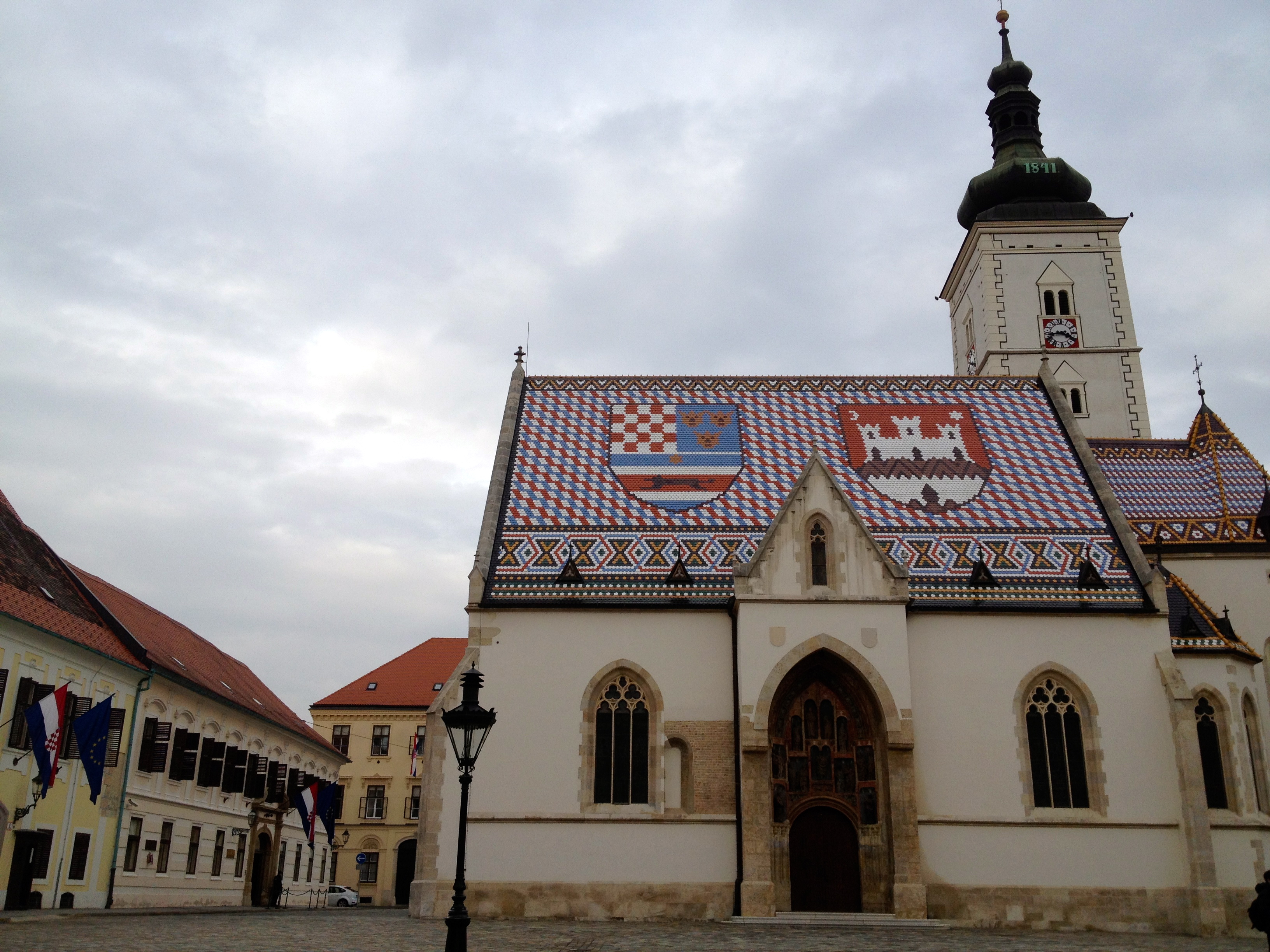
48 hours in London

1:30 pm, Sunday:

I’ve both lucked out with brilliant weather and chosen well in how to spend my one free day during this briefest of trips across the pond. It’s a warm, cloudless afternoon, and I’m sitting in an old-fashioned beach lounge chair overlooking the Italian Garden, a lovely set of fountains near the northwest entrance to Hyde Park. It’s clearly the place to be on a summery Sunday afternoon. While strolling through this vast park over the last two hours, I’ve seen hundreds of families, couples, and groups enjoying the many things this park has to offer (which, today, also includes an official London 2012 Olympics Shop). People of all ages are sunbathing on the grass, rollerblading or running along the paved and dirt paths, reading in the shade of trees, enjoying a Pimms & Prosecco at a lakeside café, walking dogs, feeding the numerous geese and swans, and swimming – either in a designated area of the lake or in the Princess Diana Memorial Fountain, a shallow, circular lazy river of sorts in which many small children (and not a few adults, including myself), delight in sticking their feet in the cool water. If I’d brought more reading material, I would stay here all afternoon.

This is the second time I’ve had the fortune to visit London this year and also the second time the weather has been perfect. Back in January, I had similarly (and even more unseasonably) cloudless days and fairly mild temperatures. In fact, of the five total days I’ve spent in this city over the years, only one has been rainy. And each time I come, I find more reasons to love London.

Today, for instance, is the last day of the Paralympic Games. I arrived at Paddington Station this morning and hopped into a cab with a driver who spoke with a hint of cockney and chatted with me the whole way to my hotel. Or rather, to near my hotel. The marathon took place this morning, and the route literally went in front of my hotel, so the closest he could drop me was on the other side of London Bridge. (After crossing it, I can confirm that it is not, in fact, falling down.)

Having been in England but not London for the opening ceremonies of the Olympic Games in July, I was pretty pleased when I found myself an accidental spectator at a Paralympic event. After dropping my suitcase, I joined people along the marathon route to cheer on runners – what a cool thing! I followed the route west to St. Paul’s, from which I crossed the Thames on the Millennium Bridge to the Tate Modern and the (new) Shakespeare’s Globe. The weather was too nice to spend any time inside, so I added money to my Oyster card and headed over here. On my way over to this end of the park, I took a quick nap under a tree, popped into the London 2012 shop (where everything is now 50% off), and put my sore feet into the cool water of the Princess Diana fountain.

8:00 pm, Sunday:

From Hyde Park I took the tube over to Notting Hill Gate for a wander along Portobello Road. I did this back in January on a weekday but wanted to check it out on the weekend. There were actually fewer vendors on the streets, but the shops were just as quirky and irreverent. I looked through cases of costume jewelry, piles of cell phone covers, walls covered in scarves, and windows of shoe stores selling glitzy, teetering platforms that I would love to wear but never will. Along the way, I enjoyed listening to the same wide variety of languages that I’d heard throughout Hyde Park: Spanish, French, Italian, and even BCS! I think London is THE most international city I’ve seen throughout my travels, and there’s nothing I love more than being around people from all over the world.

I’m now back in my hotel room in The City, where most shops and restaurants have been closed all day due both to the marathon and the general deadness of the area when the many bankers and lawyers aren’t working. I’m nibbling on Digestives and quickly succumbing to the exhaustion of being awake and on the go for so long – but I think that’s the key to fighting jet lag. Do not, under any circumstances, go to sleep when you arrive in a new time zone! It’s mind over body.

9:00 pm, Monday:

After a full day of interviewing (the reason for this visit), I met up with my friend’s younger sister and went in search of the famed curry on Bricklane, about a 15-minute walk from my hotel. This Bangladeshi area boasts a long line of restaurants, each with an overly solicitous proprietor at the front door offering you the best dinner you’ve ever had and at a good price. Ceri and I fell for the charms of the man in front of the restaurant boasting a banner proclaiming it as the home of the “Best Curry Chef 2012” and offering us a 25% discount on dinner, plus a free beer. I’d heard much about the south Asian food of London and was glad for this chance to finally try it. We were not disappointed: my lamb curry, swimming in delicious sauce, was well worth the £10 price tag and paired beautifully with the palak paneer and nan that we ordered as sides.

11:00 am, Tuesday:

I’m back at Heathrow after a lengthy but enjoyable ride on the Circle Line of the Tube to Paddington followed by another quick trip on the Heathrow Express. It feels weird to be here after spending the night sleeping in an actual bed; the last two times within the last 13 months that I’ve flown home from Heathrow, I spent the night sleeping on the floor of Terminal 1. I did have a spot of excitement when I arrived; a group of Russian paralympians were also on their way home, wearing those visible-from-a-mile-away red and white uniform jackets. Perhaps there were other athletes about too!

And, the best possible news: my plane’s only about a quarter full for the flight to Dulles, so I can spend the next eight hours comfortably sprawled out over an entire row of seats. All in all, I’d say this trip, albeit far too brief, was a winner!

And now, some pictures:


St. Paul’s, viewed from the Millennium Bridge


The Millennium Bridge and St. Pauls (viewed from the Globe Theater)


The London 2012 Official Shop in Hyde Park:


my favorite feature of the shop (this is an entire wall):


the Princess Diana Memorial Fountain:

the Italian Garden in Hyde Park:

London Calling

Just as I’m really starting to miss Europe again (now that I’ve been back for three weeks), I’ve truly lucked out and learned that I will be going to London in a week for an interview. I’m thrilled both about the job opportunity itself and the chance to go back to London for a very quick trip.

I’ve never spent more than 72 hours in London at a time. Here’s a quick summary of my experiences in my second-favorite city in the world:

My first time in London was the day of the bombings in July 2005 – I arrived that afternoon from Madrid and experienced what remains one of the most challenging situations I’ve encountered while abroad as I tried to navigate my way from Heathrow to my hostel and then to my friend (whom I found literally by following a trail of notes she’d left me). The next day we couldn’t do very much, so we mostly wandered around the Regents Park area before leaving that evening for Italy. When we returned, we had exactly one day before flying back home, and that day remains one of the best I’ve had as a traveler: we went on the London Eye, walked around Parliament and Piccadilly, visited St. Paul’s Cathedral, and happened up on the premiere of “Charlie & the Chocolate Factory”, where we waited for three hours and ultimately got within 10 feet of Johnny Depp (be still my heart!).

Last summer was my first time back in the UK since 2005, but despite flying in and out of Heathrow, I never actually got into London. (I did, however, spend the second night of my life sleeping in Heathrow, which now has sentimental value for me – I’ve done it three times total, twice within the last year.) Fortunately, when I returned to the UK for New Year’s this year, I ended up spending an unanticipated two and a half days in London and finally got to get a little more familiar with the city. I bought an Oyster card, toured Westminster Abbey, walked across the Millennium Bridge, went shopping in Notting Hill, and got lost a couple times wandering around. I loved taking the Underground everywhere and even named my new car Jubilee after one of the lines!

On this trip, I’ll have just over 48 hours in London, including all of Sunday, a little bit of Monday, and a few hours Tuesday morning. I may try to take a look at the Olympics stadium (better late than never); I also want to walk through Hyde Park and hit up a museum (on my list: the Tate art museums, Churchill’s War Room, and of course the British Museum). If anyone has any suggestions for other fun things to do or see on a Sunday, please send them my way!