Distance travelled: 24.9 kilometers
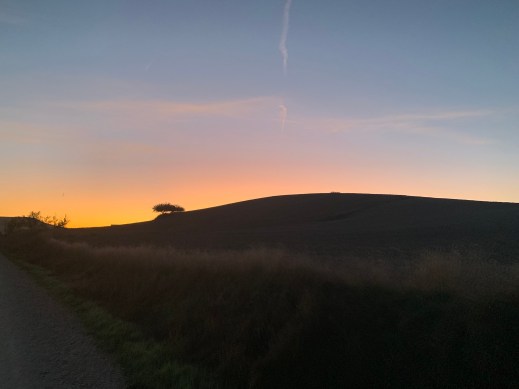
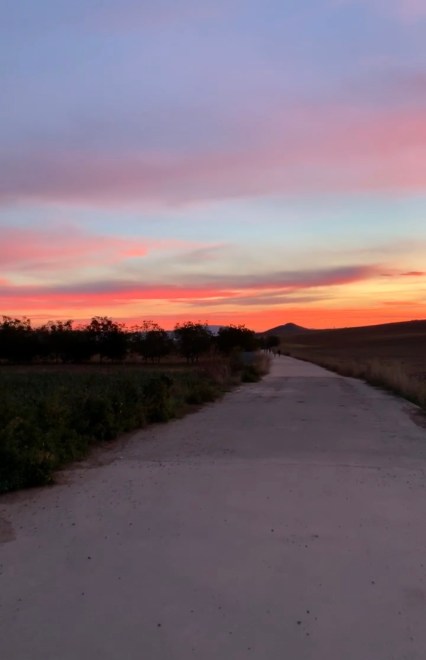
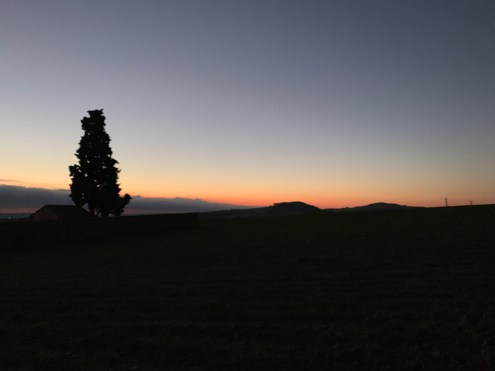
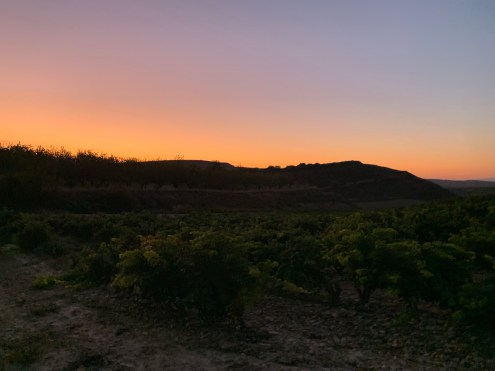
Another early start; another beautiful sky:
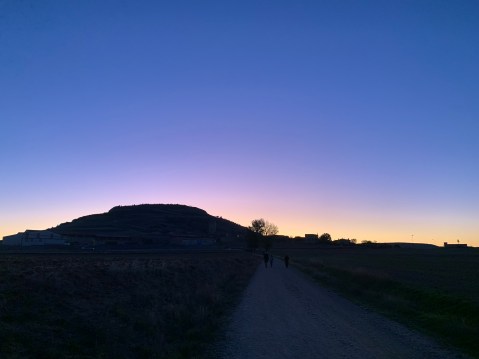
Looking back towards Castrojeriz. Those are my three French friends approaching.
I ran into Jean-Pierre, Dominique, and Marie-Claude on the way out of town. They treated me to a performance of a French Camino song that brought a huge smile to my face. The song is called “Ultreia”, which is another traditional greeting of Camino pilgrims – the word means “onward and upward”. I actually didn’t know which song they sang until I encountered it again two weeks ago at the annual gathering of the American Pilgrims on the Camino, where we sang it – in French – as part of a ceremony to send off new pilgrims. It’s nicer in French, but here are the lyrics in English:
Every morning we take to the Camino,
Every morning we walk further,
Day after day the route calls us,
It’s the voice of Santiago de Compostela.
Onward! Onward!
And upward! God, help us!
Way of earth and way of faith,
Ancient road of Europe,
The Milky Way of Charlemagne,
It’s the way of all the Santiago pilgrims.
Onward! Onward!
And upward! God, help us!
And over there, at the end of the continent,
Saint James awaits us,
His smile ever fixed,
On the sun that sets at Finisterre.
Onward! Onward!
And upward! God, help us!
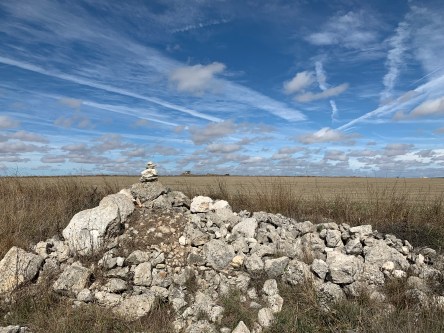
This was an appropriate song for the moment because we were approaching a pretty steep climb, up this “hill” (I continue to have need for a word that implies something higher than what traditionally comes to mind when we hear “hill”):
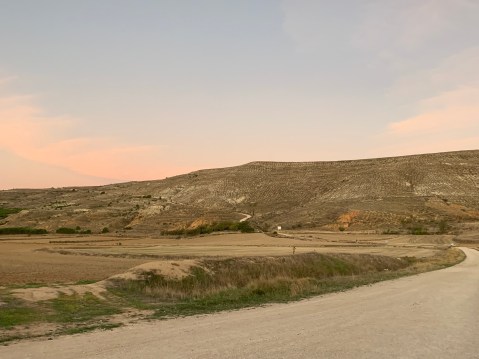
This is higher than it looks…
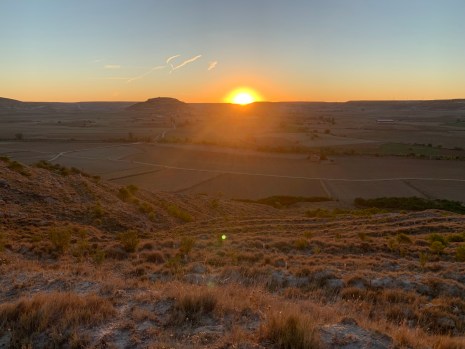
It felt great to climb again. Once again, I was filled with gratitude for how much better my feet were feeling in my new shoes. This was our view back towards Castrojeriz as we neared the top:
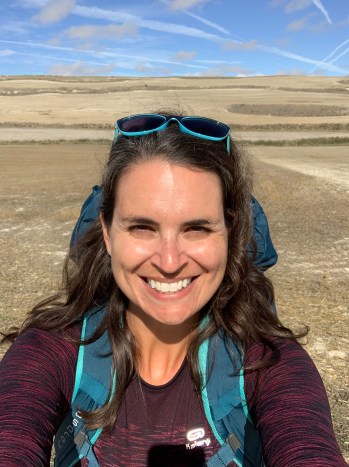
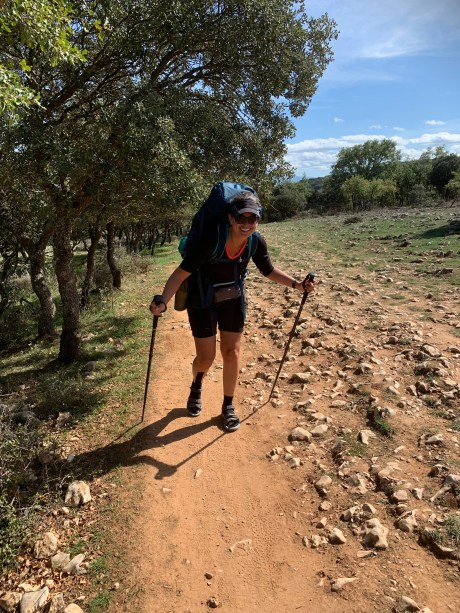
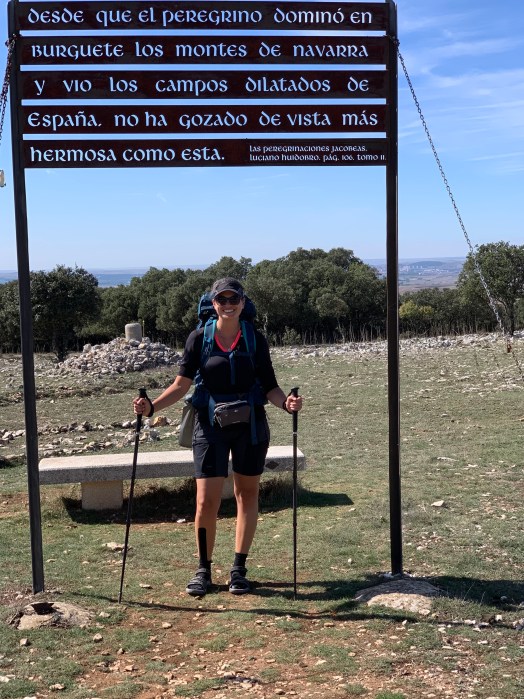
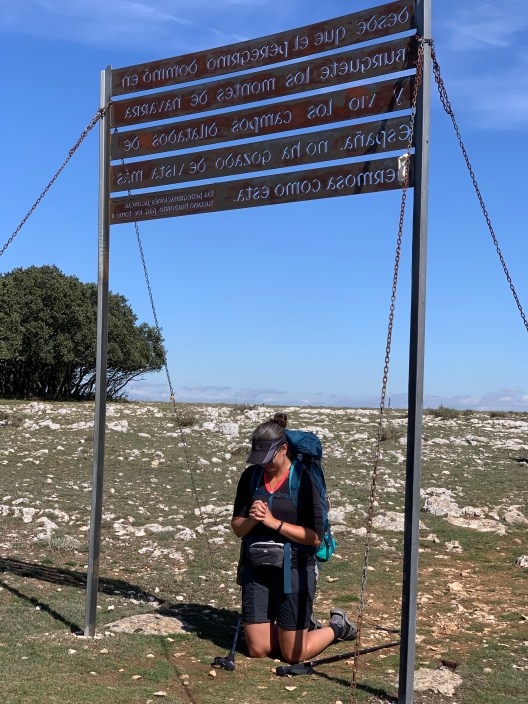
And this is one of my favorite pictures of me from the Camino, standing at the summit:
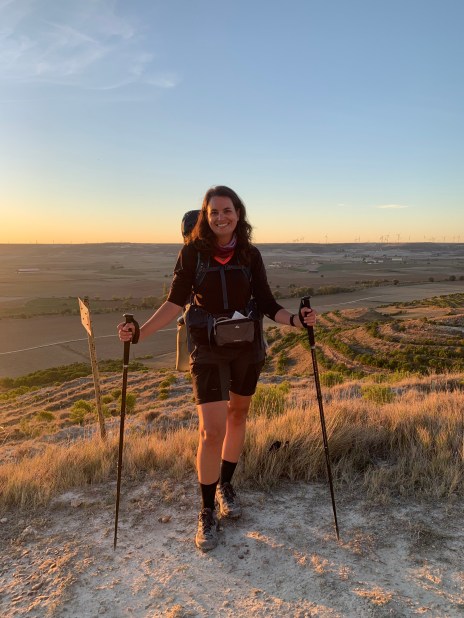
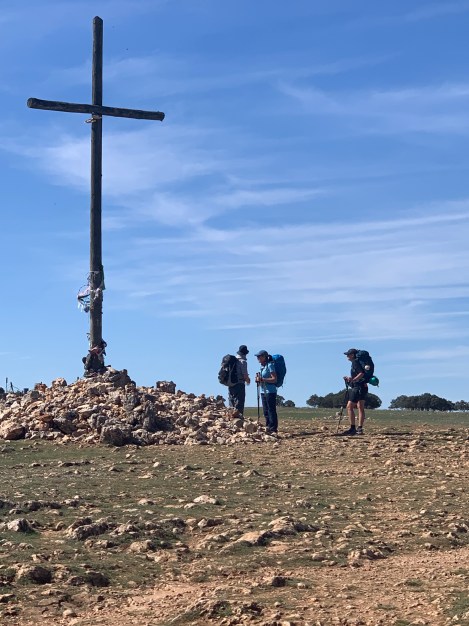
Everyone took a bit of a breather at the top before going straight back down on the other side of this hill. A British woman who’d spent more time with the group of Irish guys I’d met the day before caught up to me and delivered a message from one of them; they were heading back to Ireland that day, and he wanted to make sure I knew that I’d always be welcome in Ireland. So kind!

My view of the next 1-2 hours of walking
Remembering the difficulty and resulting injuries from the big descents into Zubiri and after Pamplona, I wanted to make sure I took the descent down the hill slowly. I fell into step with Dominique, and we both stopped in our tracks as her husband Jean-Pierre passed by us – he was literally bent over at nearly a 90-degree angle and sprinting down the hill! That’s one way to tackle descents!
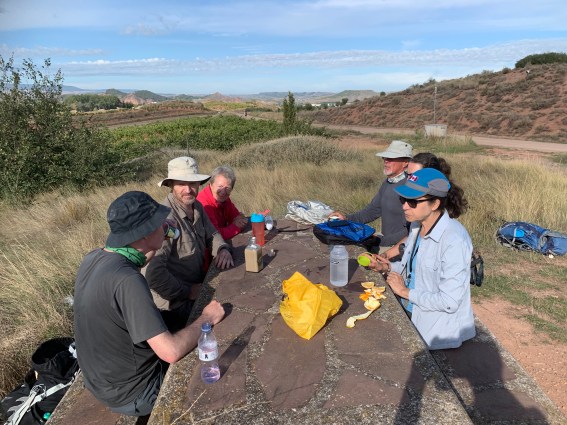
I got in lots of good practice speaking French with Dominique over the next hour, and when we caught up to Jean-Pierre and Marie-Claude, I sat with them to share a snack. I think I ended up going ahead of them after that.
I stopped in the next town to get a sandwich and ended up spending about 45 minutes sitting alone in a restaurant’s backyard terrace with a 60-something Dutch guy who’d actually stayed at my albergue the night before. We hadn’t spoken at all then, but we had a lovely conversation together and stayed together for another 30 minutes or so on the way out of town before he encouraged me to go on.
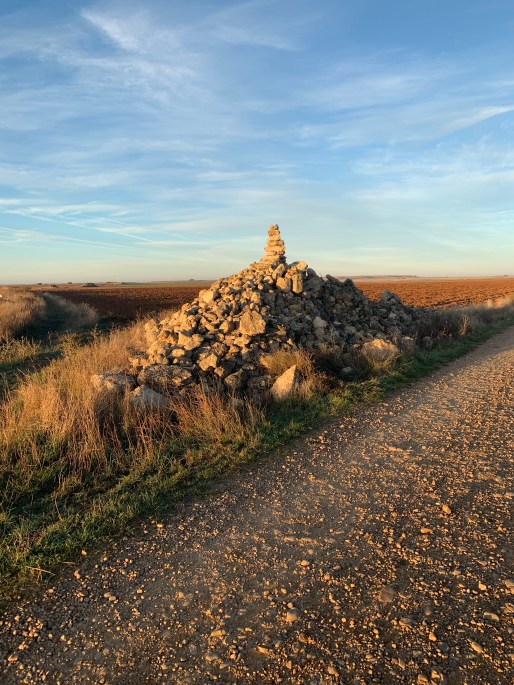
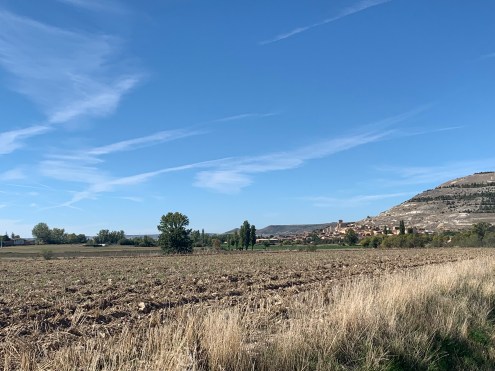
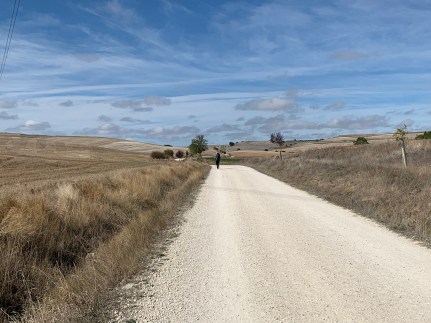
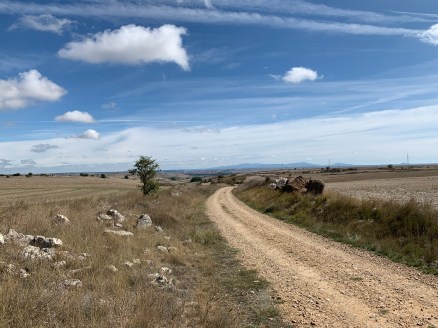
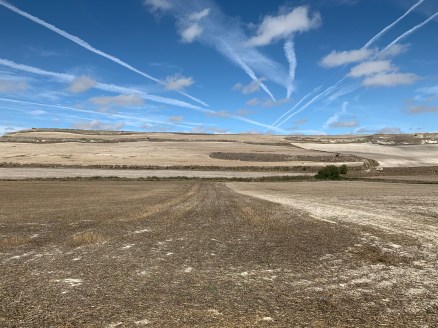
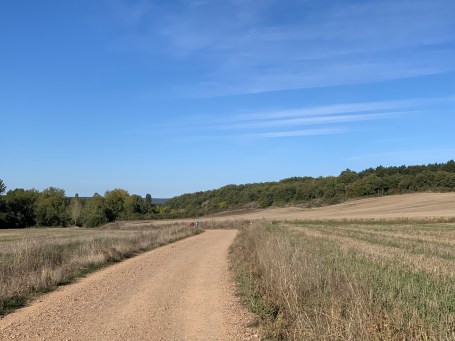
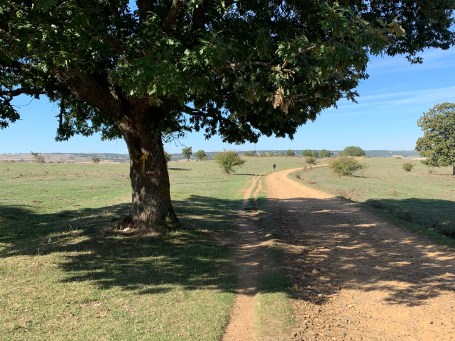
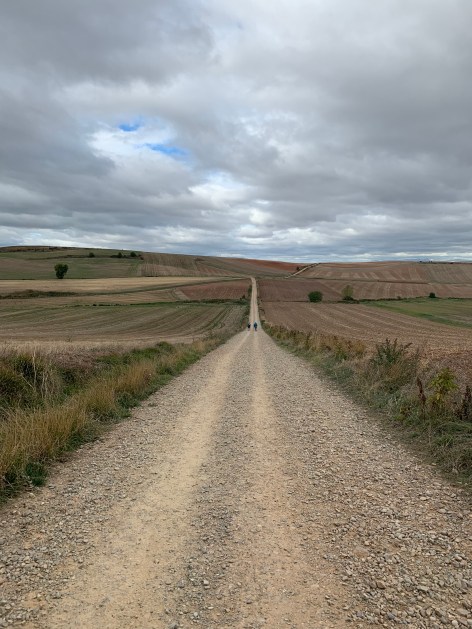
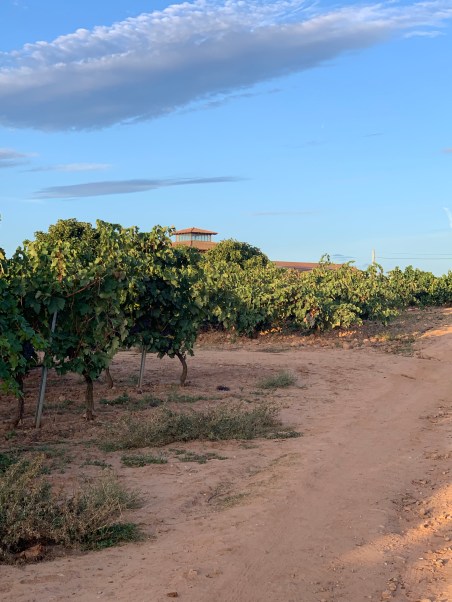
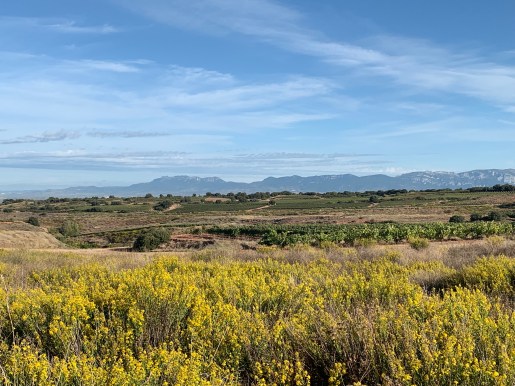
The next hour or so passed through some classic Meseta scenery:
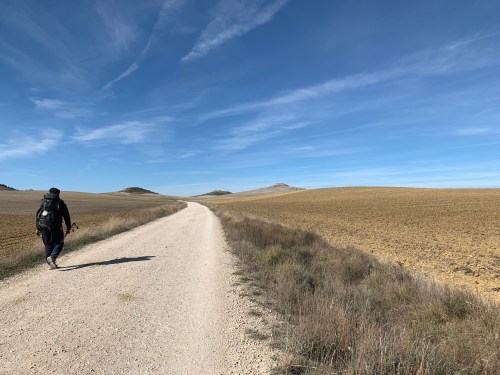
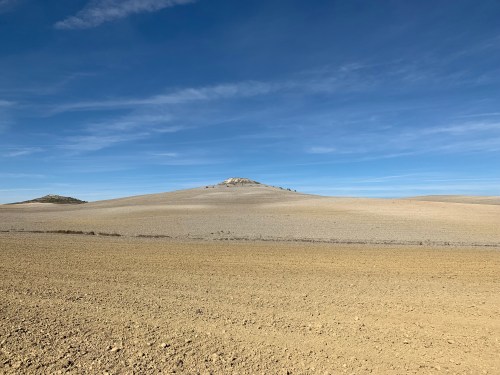
I ran into Eva-Karen and Rebecca, the Swedish women, again at some point on this stretch and also had the opportunity to speak to an American woman who’d sparked my curiosity the day before. She was walking with a truly ingenious little umbrella attached to her backpack so that her face was in the shade. Jennifer explained that she’d done the Camino Francés two years ago and then did the Camino in France the year before, both times by herself. She saw these experiences as her taking time to take away from her family and work to take care of herself, which seemed very wise.
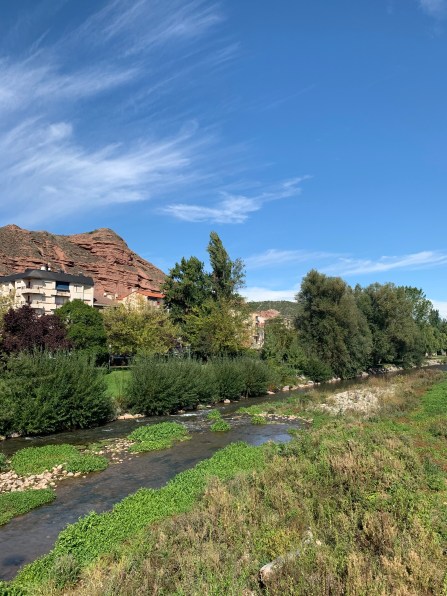
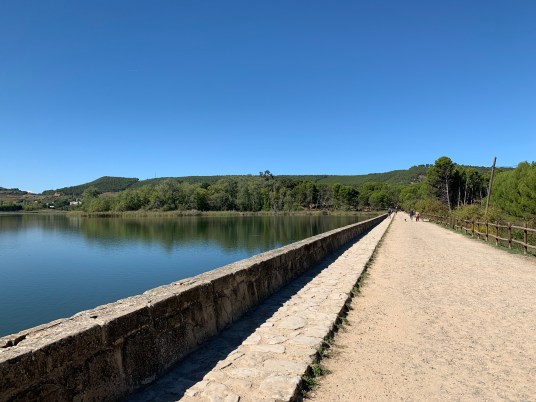
We eventually reached the town of Boadilla del Camino, which is the recommended stage-end for the day, but I continued on to the next town. The two-hour walk mostly tracked a canal that led straight into Frómista and made for a very pleasant route.
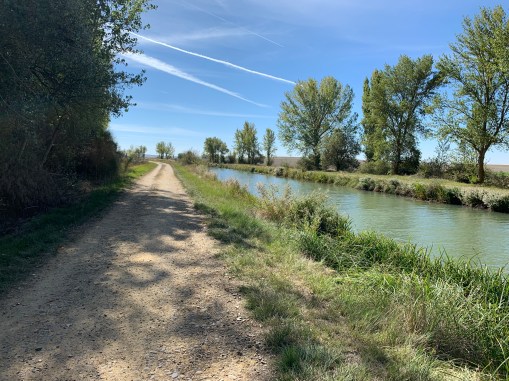
Crossing into Frómista involved crossing a lock, which was a little anxiety-inducing because it was narrow, and I couldn’t help but think how much trouble I’d be in if I happened to fall over into the water with my heavy backpack on…
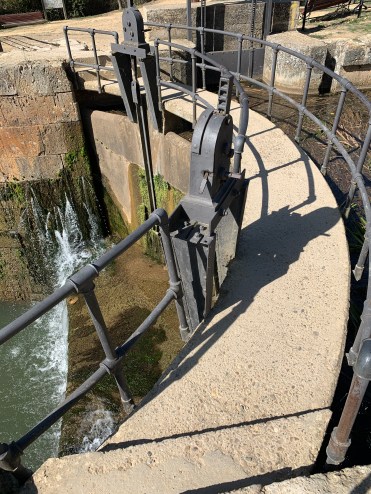
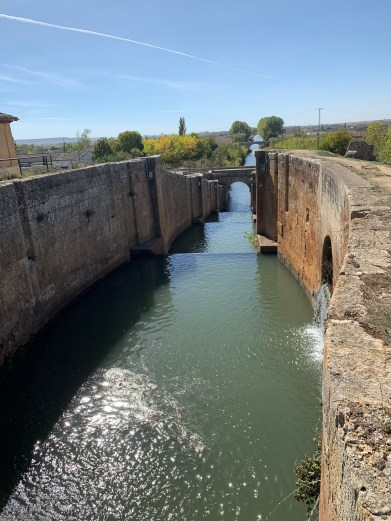
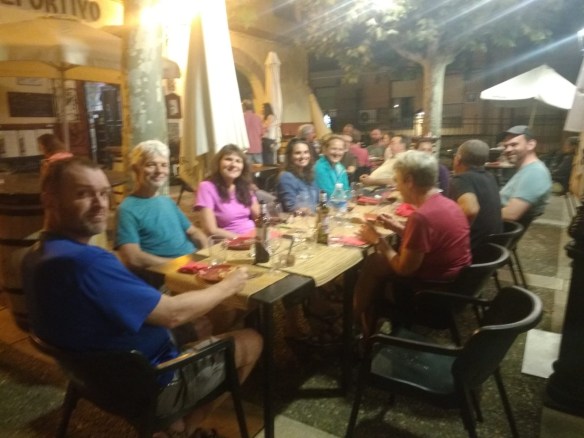
Anyway, I made it safely across and trudged another 20 minutes to my albergue. I was pretty tired; it had been a long, hot, and challenging day. I was glad to find some familiar faces in my room: Sam and Rosa, the Australians from the night before. I ended up having dinner with them. We also met an inspiring pair of Spanish men in their 50’s. One of them was blind, and his friend was walking with him. They were also doing the Camino in portions, about a week at a time; they somehow managed to cover huge distances (35 kilometers or so) each day. How incredible! I still can’t imagine doing this blind – the Meseta at least is relatively easy terrain, but other portions… I really don’t know how they managed it. It was great to meet them.
















 Travel With Wergs