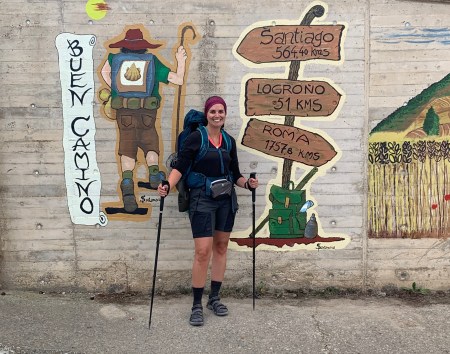
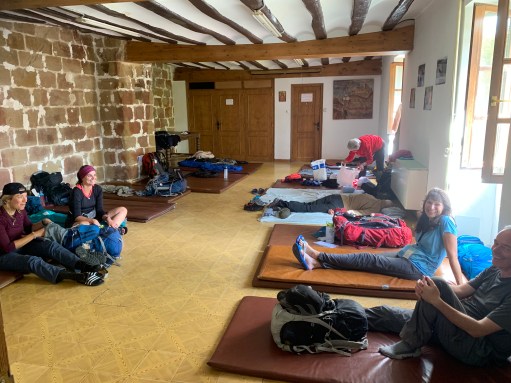
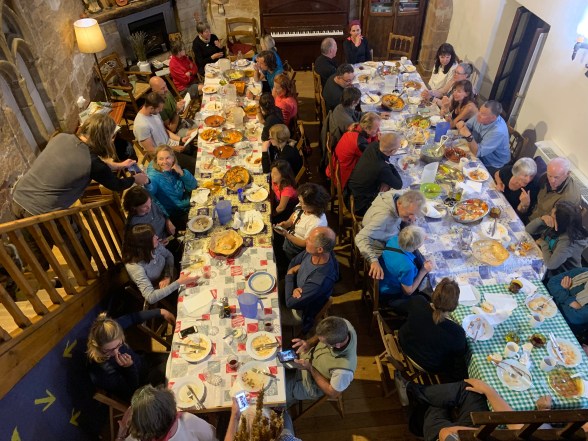
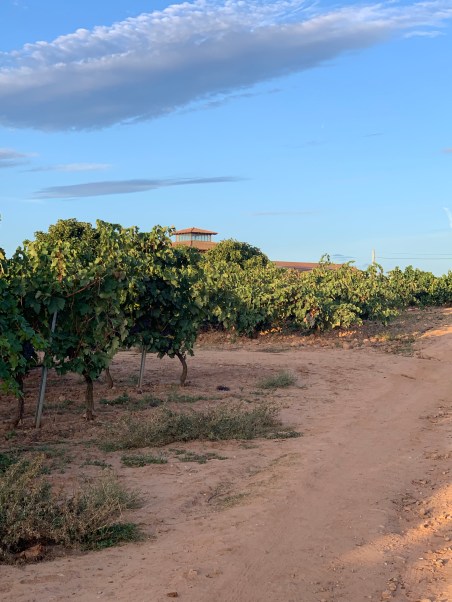
Camino Day 17: Castrojeriz to Frómista

Distance travelled: 24.9 kilometers

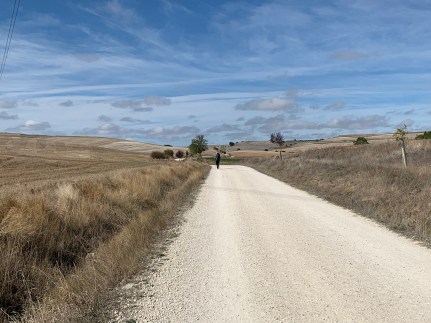
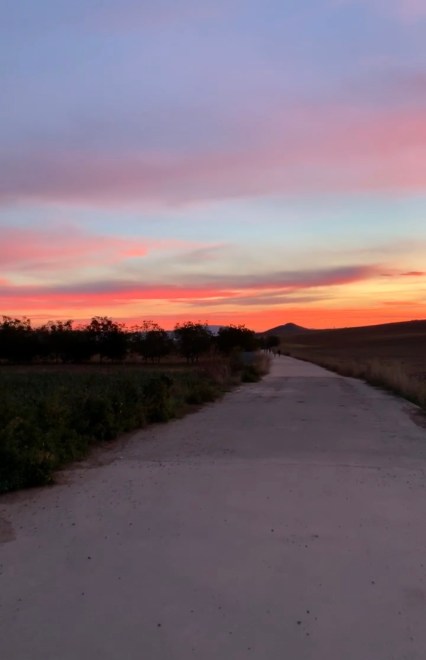
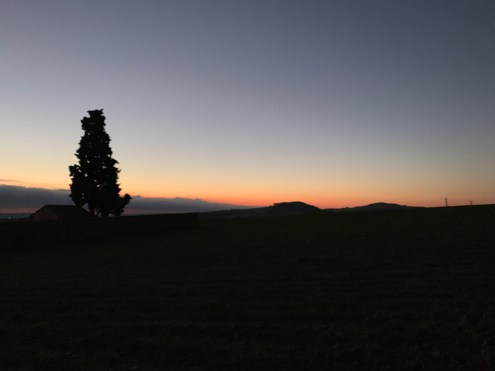
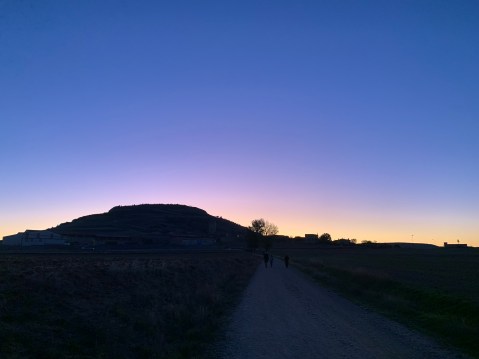
Another early start; another beautiful sky:
IMG_8895

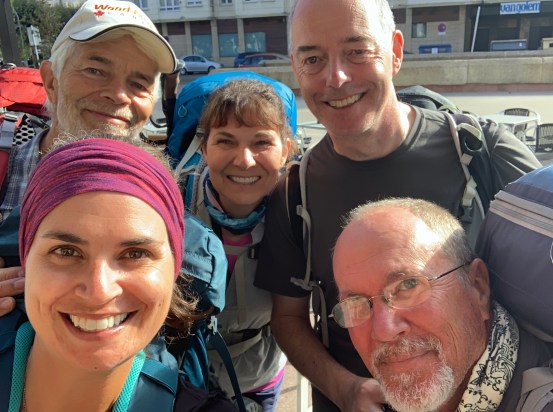
Looking back towards Castrojeriz. Those are my three French friends approaching.

I ran into Jean-Pierre, Dominique, and Marie-Claude on the way out of town. They treated me to a performance of a French Camino song that brought a huge smile to my face. The song is called “Ultreia”, which is another traditional greeting of Camino pilgrims – the word means “onward and upward”. I actually didn’t know which song they sang until I encountered it again two weeks ago at the annual gathering of the American Pilgrims on the Camino, where we sang it – in French – as part of a ceremony to send off new pilgrims. It’s nicer in French, but here are the lyrics in English:

Every morning we take to the Camino,

Every morning we walk further,

Day after day the route calls us,

It’s the voice of Santiago de Compostela.

Onward! Onward!

And upward! God, help us!

Way of earth and way of faith,

Ancient road of Europe,

The Milky Way of Charlemagne,

It’s the way of all the Santiago pilgrims.

Onward! Onward!

And upward! God, help us!

And over there, at the end of the continent,

Saint James awaits us,

His smile ever fixed,

On the sun that sets at Finisterre.

Onward! Onward!

And upward! God, help us!

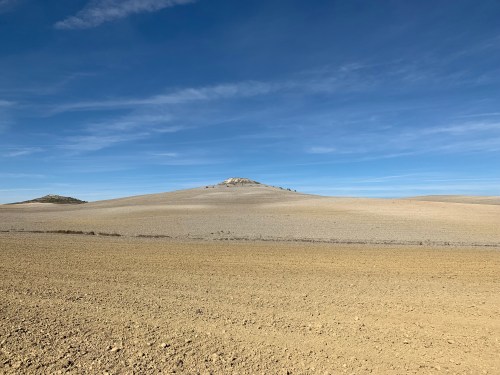
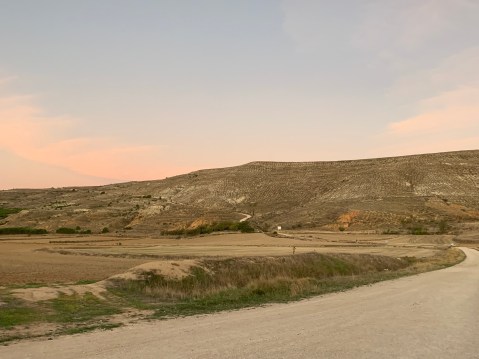
This was an appropriate song for the moment because we were approaching a pretty steep climb, up this “hill” (I continue to have need for a word that implies something higher than what traditionally comes to mind when we hear “hill”):
IMG_8898

This is higher than it looks…

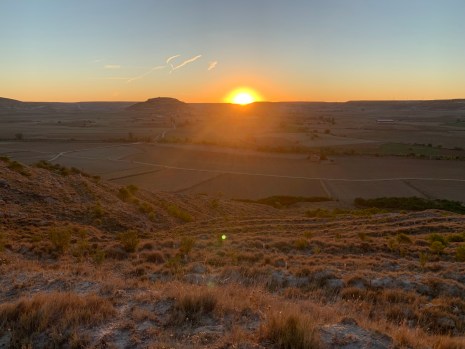
It felt great to climb again. Once again, I was filled with gratitude for how much better my feet were feeling in my new shoes. This was our view back towards Castrojeriz as we neared the top:
IMG_8901

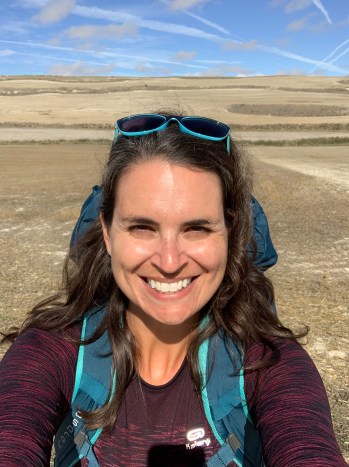
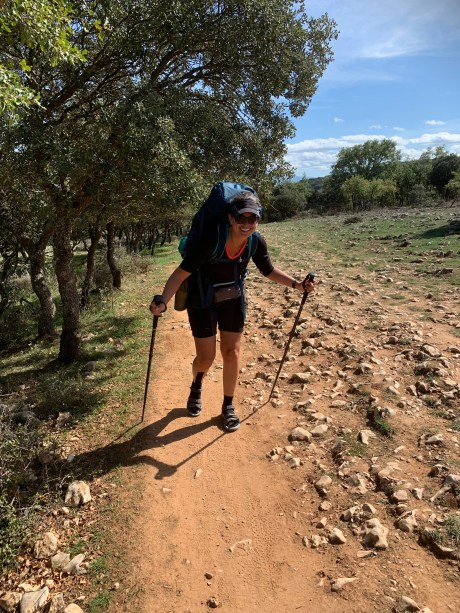
And this is one of my favorite pictures of me from the Camino, standing at the summit:
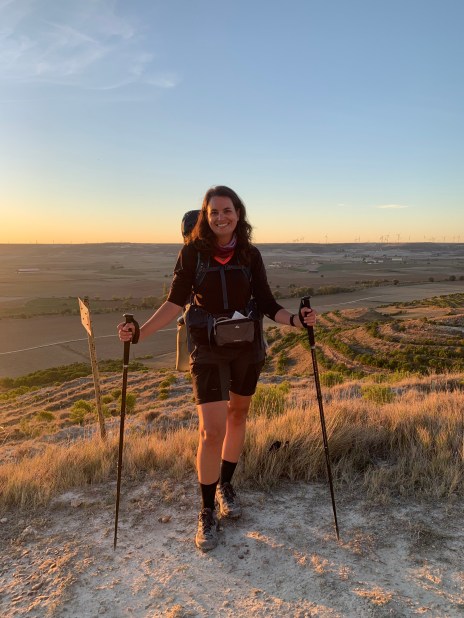
IMG_8903

Everyone took a bit of a breather at the top before going straight back down on the other side of this hill. A British woman who’d spent more time with the group of Irish guys I’d met the day before caught up to me and delivered a message from one of them; they were heading back to Ireland that day, and he wanted to make sure I knew that I’d always be welcome in Ireland. So kind!

IMG_8908

My view of the next 1-2 hours of walking

Remembering the difficulty and resulting injuries from the big descents into Zubiri and after Pamplona, I wanted to make sure I took the descent down the hill slowly. I fell into step with Dominique, and we both stopped in our tracks as her husband Jean-Pierre passed by us – he was literally bent over at nearly a 90-degree angle and sprinting down the hill! That’s one way to tackle descents!

I got in lots of good practice speaking French with Dominique over the next hour, and when we caught up to Jean-Pierre and Marie-Claude, I sat with them to share a snack. I think I ended up going ahead of them after that.

I stopped in the next town to get a sandwich and ended up spending about 45 minutes sitting alone in a restaurant’s backyard terrace with a 60-something Dutch guy who’d actually stayed at my albergue the night before. We hadn’t spoken at all then, but we had a lovely conversation together and stayed together for another 30 minutes or so on the way out of town before he encouraged me to go on.

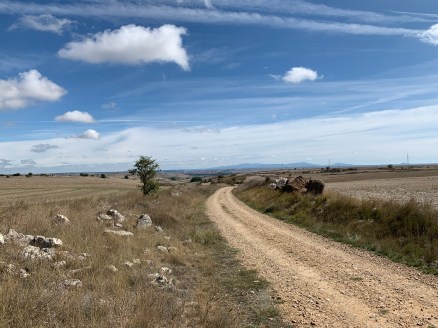
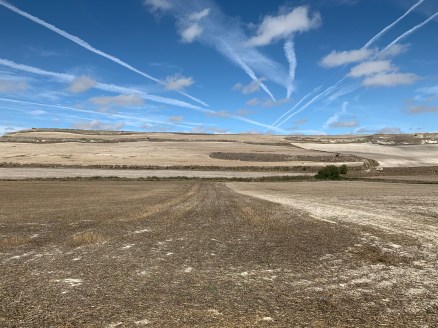
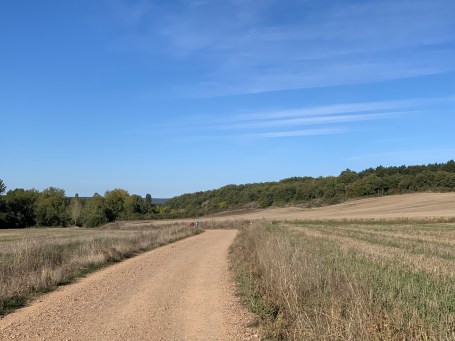
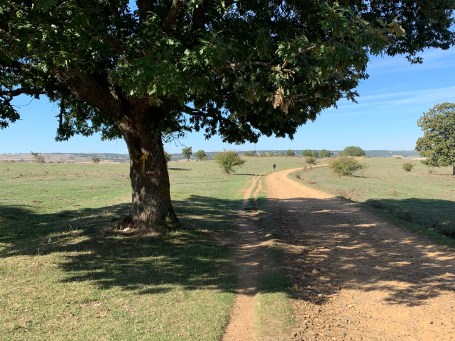
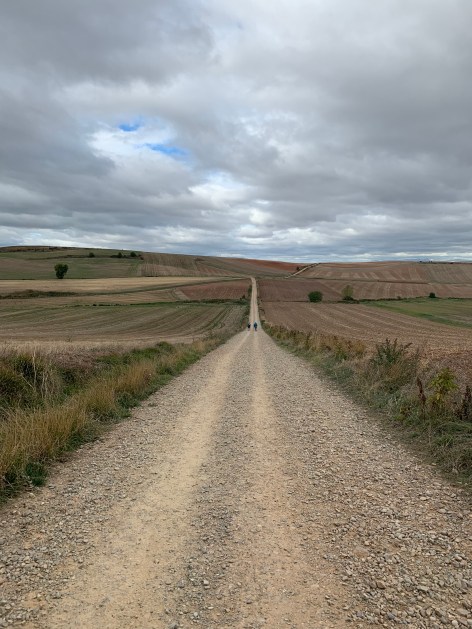
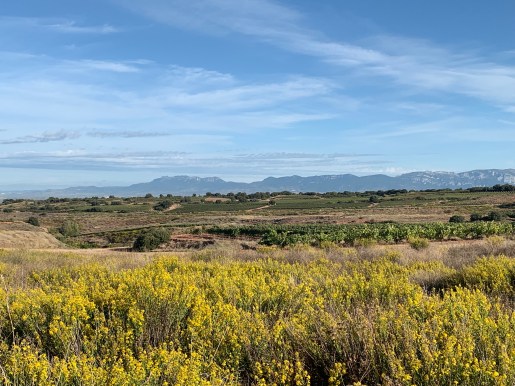
The next hour or so passed through some classic Meseta scenery:
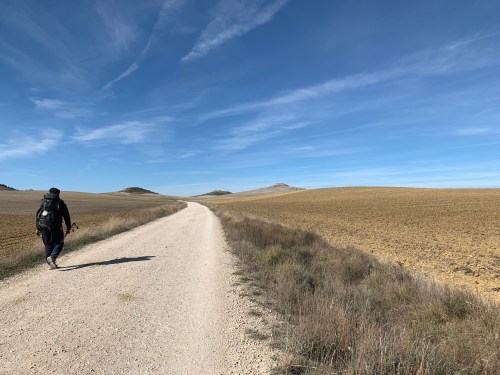
IMG_8915

IMG_8916

I ran into Eva-Karen and Rebecca, the Swedish women, again at some point on this stretch and also had the opportunity to speak to an American woman who’d sparked my curiosity the day before. She was walking with a truly ingenious little umbrella attached to her backpack so that her face was in the shade. Jennifer explained that she’d done the Camino Francés two years ago and then did the Camino in France the year before, both times by herself. She saw these experiences as her taking time to take away from her family and work to take care of herself, which seemed very wise.

We eventually reached the town of Boadilla del Camino, which is the recommended stage-end for the day, but I continued on to the next town. The two-hour walk mostly tracked a canal that led straight into Frómista and made for a very pleasant route.
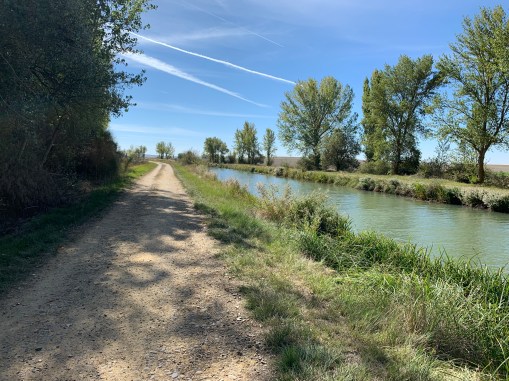
IMG_8919

Crossing into Frómista involved crossing a lock, which was a little anxiety-inducing because it was narrow, and I couldn’t help but think how much trouble I’d be in if I happened to fall over into the water with my heavy backpack on…
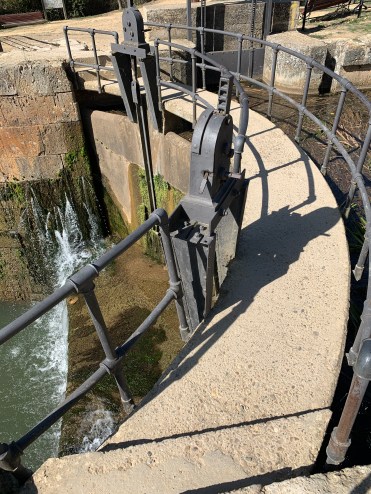
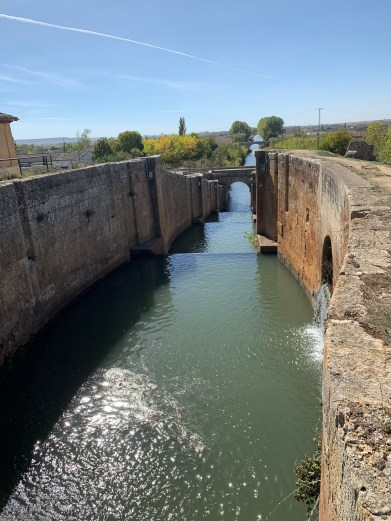
IMG_8921

IMG_8922

Anyway, I made it safely across and trudged another 20 minutes to my albergue. I was pretty tired; it had been a long, hot, and challenging day. I was glad to find some familiar faces in my room: Sam and Rosa, the Australians from the night before. I ended up having dinner with them. We also met an inspiring pair of Spanish men in their 50’s. One of them was blind, and his friend was walking with him. They were also doing the Camino in portions, about a week at a time; they somehow managed to cover huge distances (35 kilometers or so) each day. How incredible! I still can’t imagine doing this blind – the Meseta at least is relatively easy terrain, but other portions… I really don’t know how they managed it. It was great to meet them.
Camino Day 16: Hornillos del Camino to Castrojeriz

Distance travelled: 20 kilometers

I got started early the next morning, along with seemingly everyone else in the albergue. I would come to see that something about the Meseta seemed to unnerve people a little bit – as I mentioned, there was a bit less flexibility about where you could choose to end the day, and I think that made people feel more pressured to get there first, ahead of the rush.

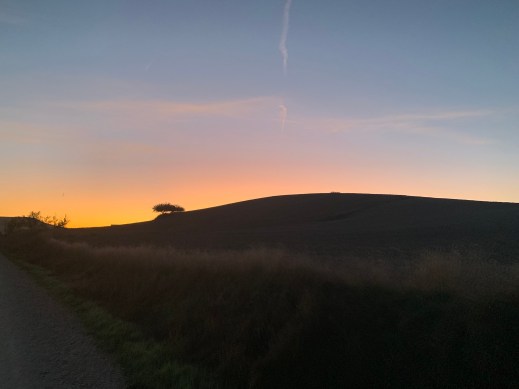
As usual, our early start was rewarded with a beautiful sky. What a great way to start the day!

IMG_8873

IMG_8877

Some space gradually developed between us pilgrims who’d left Hornillos at around the same time, and within an hour I was back to having several hundred meters between me and the nearest people. It was quiet and wonderful. At one point, I recorded a 10-second video of the landscape around me and sent it to a few people, knowing that my Monday  morning looked distinctly different from theirs.

IMG_8879

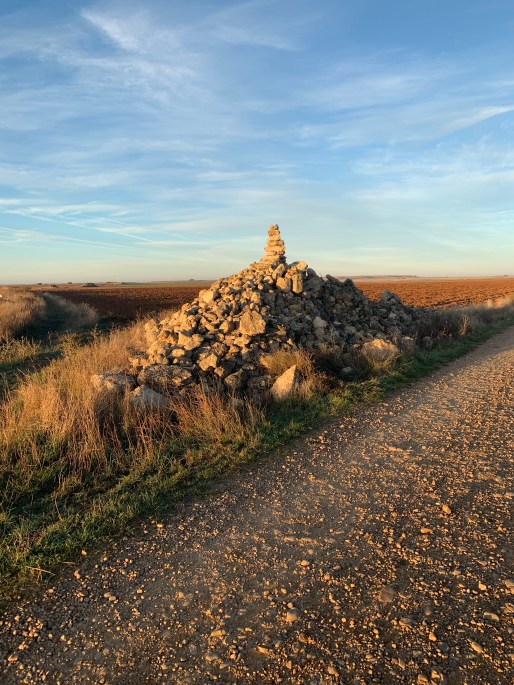
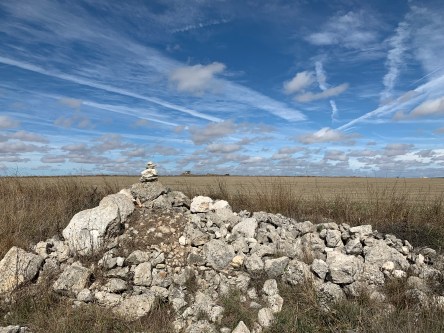
Another cairn on the side of the road

IMG_8880

A few hours later, we finally came upon another town, where I stopped at a lively albergue/cafe to get coffee and a slice of tortilla. It was owned by a Cuban guy who was blasting salsa music through the speakers on the terrace and greeting everyone. I met a group of Irish guys who were doing their annual week-long portion of the Camino together.

IMG_8883

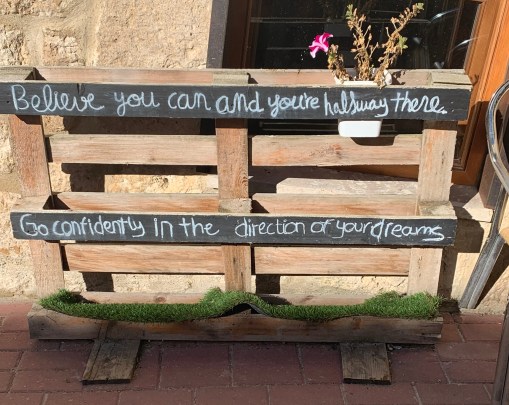
Found part of my favorite quote: “Go confidently in the direction of your dreams; live the life you have imagined.” – Henry David Thoreau

IMG_8884

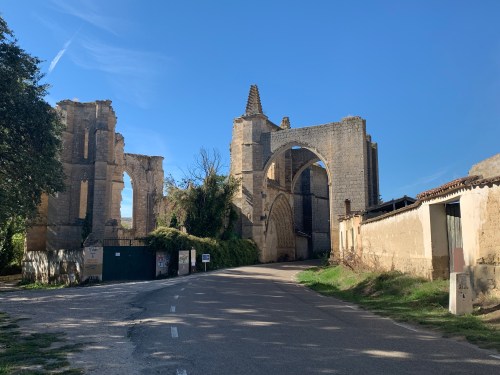
Later in the day we passed through the remnants of the monastery of Saint Anthony, which used to shelter pilgrims as long ago as the 14th century. (Today, 14 pilgrims can still spend the night there, without electricity or hot water. I’ve heard it’s an experience.)

IMG_8885

IMG_8886

These were lying next to the monastery wall, and I wasn’t sure for whom or what they were intended…

Just past the monastery, an enterprising Mexican man had established an outdoor pop-up cafe offering beer and watermelon to pilgrims in need of a break. I joined the Irish guys for a cold one and then continued on.

As we drew closer to Castrojeriz, I struck up a conversation with an American woman I’d heard speaking Spanish at both of my earlier stops. Andrea turned out to be a just-retired high school Spanish teacher from Minnesota, and we spent the next hour leading into Castrojeriz comparing notes from our teaching experiences.

IMG_8887

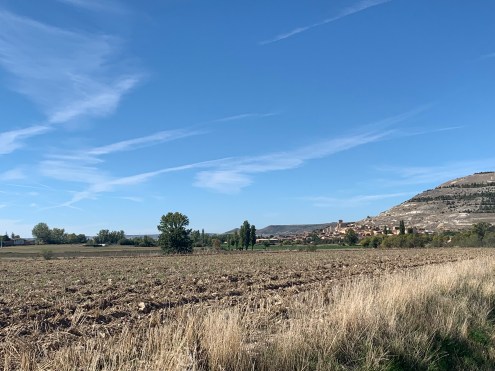
Castrojeriz, viewed from a distance

Castrojeriz turned out to be a cute town nestled at the base of a tall hill with the remnants of a fortress on top. (A couple of ambitious pilgrims decided to hike up there for the view and said it was great.) My albergue was on the other end of town, and I was pleased with my choice. My eight-person room featured only stand-alone, non-bunked beds, and there was a quiet garden/terrace space in the center of the building. When I went out there to hang up some laundry, I met two Australian girls named Sam and Rosa; they will appear again in future posts.

IMG_8889

I spent some time reading in this large plaza just down the street from the albergue. It felt marvelous to sit in the warm sun.

IMG_8891

The evening’s communal meal (optional, so not attended by everyone in the albergue) was the least memorable of all the ones offered by an albergue. Conversation felt a little forced as I got the sense that a number of the other pilgrims sitting at the table were a bit socially awkward. It was a bit of a bummer to end the day on that note, so I crossed my fingers I’d end up in a more interesting situation the following night.

Camino Day 15: Burgos to Hornillos del Camino

Distance traveled: 20.8 kilometers

I had originally planned to only do another half day of walking out of Burgos. Many people take a day off in Burgos in order to take advantage of being in a city of 180,000 people and all that that entails, but I was so glad to be able to walk properly again after the week of blisters that I wanted to keep moving. I think doing a half day out of Burgos was my way of splitting the difference.

IMG_8845

It felt strange, though not in a bad way, to walk out of town alone after having been continuously with my group for over a week. It took about 45 minutes to get out of the city and into the countryside; fortunately, the way out was much more pleasant than the way in. Most of the way to the town where I’d planned to stop was actually like a giant park, and I encountered a lot of small groups of local cyclists out for their Sunday morning ride. I found it so funny to think of locals using the Camino recreationally!

IMG_8843

It wasn’t even 1:00pm yet when I arrived in Rabé de las Calzadas, and I didn’t feel at all ready to stop – mostly because I just couldn’t imagine what I would do with myself for the rest of the day in this small town! I grabbed a coffee and a to-go sandwich from a cafe serving some families who’d just come from mass, and I consulted my guide to see where I should now aim to end up. On the Meseta, there’s a bit less flexibility in terms of where you stop for the day because the towns are more spaced out, so a lot more people end up following the suggested end points. The typical destination for those doing a full day’s walk out of Burgos was Hornillos del Camino, which would be another few hours of walking, so I decided to go for it.

IMG_8851

IMG_8849

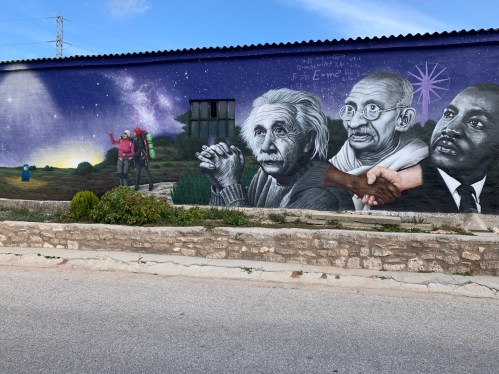
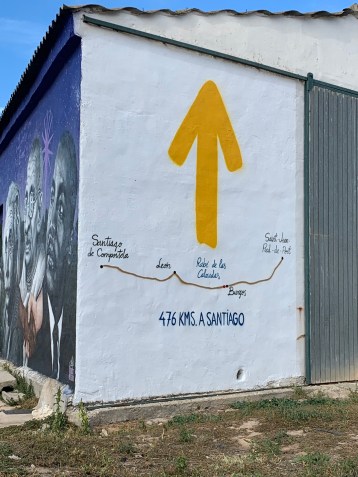
One of several impressive murals coming out of Rabé de las Calzadas

IMG_8848

Once I left Rabé de las Calzadas, I really felt a shift. Suddenly, I seemed a world away from everything. There was only one other pilgrim that I could see in either direction, and he remained several hundred yards in front of me for a long time. It would often be the case on the Meseta that I’d be the only pilgrim I could see in either direction – and on the Meseta, you can see for a very long way.

IMG_8853

IMG_8857

IMG_8854

This is where I felt well and truly alone.

IMG_8856

I found myself thinking “if this is the Meseta, I’ll take it!” While you may not find the above landscapes particularly beautiful, I felt a unique sense of peace in being so obviously isolated. I was also very happy because my new shoes felt great on my feet – my toes didn’t feel too restricted!

IMG_8855

A big smile to match my mood

My only complaint, on this day and the next, was the prevalence of flies on the road. As I neared Hornillos del Camino, I seemed to be walking in a continual cloud of them! Swatting them away with my trekking poles did nothing.

I arrived in Hornillos around 3:00 or so and received a warm welcome from the manager of the albergue. Although my six-person room smelled like it had been doused in cleaning fluid, I liked the place; we were essentially in a family home that happened to use the second floor’s bedrooms for pilgrims. There was a small backyard with lounge chairs (and, still, a lot of flies).

The communal meal that night was homemade paella. I spoke a while with two Swedish women (also sleeping in my room) who were picking up where they’d left off the year before; today was their first day of walking. I also joined the conversation of a group of three French people in their sixties: Jean-Pierre, his wife Dominique, and their friend Marie-Claude. They, like all the other French pilgrims I’d met thus far, were happy to find another francophone and readily included me in their conversation. The three of them had done all of the Camino routes in France and were now tackling the way in Spain. Dominique and Marie-Claude would only go as far as León, but Jean-Pierre planned to go all the way to Santiago. I would interact a lot with all of these people in the coming days, and I eventually started thinking of Jean-Pierre as my “French Camino dad”. (I already had American and Canadian “Camino dads”, and I’d eventually pick up a Spanish “Camino dad” in Galicia.)

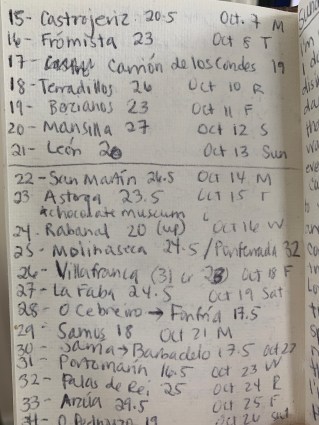
Before going to bed, I spent about an hour looking at the pages from my guide book and coming up with a plan for the rest of the journey. Here it is below, showing the town, number of kilometers per day, and the date on which I anticipated arriving. I mostly stuck to this (in a couple of cases later on, I went further than planned).

IMG_1417

So, my first day on the Meseta was a success. I missed my “Camino family” but was also looking forward to meeting new people. So far, I hadn’t encountered any of the people I’d seen on the way to Burgos, and it would mostly stay that way.

Camino Day 14: Burgos, and the end of Stage 1

Distance traveled: 13.5 kilometers

I knew we had about 13 kilometers to walk in order to get to Burgos; 13 kilometers is less than half a usual day, so I expected it to feel like an easy morning stroll. Although the walk was totally flat, I found that my anticipation of arriving in Burgos made it feel like a very long walk, and the landscape didn’t help things. The walk into Burgos is, in my opinion, the second worst part of the Camino. There are two routes you can take, and I had been zealously advised as early as day 2, “take the river route!!!!” I was very glad to have Adam and Lou with me to steer us correctly, because I never would have noticed the turn-off for the river route. Regardless of the route, the majority of the walk isn’t very picturesque; we walked around the perimeter of the airport for what seemed like 45 minutes, then through some industrial outskirts. We arrived at the river only when we’d arrived at the city itself, and then, as with many other destinations thus far, it took us quite a while longer to actually get to where we were going. I found myself getting grumpier by the moment. Finally, we made it to the city center, and we stopped for a snack and a coffee before continuing on.

At this point I was with Adam, Lou, Chuck, and Kim. Our friend Bill had gone ahead of us two days before and had arrived in Burgos the day before. Lou wanted to catch up to Bill and ended up walking another full day’s walk this same day in order to reach him; Adam, Chuck, and Kim were planning to take a day off in Burgos. Since I planned to continue on the next day, the five of us said good-bye. It was a surreal moment, after having spent so much time together!

IMG_8826

By this point, we had already created a WhatsApp group, so I knew I’d continue to be in touch with everyone even if we didn’t necessarily find each other again soon on the trail. It felt sad to be going our separate ways, but I also felt it was time for me to spread my wings a bit.

I checked into my hotel, where I was upgraded to a nicer room, and left again pretty quickly in order to tackle some errands. Burgos was the first big city we’d encountered, so there was a lot I wanted to get done. I started by finding a laundromat and taking everything except what I was wearing for a proper wash and dry. After that, I went straight to the Sephora that coincidentally happened to be on the same block as my hotel, and I treated myself to face, hand, and foot masks as well as a bath bomb. (My hotel room had a bathtub, and I took two baths during the 19 hours I was there!) Finally, I went in search of a new pair of walking shoes. I found a small outdoor store and, somewhat riskily, bought the first pair of shoes that the sales woman presented to me. Technically, the shoes are trail running shoes; that essentially means they look like regular running shoes with an extra complex tread. I was wary of the trial by fire involved in wearing a brand new pair of shoes for a full day of hiking, but I didn’t want to do the whole rest of the Camino in my Tevas!

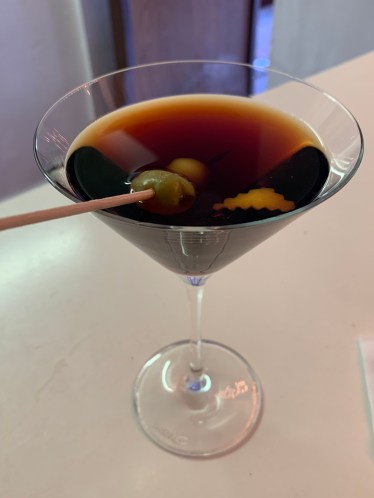
Next, I decided I was overdue for a drink, so I headed off in the direction of the cathedral and ducked into a bar off the main plaza, where I got a vermouth and some tapas. Vermouth is one of the best things about northern Spain, and I drank it often on the Camino. (You’re probably thinking about the clear vermouth that’s used in martinis; as you can see from my picture below, I’m talking about red vermouth, which you drink straight, usually with a couple of olives and/or some orange peel, as here. It’s delightful.)

IMG_8830

IMG_8831

“Happiness is finding two olives in your vermouth when you’re hungry.”

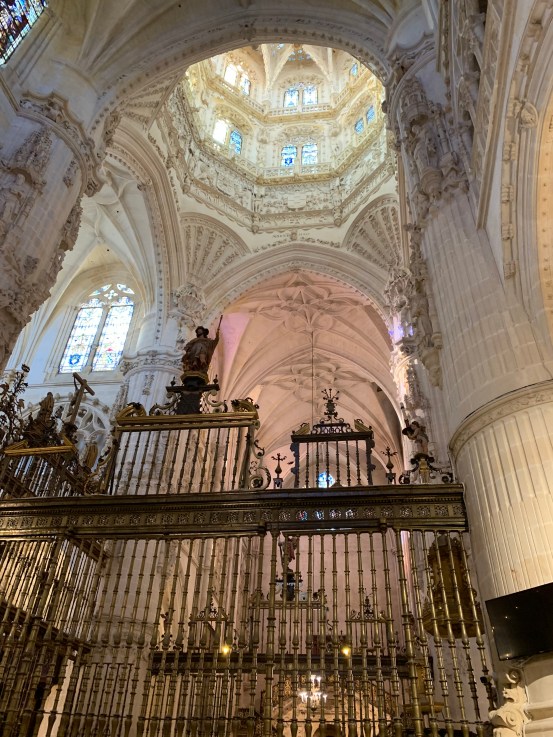
Now, Burgos is very famous for its grand cathedral, and the Camino path (still marked within the city) leads you straight to it. I have to confess that I wasn’t willing to spend my precious free afternoon exploring the cathedral, so I only went inside as far as the ticket check point. It was really beautiful, and I do regret not doing the full tour, but I’ve rationalized it as giving me a reason to do the Camino again. I’m sure Google can supply you with plenty of pictures!

IMG_8833

I spent the rest of the day in my spacious hotel room, happy to be by myself in a quiet space. I watched a Pedro Almodóvar film on my phone, ate food I’d picked up in a supermarket, took my bath, and applied all of my masks. It was a real treat.

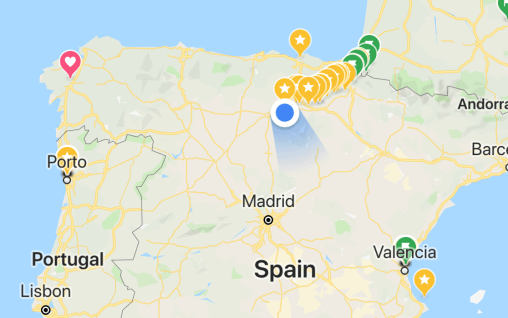
So, 14 days into the Camino, I’ve now traveled 292 kilometers (181 miles), 35% of the way. Here’s where I am (and the heart is Santiago):

IMG_8836

I felt so many things: proud of having made it this far, humbled by the Camino’s challenge to my body, grateful for the friends I’d made and experiences I’d had so far, nervous about the new obstacles awaiting me on the Meseta, and excited to keep going. Two weeks seemed like both a very short and a very long time to have been walking. My life in Paris seemed geographically and temporally very far removed from my present situation. My job, which I’d left a bit over three months before, seemed even more distant. I felt like a different person that the one who’d set out from Saint Jean, yet I also felt more truly myself than I had in a long time.

The stretch of the Camino from Saint Jean to Burgos is the “hell” part of the journey. It’s the most physically grueling, not necessarily because it’s the most difficult terrain (there are two more notably challenging climbs and descents coming up) but because your body is adjusting the whole experience. However, it’s this difficulty that brings people together. The sense of community among pilgrims was, to me, markedly stronger during these first two weeks. Everyone was in it together and in need of support. I can’t convey adequately here just how powerful and special that is; you just have to experience it for yourself. In the separate guide to the Camino that I’ve written, I address your options if you don’t have time to do the entire journey in one go, and I recommend that if you can only do one section of the Camino, you should start with this one. Yes, it’s harder, but your interactions with other pilgrims will make it more meaningful. Also, the food is better in the first third of the Camino than anywhere else until you get to Santiago!

The next portion of the Camino is the Meseta. The vast majority of pilgrims really dislike the Meseta; only my friend Lou had positive things to say about it. The reason for this disapprobation stems principally from the fact that the Meseta is, well, boring. The landscape is largely flat and open, so it can be a bit monotonous. I was warned that many pilgrims find the lack of visual distraction difficult to bear because of its impact on their thoughts. Without more to keep your eyes busy, your mind is naturally going to find new ways to keep itself occupied, and many people find that this isolation with their thoughts leads to some discomforting reflections and realizations. In particular, I’d heard that people often end up ruminating on their regrets.

I wasn’t sure how any of this would impact me, but I felt ready to face it. Now that I’d survived blisters and tendinitis, I felt relatively unstoppable. I had gotten into the swing of the pilgrimage and looked forward to leaning in to what it would bring me next.

Camino Day 13: Villafranca Montes de Oca to Cardeñuela de Riopico

Distance traveled: 24.6 kilometers

Today was a day for pictures.

We began with a brief but steep climb out of Villafranca. Two mornings in a row, we had a sunrise whose beauty defies description.

We spent the next couple of hours walking through a dirt road running through a woods. It had been a while since we’d been in a wooded area, so it was a nice change of pace and prompted some really good conversations.

Once out of the woods, it was back to the open fields to which we’d become more accustomed.

IMG_8757

IMG_8758

IMG_5828

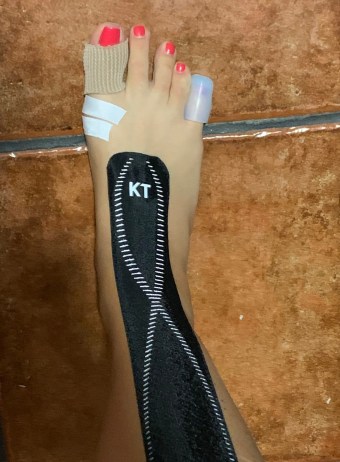
My blisters are healing thanks to the change of shoes, but the tendinitis is taking longer, hence the KT tape on my shin.

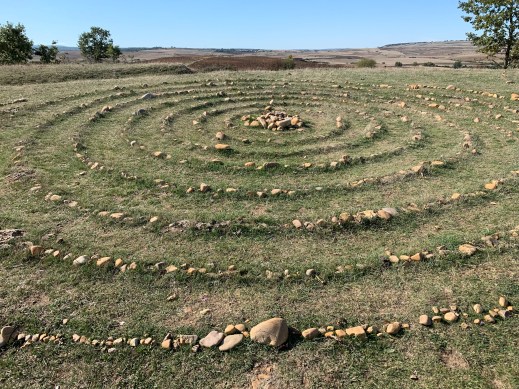
Later in the day, we encountered a pretty big labyrinth. Pilgrims have a curious habit of creating stone formations along the path; more frequently, these take the form of cairns (mounds of stone), often grouped together. Occasionally, though, someone would go to the trouble of creating a labyrinth. I never went so far as to walk through one, but I really enjoyed finding them. I think the point is to force you to slow down and contemplate something else.
IMG_8760

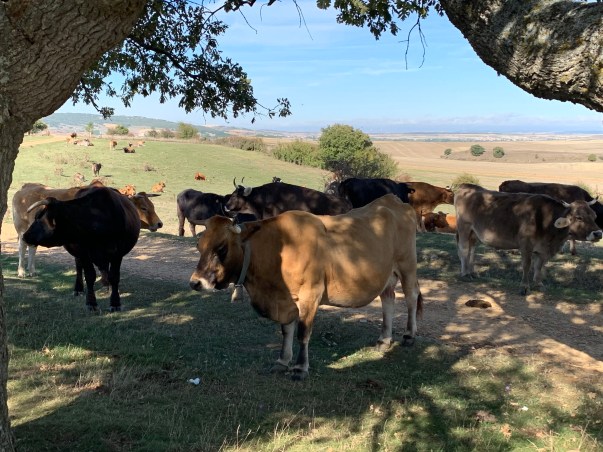
Not long after the labyrinth, we found that we had some company on the trail. It was a pretty warm day, and part of a herd of cows had decided to cool off in the shade. Some were napping in the grass on the side of the trail! Cows would become more and more a part of the Camino, and I came to realize that I actually am quite fond of cows. (Perhaps because in all of the forms of astrology that assign an animal to you, I am some form of a cow: I am a Taurus born in the year of the Ox, and my primal zodiac sign is a yak. Apparently, I should be a lot more stubborn than I actually am…)

IMG_8762

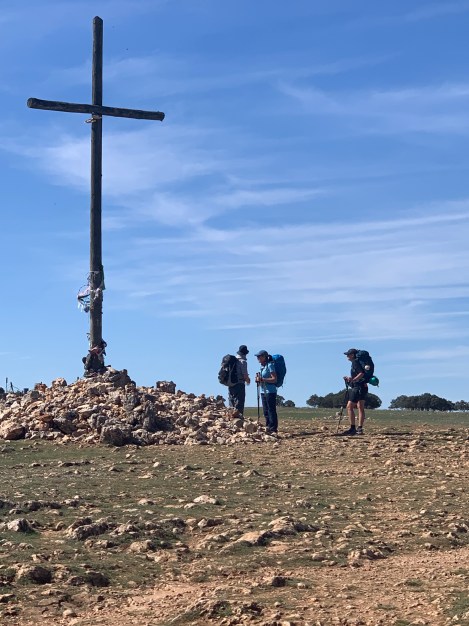
Further on, we came upon a cross. There actually aren’t as many crosses along the Camino as you might expect given that it’s a Catholic pilgrimage route. I’m not sure who put this one here, but people had left shoes and other mementos as its base.

IMG_5836

The main event, however, was our arrival at the summit of a hill overlooking the valley in which, seemingly not so far away, the city of Burgos – and the end of this first and most challenging portion of the Camino – awaited us. Adam and Lou assured us: it’s easy to look down, see Burgos in the distance, and think “I’ll just push through and go all the way there today!”, but that would be a mistake. Thus, we were aiming for one of the hamlets at the bottom of the hill, where we’d spend the night and then have an easy walk into Burgos the next day.

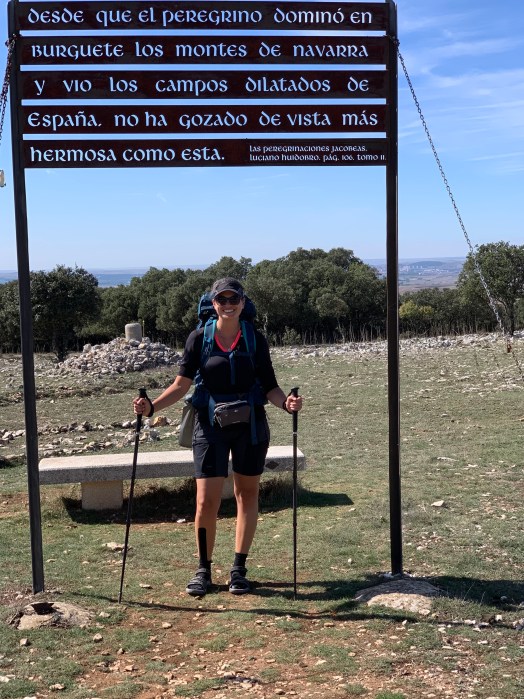
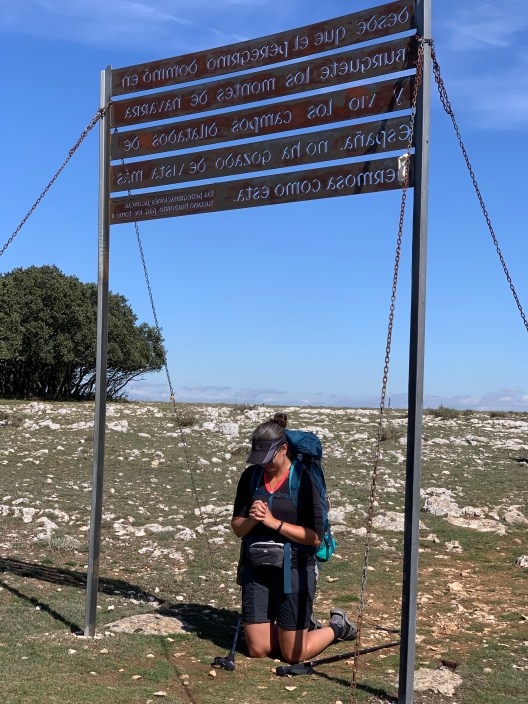
From this vantage point, there’s a large sign that essentially says that when pilgrims arrive at this point after all of the trials of the preceding days, they can’t help but think that they’ve never seen a more beautiful sight. According to Adam, pilgrims of the past often fell to their needs to thank God for having helped them get this far. I did the same.

IMG_8782

IMG_8789

It took longer to get to the next town than anticipated; it was quite a long way down. (“Hill” is a bit of a misnomer here. It took us about 45 minutes to get down to the valley level.)

IMG_5845

Down we go.

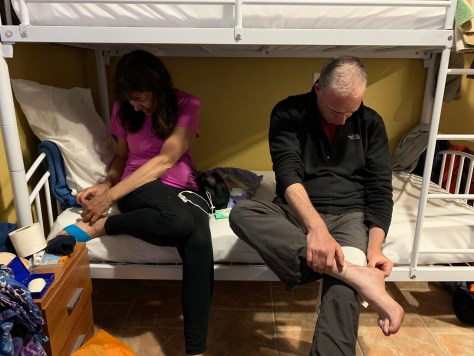
In our semi-private room later, it was Adam’s turn to join me and Kim in tending to blisters. He got one today, after all the days before without any problems! He and Kim went further than I had been willing to go: the picture below shows them literally sewing up their blisters with a needle and thread.

IMG_8797

I went to bed full of anticipation for the next day. Aside from the meaning of the moment – which I’ll discuss tomorrow – I was unabashedly thrilled about the idea of treating myself to a night alone in a hotel room, hopefully with a bathtub. After a week of bad sleep due to lots of snoring, I was ready to sleep in a room all by myself!

Camino Day 12: Grañón to Villafranca Montes de Oca

Distance traveled: 27.6 km 

I think this day had the best sunrise of the entire Camino, which is really saying something. It’s the first one that comes to mind when I think about Camino sunrises. Perhaps you can see why?

IMG_8726

IMG_1376

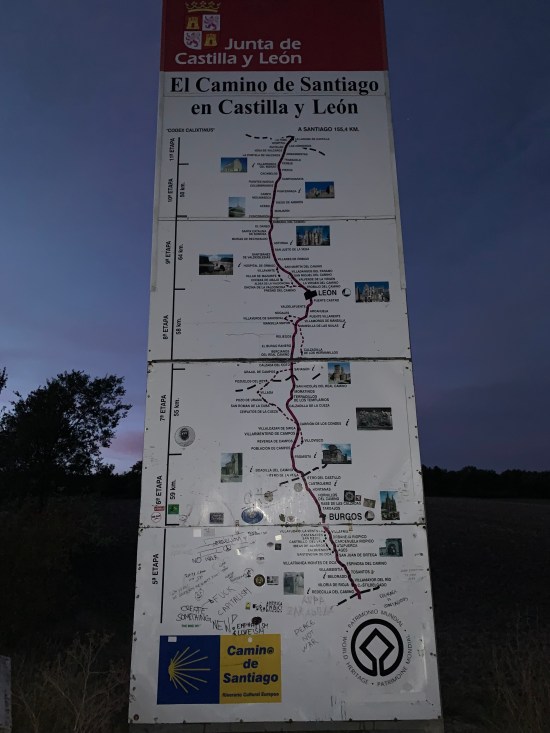
Within an hour of leaving Grañón, we crossed out of La Rioja and into the region of Castilla y León, which is by far the largest of the four that the Camino Francés passes through. (This is day 12; I won’t leave Castilla y León until day 30!) The sign below plots out all of the stops on the Camino through Castilla y León. As you can see… there are many!

IMG_8729

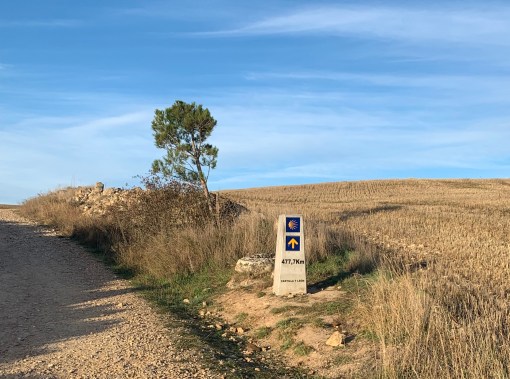
One of the things I immediately appreciated about Castilla y León was the regular signage. While the path had been perfectly clear through Navarra and La Rioja as well, the signs in Castilla y León were far more regular, and they had the added benefit of giving you a constant reminder of your progress toward Santiago. I think the one below is the first we passed, and all of the ones in Castilla y León look like this – just with steadily decreasing numbers of kilometers left!

IMG_8736

There’s not a ton for me to say about this particular day, despite the fact that I can actually recall quite a few distinct portions of the walk. I ended up walking apart from the group for part of the morning – we all were just going at different paces – and I decided that I’d try putting my hiking boots back on, just to see how they felt. Well, friends, I had my boots on for all of five minutes before taking them off again. They just felt horrible on my feet, even beyond the places where I still had healing blisters. I knew with certainty that I wouldn’t be wearing them again and that I’d try to find a pair of sneakers or something once I got to Burgos in a few days so I wouldn’t end up going the rest of the way in Tevas.

Our walk after lunch was really pleasant, and I don’t know why I don’t have more pictures of it. There was a point when I was strongly reminded of Virginia, for no reason I could articulate – but I found it very comforting. We passed through a few small towns and then walked through a rolling landscape until finally arriving at Villafranca.

I think just about everyone stays in the same place in Villafranca; it’s home to a large structure that’s half hotel and half albergue. I think my room that night might win the prize for the greatest number of pilgrims sleeping in one space, if you consider that in Roncesvalles there were at least dividers between bunk groups. I think in Villafranca there were about 30 people in my dorm room. Fortunately, the beds weren’t super close together, so we all had the space we needed to move around.

At one point before dinner when many of us were just journaling or tending to injuries, I heard a French woman attempting to communicate something to someone who spoke English, so I waved to her and let her know that I spoke French and was happy to translate. A few minutes later, the business concluded, she turned to me and asked “where are you from?” When I explained that I was originally from the US, she exclaimed “and you speak French like THAT?!” It really made my day!!!

This was another big gift I received from the Camino. Although I have a facility for languages, I struggled for most of the time I lived in France to feel truly comfortable and confident when I communicated in French. I felt hyperconscious of every little mistake or word missing from my vocabulary, despite the fact that I spoke French at work – in offering legal advice to clients – and regularly received praise for how well I speak French. I didn’t finally start to relax until the last six months or so of my residency in Paris. On the Camino, there are many French pilgrims, so I had plenty of opportunities to use French, and I found somehow that I had never spoken better French in my life. I don’t know if it was the result of really taking the pressure off by removing myself from Paris or what, but I started reporting back to French friends “my French is perfect on the Camino!” By the end of the journey, I’d decided that I could feel comfortable holding myself out as fluent in the language. That’s a designation I would never have dared to give myself previously – I’ve always imagined “fluent” to mean knowing 100% of the words and making almost no grammatical errors – but I realized that there was never a moment on the Camino when my French failed me from the perspective of either vocabulary or grammar, and the French pilgrims were happy to claim me as one of their own. It was the linguistic application of another Camino mantra: “my needs are few, and I have what I need.”

Anyway – we had a hearty meal that evening in the albergue’s above-average restaurant and with a pretty generous amount of red wine. The night passed more peacefully for some of us than others. I had the luck to be on one end of the room, away from a couple of Italian guys whose snoring nearly drove some members of my group to violence. I could hear them, but not enough to really keep me awake!

Because I happened to have this on my phone, here’s where I am at this point – the trail of stars will eventually lead all the way to the heart you see on the western side of the country; that’s Santiago.

IMG_8741

Camino Day 11: Nájera to Grañón

Distance traveled: 28.1 km

This was one of my favorite days on the Camino!

We knew that we had a longer day ahead of us, so we set off from Nájera in the dark. Once again, we got a real treat as the sun rose!

IMG_8708

Agnes, Adam, and I took a quick bathroom and coffee break in the next town we came to, and a man I’d noticed the night before while walking around town turned up there too. He was wearing what I recognized as a Split Hajduk soccer jersey, so I approached him and said “Hrvatski?” His face lit up, and he started speaking excitedly in Croatian. I had to stop him and say “na govorim hrvatski” – I don’t speak Croatian. I do, however, speak enough to be able to explain that my mother’s family is originally from Croatia, and we were able to get by for about a minute as he asked from which town and I explained. This man and I had no languages in common other than my few words of Croatian, but thankfully, he turned out to be traveling with some other people who did speak English, so we ended up being able to communicate more. He was utterly tickled to find someone else Croatian on the Camino, and I got him to tell me how to say “Buen Camino!” in Croatian. (I think you just say “have a good trip!”)

A while after we left this town, we came upon a strange ghost town. That phrase “ghost town” likely conjures an image of something built long ago and abandoned, but this was was strange because it was built recently! Apparently, the government had hoped to lure young people back from the big cities by constructing a new community here, but no one had been tempted, so there is just a large cluster of buildings standing wholly uninhabited! There is, however, an adjacent golf course that serves both regional residents as well as the pilgrims passing by. We took another break there, and that’s where I met Mark, my second lawyer of the Camino. I was excited to meet him because he is also from the San Francisco area, and I thought he might be a good source for connections once I arrived and needed to find a job. Mark told us he was heading for Grañón that night, and that was our tentative goal as well.

IMG_8709

A pilgrim next to the golf course

We arrived around lunchtime in Santo Domingo de la Calzada, which is the guide-suggested stopping point for those coming from Nájera. Adam, Agnes, and I got lunch together and then, sadly, said good-bye to Agnes. She knew that it would be better for her to stop there rather than push herself too hard in order to get to Grañón, and we couldn’t argue with that. The rest of our group would see Agnes again, but I never did. (I’m sure I will again in the future!) She was such a pleasure to walk with and made me laugh often.

IMG_8711

Kim and I had sent our backpacks to the albergue where Agnes was going to stay, but since we felt like continuing on to Grañón, we picked them up and carried them with us for the first time in five days. I was amazed at how good it felt to have 25 pounds of weight on my back again! Now that I had Tevas and my blisters had started to heal a bit, my feet could handle the extra pressure, and I never went without my backpack again!

IMG_8714

Back in form!

Our main reason for pushing on to Grañón was our desire to have a more classic pilgrim experience: sleeping in a church! (I loved telling my mother in my daily check-in message that I’d be sleeping on the floor of a church that night.) The church of San Juan la Bautista houses pilgrims in a few rooms adjacent to the sanctuary and offers a communal dinner that everyone prepares together. We claimed mats in the main room and then joined a small group of pilgrims already enjoying drinks in front of a nearby pub. We found Mark again and met his sister Becky as well as a guy named Javier from Seattle and a woman named Judy from Canada. I’d spend a lot more time with Mark, Becky, and Javier in the coming weeks.

IMG_5764

After a couple glasses of Rioja outside, we returned to the church, and I attended my first mass in a long time. (Most of the people staying there chose to attend, regardless of whether or not they were Catholic.) The mass took place in Spanish, which I could understand, but I think even the people who couldn’t speak Spanish still enjoyed it. The priest closed the celebration with a pilgrim blessing that we’d encounter a few more times along our journey.

I had forgotten that in Spanish, which has both formal and informal forms of address, God is addressed using the informal rather than the formal usted. (In contrast, in French and I think also in Italian, God is addressed formally, similar to how in English we tend to capitalize “Him” when writing about God or Jesus.) I’m both a linguistics nerd and someone who spent quite a bit of time in college studying the role of the Catholic Church in Spain, so I wanted to find out more about the reason for this distinction (not used in other Spanish-speaking countries). The priest ended up joining us for dinner, so I approached him afterwards to ask about this. He told me something like: “God is supposed to be accessible. He’s not far away from us; he’s always with us. We consciously chose to use the form when addressing God because we didn’t want to create a false separation between Him and us.” I liked that a lot!

Back inside the albergue part of the church, everyone helped to get dinner ready. My job ended up being slicing chorizo! The meal was simple but satisfying, in part because we’d all contributed to it. We had pasta, chorizo, salad, bread, and more wine. One of the men sitting near me was an object of fascination for many of us – he is essentially a professional pilgrim. Although he’s originally French, he spoke accentless Spanish, which he learned purely from all the time he has spent walking back and forth across his Spain. He was walking with his daughter (who was back at their campsite), who was now a young adult but had been accompanying him literally since she could walk. Can you imagine?!

IMG_5774

After we all helped to clean up dinner, a smaller number of us gathered in the choir loft of the sanctuary for an evening prayer service of sorts. We sat in a circle, and the main activity was going around in a circle and introducing ourselves and our reasons for walking or reflections from our journey so far. It was so interesting to hear from this diverse group of people, many of whom I hadn’t seen before today. We had people walking during a time of great transition in their lives (like me), people celebrating recovery from cancer, people recovering from loss, people who’d hit rock bottom and couldn’t think of another option, people seeking greater connections with their fellow man… more than a few people teared up as they spoke. It was clear that everyone recognized how transformative this experience had already been for them. We ended the service by going around again and giving the person next to us a blessing. I surprised the Spanish woman next to me by giving it to her in Spanish. 🙂
I highly recommend staying in Grañón to anyone who may do the Camino in the future. It wasn’t as uncomfortable as you might think to sleep on mats on the floor, and the mass, dinner, and prayer service were really moving and memorable.

Camino Day 10: Navarrete to Nájera

Distance traveled: 17 km

We got started early given that none of us were really sleeping anyway. We were all grumpy from the sleep deprivation, but pretty soon we were laughing at the sheer ridiculousness of the snoring situation during the night. At least we were all in it together! Putting up with snoring is a classic and unavoidable part of the Camino experience.

We had a wholly pleasant walk together all the way to Nájera. We walked among grape vines for quite a while and, understanding that it was okay to do so, sampled a few. The type of grapes used for wine a pretty different from those we typically eat, but they were still pretty good, and it was fun to eat them straight off the vine! (No harm done from ingesting a bit of dust, either.) The landscape afterwards was beautiful.

IMG_8687

IMG_8693

This was our view for much of the way after we got out of the grapes.

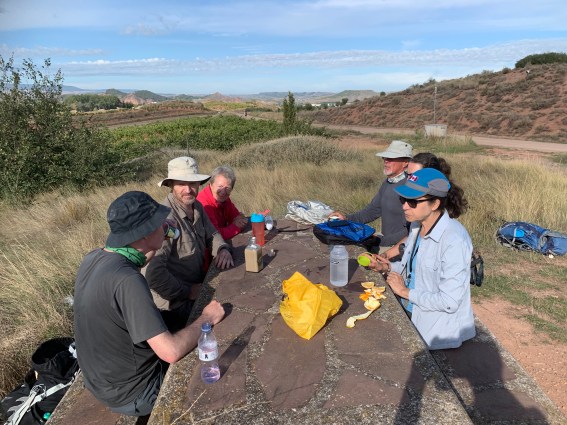
Around mid-morning, since there hadn’t been another place to stop for a coffee or snack, we took advantage of a few picnic tables next to the trail and had a little outdoor party. Agnes, being the star that she is, had brought along a bottle of what is essentially the Spanish equivalent of Bailey’s Irish Cream, and we figured… why not?

IMG_8698

Bill opens the bottle, with Adam and Agnes looking on with anticipation.

IMG_5674

IMG_8696

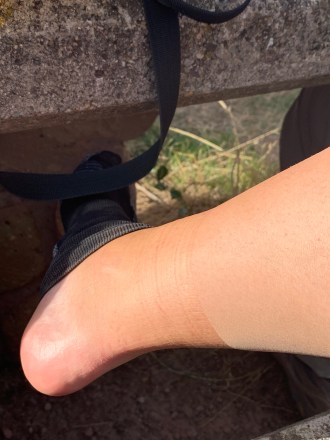
I realized just how dusty the road had been… that’s my sock line!

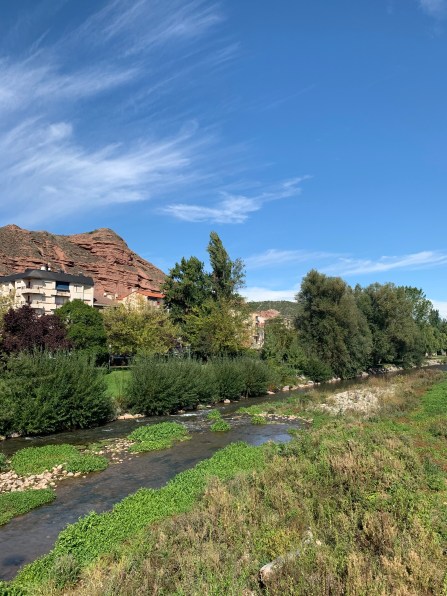
We arrived in Nájera about half an hour before the albergue would start letting people check in, so I took advantage of its location right next to the river and went to soak my feet again. The water was pretty chilly, but it felt SO good!

IMG_8700

IMG_8701

We all experienced an uncharitable but justified period of anxiety when our snoring roommate from the night before also appeared in front of our albergue. We couldn’t handle two nights like that in a row! Luckily, we ended up in two semi-private rooms split among ourselves. (And while a few people in our group snored, we were all able to deal with normal snoring!)

Nájera has some interesting history and, as I recall, there’s a chapel in a cave somewhere in that red stone cliff that you see in the picture above. I didn’t go to look at any of this, but Kim and Chuck said it was cool. Instead, I sorted through all of my stuff and identified a few things I could afford to part with, which I took to a post office to mail back to Paris.

Agnes, Kim, Chuck, and I had a really great dinner that evening. My meal included stuffed peppers and some type of local fish, both expertly prepared by our waiter’s sister. I should note that the food on the Camino was markedly better during the first two weeks as we approached Burgos. I think almost all of my memorable meals (before Santiago, where the food is outstanding) were in the first two weeks. After Burgos, things become more formulaic… but we’ll get to that later.

We enjoyed a much more restful night, which was good – the next day would be a substantially longer walk than I’d done in several days, and I also planned to start wearing my backpack again. It turned out to be one of the most important days of the Camino in terms of people I met, as well!

Camino Day 9: Logroño to Navarrete

Distance traveled: 12.6 km 

This was our final shorter day for a while. We had heard that the one albergue in the town we had originally planned to end in was full, so we opted for a half day rather than a really long (30 km) day. After having breakfast together, most of the group started off. Adam and I lingered for a haircut and shoe shopping, respectively. While waiting for the stores to open, we had another coffee in a pretty fancy cafe in which I felt amusingly out of place in my walking clothes (though no one gave us a second glance). I still wasn’t quite used to spending all of my time in a rotation of three outfits! Although I initially viewed it as a bit of an indulgence, I had brought a jean shirt-dress in order to have something other than athletic gear to wear, and I was really glad to have it (as it was also very comfortable to sleep in and gave me more flexibility in terms of washing my walking outfits). Coming from Paris, where a joke is that you get fully dressed up to take out the trash (it’s true), it was quite an adjustment to spend time in only casual gear, particularly in the evenings when we were out “in public”!

Wearing Tevas made an immediate difference in my level of physical comfort (though, given that I wore the sandals with socks, they added to my “I’m not in Paris anymore!” fashion moment). My toes finally weren’t rubbing against anything as I walked.

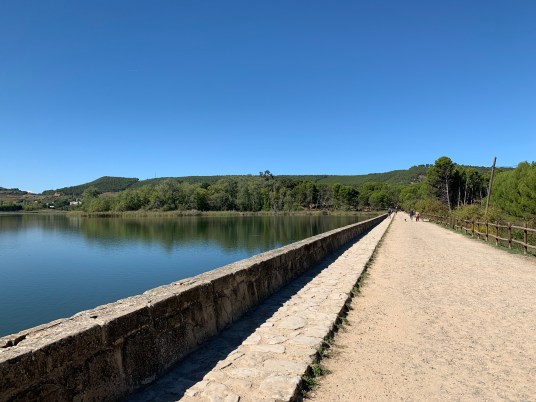
Despite this, I found the three-hour walk to Navarrete rather tedious. I’m not sure what caused my bad mood. It was warm but not unbearably hot, and the path was pretty pleasant. Once I got out of town (where the signage could have been a bit clearer), there was a long path through a public park that ultimately led to a larger park situated around a lake.

IMG_8675

I did run into Pam, the woman with whom I’d arrived in Roncesvalles on day one; I hadn’t seen her since then! She and her son were walking together again, and she was in good spirits despite having had some physical setbacks of her own during the past week. I didn’t see her again after this, but I was really glad to see her one more time.

IMG_8680

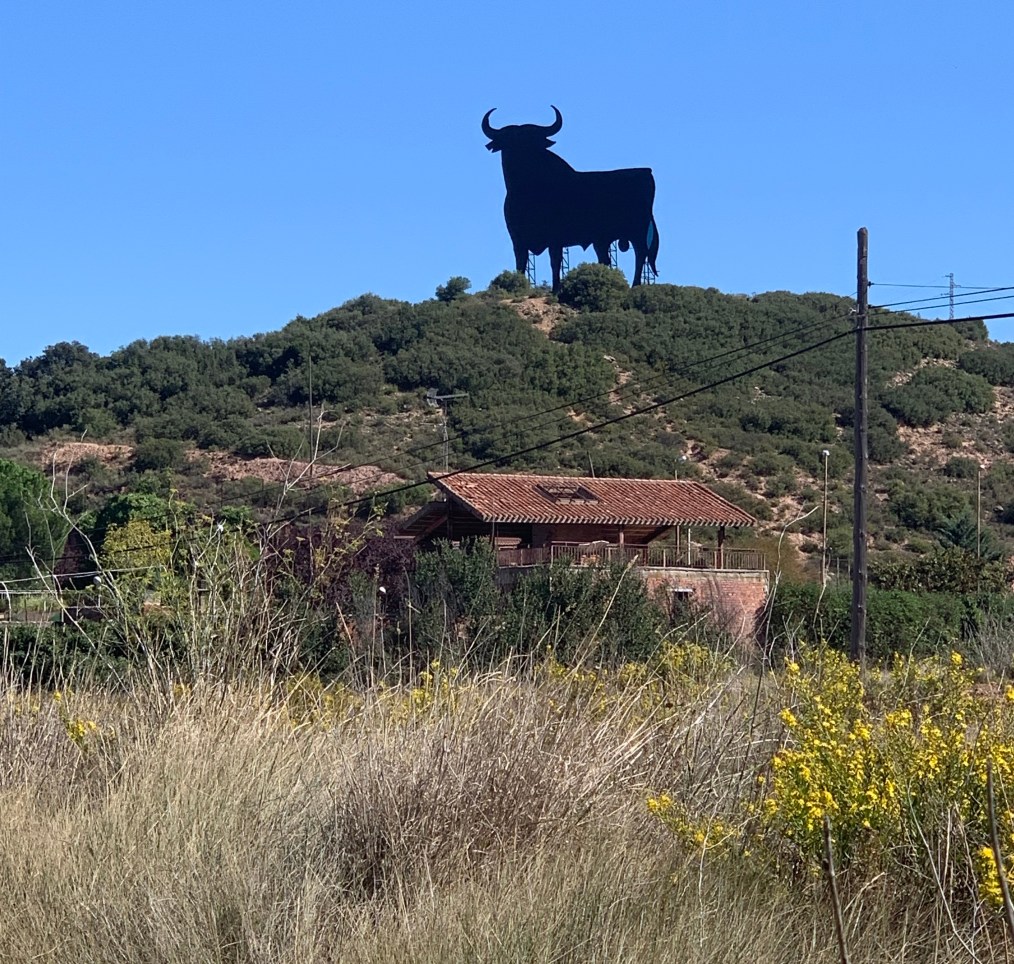
The first (and maybe only?) big bull I saw on the Camino. These are very common fixtures of the landscape elsewhere in Spain.

The path also took us next to what appeared to be an official government vineyard of some sort. Each row of vines was labeled with its grape type – tempranillo (the main grape used in Rioja), garnacha (aka grenache), and many others I’d never heard of. I wish I could have asked someone what this place was and what they were doing!

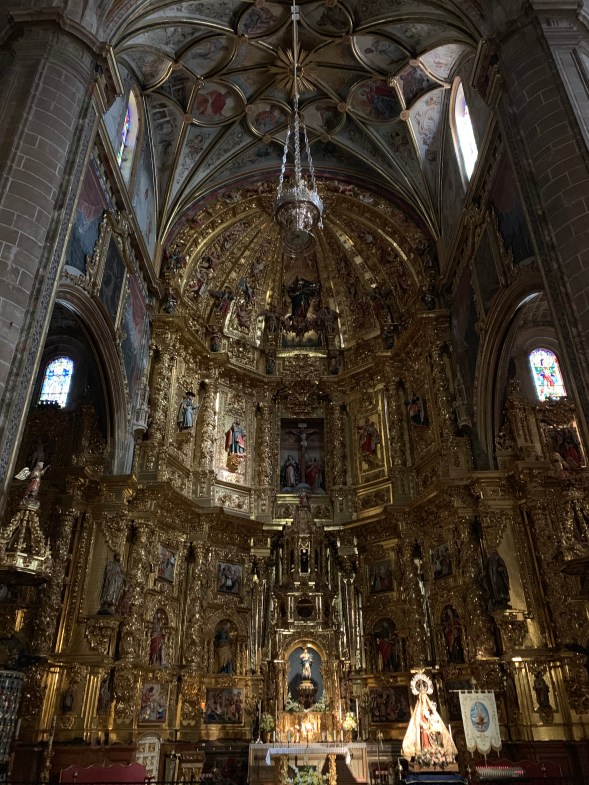
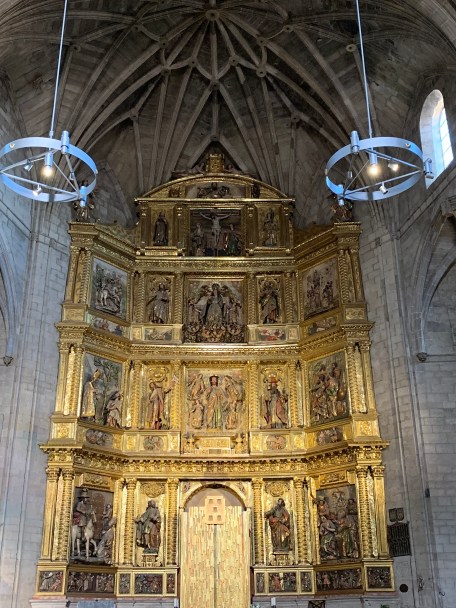
Navarette was a cute little town, and it was a great place to spend the night. It’s home to a church with a truly astonishing interior. The picture below doesn’t do it justice. You can insert a coin to illuminate the wall behind the altar; it’s entirely gold-plated.

IMG_8681

(This is without the lights on.)

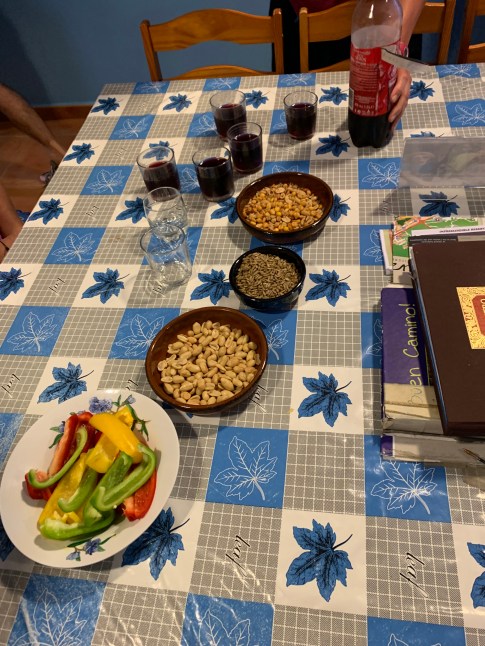
Since we had more than the usual amount of time to kill in the afternoon, Agnes organized a little happy hour for us in the albergue. We drank pre-mixed tinto de verano, which is similar to sangria. I think somehow this was the only time we ended up doing this, but it was a great way to head into the evening!

IMG_8682

We eventually transitioned to the town’s main square for dinner and got to eat outside, which was really lovely. I also had the pleasure of reuniting with Alma, my friend from the first night in Saint Jean, and William, who’d been one of my bunk mates in Roncesvalles. The two of them had been walking together since Pamplona at a slower pace but had done a longer day that had allowed them to catch up to us. It happened to be William’s birthday, so we had a nice festive spirit among us.

IMG_5663

a62b85ac-4adc-4f74-8bcb-4545d8d66d58

A blurry, but more complete, picture of our group

It’s a good thing we had such a good evening, because the rest of the night was horrible – probably the worst one of the Camino for all of us. I think there were about 12 people sleeping in our room, and one of them turned out to have sleep apnea. His snoring was shockingly loud and disruptive. He was the only one not awake! While my earplugs had generally served to block out snoring sufficiently up to this point, they failed completely on this occasion, and it was a very long night indeed.

Camino Day 8: Torres del Río to Logroño

Distance traveled: 19.9 km 

Today we crossed into La Rioja… the region that produces the eponymous wine! I have been a Rioja fan for a long time, and while the wine we’d had every night thus far hadn’t been bad, I was excited for the inevitable upgrade we’d have while in wine country.

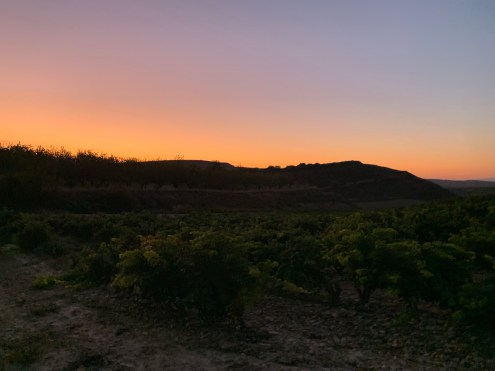
I sent my backpack ahead again, and we set off earlier than usual given the high temperatures forecast for the day. What a visual treat we got as the sun came up!

IMG_8621

IMG_8626

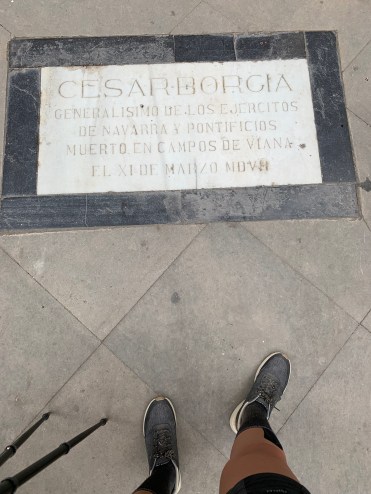
Later in the morning, we passed through the town of Viana, which was of interest to me as a big fan of the Showtime series “The Borgias”. If you’ve seen that or are otherwise familiar with the endlessly fascinating Borgia family (Pope Alexander VI and his supposed illegitimate children), Viana is the town were Cesare Borgia finally met his end and was buried. Here is the stone marking that event outside the main church:

IMG_8627

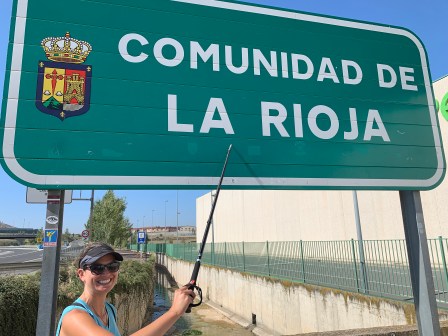
An hour or two after leaving Viana, we finally crossed into La Rioja. (Up until this point, we’d been walking in the province of Navarra.)

IMG_8631

We arrived in Logroño, which is a proper city, just in time for the traditional Sunday mid-afternoon dinner that many families were enjoying in restaurants all around our albergue.

IMG_5618

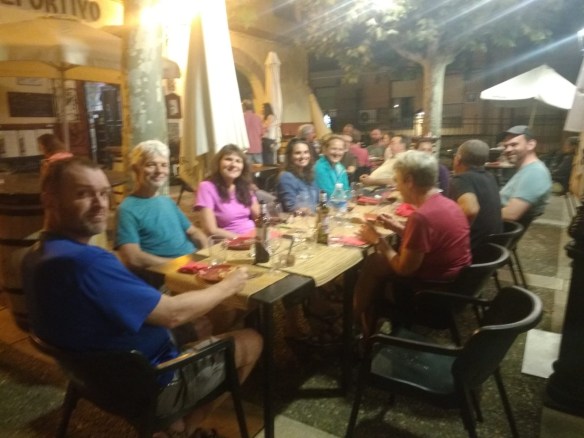
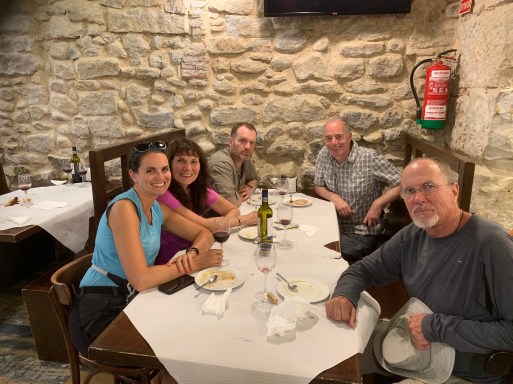
Camino family dinner (missing Chuck and Agnes)

We all wandered around together after eating. We are now getting into a part of the country with some pretty stunning churches:

IMG_8663

I really enjoyed both of the graphics on this banner outside the church, referencing Logroño’s importance from the perspective of both the Camino and wine:

IMG_8666

We found a fountain that had been giving pilgrims water for centuries:

IMG_8648

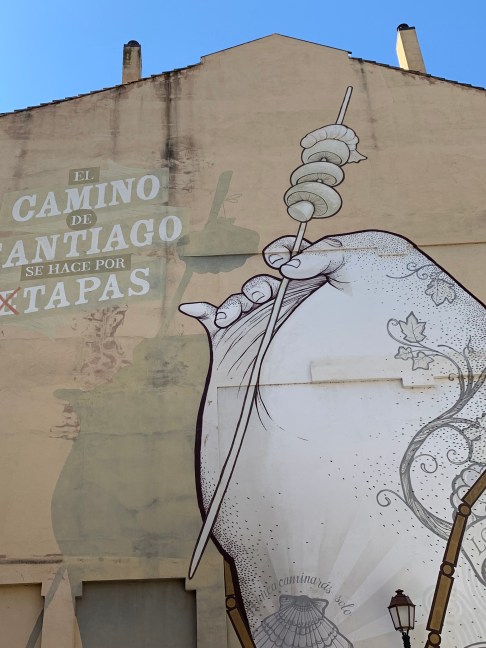
And we saw one of my favorite Camino-related murals of the entire journey:

IMG_8641

There’s a play on words here. Without the crossed out E, what this says is “the Camino de Santiago is done in stages”; after you eliminate the E, the meaning changes to “the Camino de Santiago is done for the tapas”. If you’ve been to Spain, you know that many taps are served on toothpicks, which here is doubling as a pilgrim’s staff. I think the whole thing is very clever!

I stayed that night in a semi-private room with Chuck and Kim. (In any other circumstances, staying in a room with a married couple I had just met 24 hours before would have been awkward and strange, but on the Camino, these things seem perfectly normal!) Kim was also suffering from blisters, so I was in good company. I performed some real surgery on myself that evening, but this was the last bad day for me; I bought some Tevas the following morning and was able to give my toes the space they needed to heal. Kim was also kind enough to give me a silicone cap for the toe that had become one big blister, and that was a real game-changer. So, here’s what my right foot (the more injured one) looked like at this blister and tendinitis pinnacle:

IMG_8672

“At least your pedicure is still intact, Kendra!”

Final words on blisters, since from this point they weren’t such a problem for me. Pilgrims on the Camino are almost guaranteed to get blisters, though I do know people who didn’t. There doesn’t seem to be any rhyme or reason to them – in my opinion, it’s not a matter of which shoes or socks you wear, and you might get them after walking in the same shoes for days without problems. The best advice I can give is:

  • Buy shoes that are a half or full size up from what you normally wear so that you’re giving your feet plenty of room to move and to swell (which they’ll do naturally over the course of the day).
  • Make sure you’ve broken in whatever shoes you’re planning to wear, which means not just walking long distances in them but also doing sustained climbs and descents in them.
  • Put anti-friction cream or something like Vaseline on your feet in the morning and reapply as necessary throughout the day. (Some people also swear by changing your socks every couple of hours.)

And finally, a note to anyone contemplating doing the Camino Francés in the future: consider taking a day off in Logroño. You’d be doing your body a favor after six hard days of walking, and since it’s the capital of the wine region, it’s a great place to spend time if you’re an oenophile like me. There are a lot of bodegas (wineries) you can visit. I was anxious to stick with my Camino family and wasn’t certain I could catch them up if they went on ahead, but if ever repeat this route, I’m probably going to take an extra day here